




History
California’s wine-growing history began with Spanish missionaries planting the Mission grape in 1769, with commercial production shifting north during the Gold Rush. The late 19th century saw an expansion of wineries and European immigrants introducing new varieties, but the industry was severely impacted by the phylloxera epidemic and Prohibition. A major turning point was the 1976 Judgment of Paris, which put California wine on the global map and spurred modern growth and innovation.
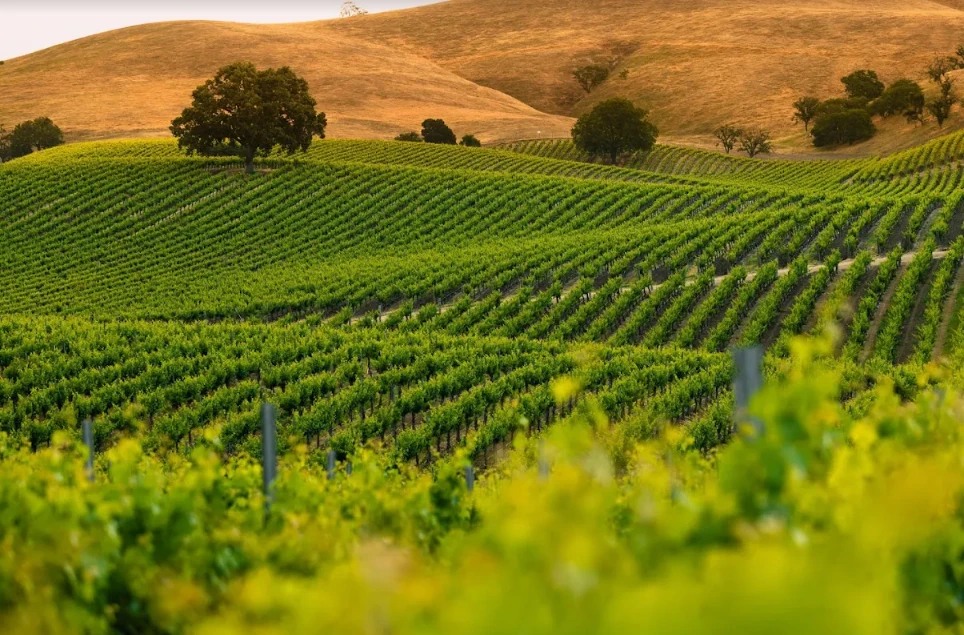
Early years (1769–mid-1800s)
- 1769: The first vineyards were established by Spanish Franciscan missionaries at Mission San Diego de Alcalá, primarily using the Mission grape.
- Southern California: Initially, the center of commercial production was in Southern California.
- Mid-19th century: The California Gold Rush (1848–1855) led to a population boom and a surge in demand for wine, spurring the first vineyards in Northern California.
Expansion and setbacks (mid-1800s–early 1900s)
- European influence: Immigrants from Italy, France, and Germany brought winemaking expertise and new grape varieties.
- Napa Valley: George Yant planted the first vineyard in Napa in 1839. Charles Krug opened Napa’s first commercial winery in 1861, marking the beginning of the industry’s boom in the region.
- Phylloxera epidemic: A vine louse destroyed many vineyards in 1890, though winemakers later solved the issue by grafting European vines onto disease-resistant American rootstock.
- Prohibition: The start of Prohibition in 1920 severely reduced the number of wineries in the state.
Modern era (1933–present)
 Post-Prohibition: A new era began after the repeal of Prohibition, with winemakers like André Tchelistcheff introducing modern techniques such as temperature-controlled fermentation.
- The Judgment of Paris: In 1976, a blind tasting in Paris saw California wines win against their French counterparts, which significantly boosted global recognition for Napa and other regions.
- Growth and innovation: This event sparked rapid growth, leading to a massive increase in the number of wineries and a focus on producing high-quality, world-class wines.
- Challenges: Today, California’s wine industry continues to be a major global producer, though it also faces challenges such as drought and wildfires
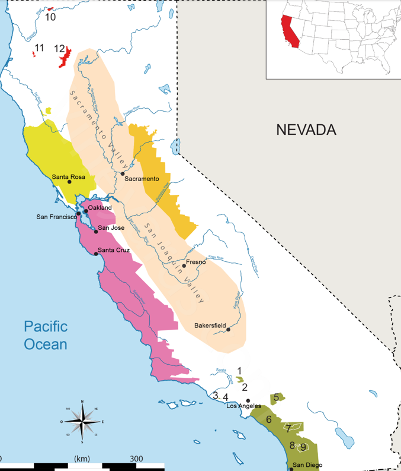
California’s wine regions are broadly categorized into North Coast, Central Coast, Sierra Foothills, Inland Valleys, and Southern California, each with distinct climates and grapes. Key areas include the renowned Napa and Sonoma valleys in the North Coast, the diverse Central Coast with regions like Paso Robles and Santa Barbara, and the Central Valley, which produces the majority of the state’s wine grapes. Other significant areas are the historic Sierra Foothills, famous for Zinfandel, and Southern California, with emerging regions like Temecula Valley.
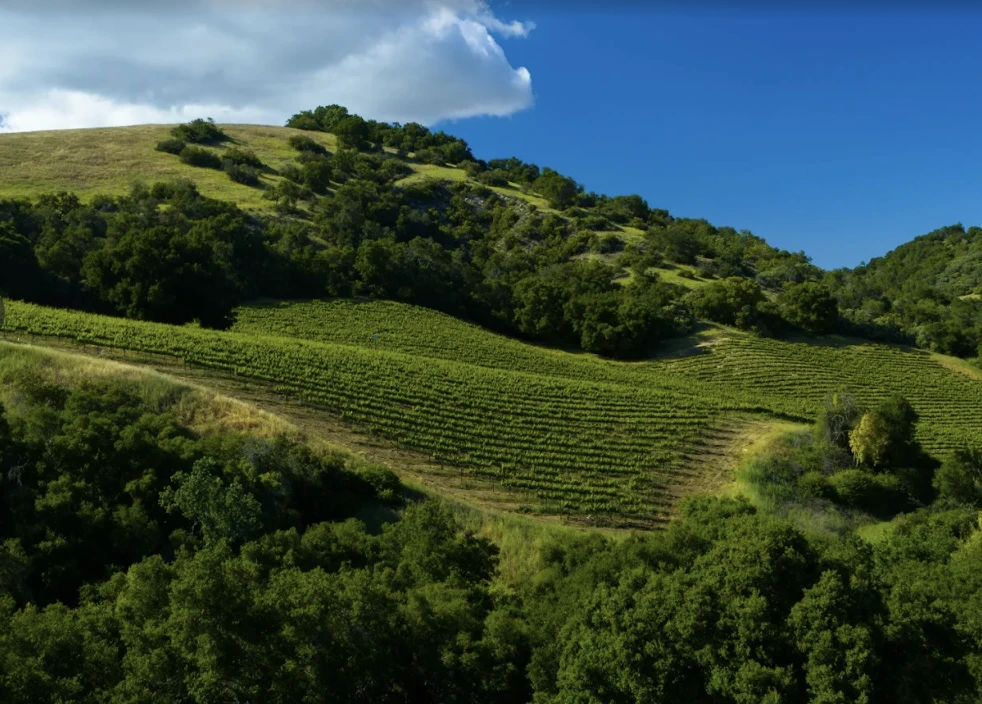
Major California wine regions
North Coast
A world-famous region home to more than half of California’s wineries.
Napa Valley
Perhaps the most famous region, with a high concentration of wineries and a reputation for high-quality wines.
Sonoma County
Produces a wider variety of grapes than Napa due to its diverse climates, with 19 AVAs including the Russian River Valley and Dry Creek Valley.
Lake County
Known for concentrated red wines like Cabernet Sauvignon and Petite Sirah, influenced by Clear Lake.
Central Coast
Stretches from south of San Francisco down to Santa Barbara and includes areas like Paso Robles, San Luis Obispo, and Santa Barbara County.
- Known for its cool coastal influences and diverse landscapes.
- This region is also one of the oldest, with grapes planted by Franciscan monks in the 1700s.
Central Valley / Inland Valleys:
This region is the workhorse of the state, producing about three-quarters of the grapes used in California wine.
- It includes counties like Sacramento, Yolo, San Joaquin, and Fresno.
- Grapes from this region are often labeled simply as “California”.
Sierra Foothills
This region gained prominence during the Gold Rush and is now a large viticulture area famous for its Zinfandel.
- Notable AVAs include Amador County, El Dorado, and Shenandoah Valley.
Southern California:
This region is home to some of the state’s oldest vineyards, including the birthplace of California viticulture.
- With a growing wine scene, it produces a wide variety of grapes in warmer and cooler coastal areas.
- Notable areas include Malibu and the Temecula Valley
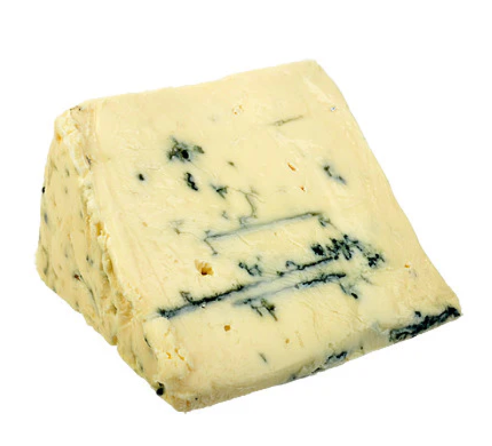
Point Reyes Original Blue
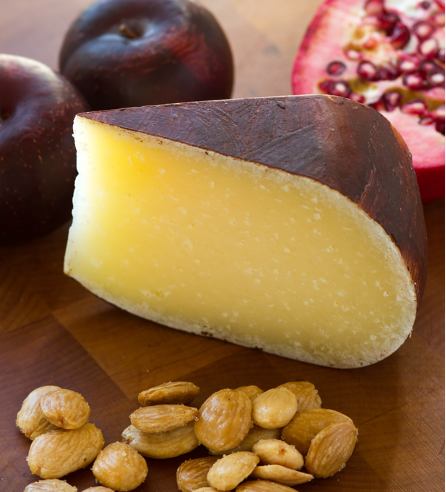
Monterey Jack

Aged Havarti

Oregon Blue
Food Pairings
Roasted Chicken Thighs with Green Coriander, Fennel and Green Olives

Parcook and clean the crab, and cut them in half lengthwise – drizzle with olive oil and set aside.
Marinade chicken thighs with lots of olive oil, green olives, sliced fennel with fronds, green peppercorns and fresh green coriander. Add salt and pepper, and any fresh herbs you might like – let sit in the refrigerator for a few hours.
To sear, bring olive oil over medium heat to the sheeting stage in a saute pan, and then put in the chicken thighs, skin side down. Sear for a few minutes, until nicely browned and the skin releases easily from the pan. Turn, and add in the marinade with the fennel, olives and herbs; add more oil if needed.
After a minute or two, pour in a cup of dry hard cider or white wine and put the pan in a 350 degree oven for about 20-25 minutes for boneless thighs; 35-40 minutes for bone-in thighs. Baste occasionally.
Serve over French white beans or flageolet with plenty of garlic and fresh herbs.
Spritz fresh lemon if desired.