
Geology of Southern France / Overview
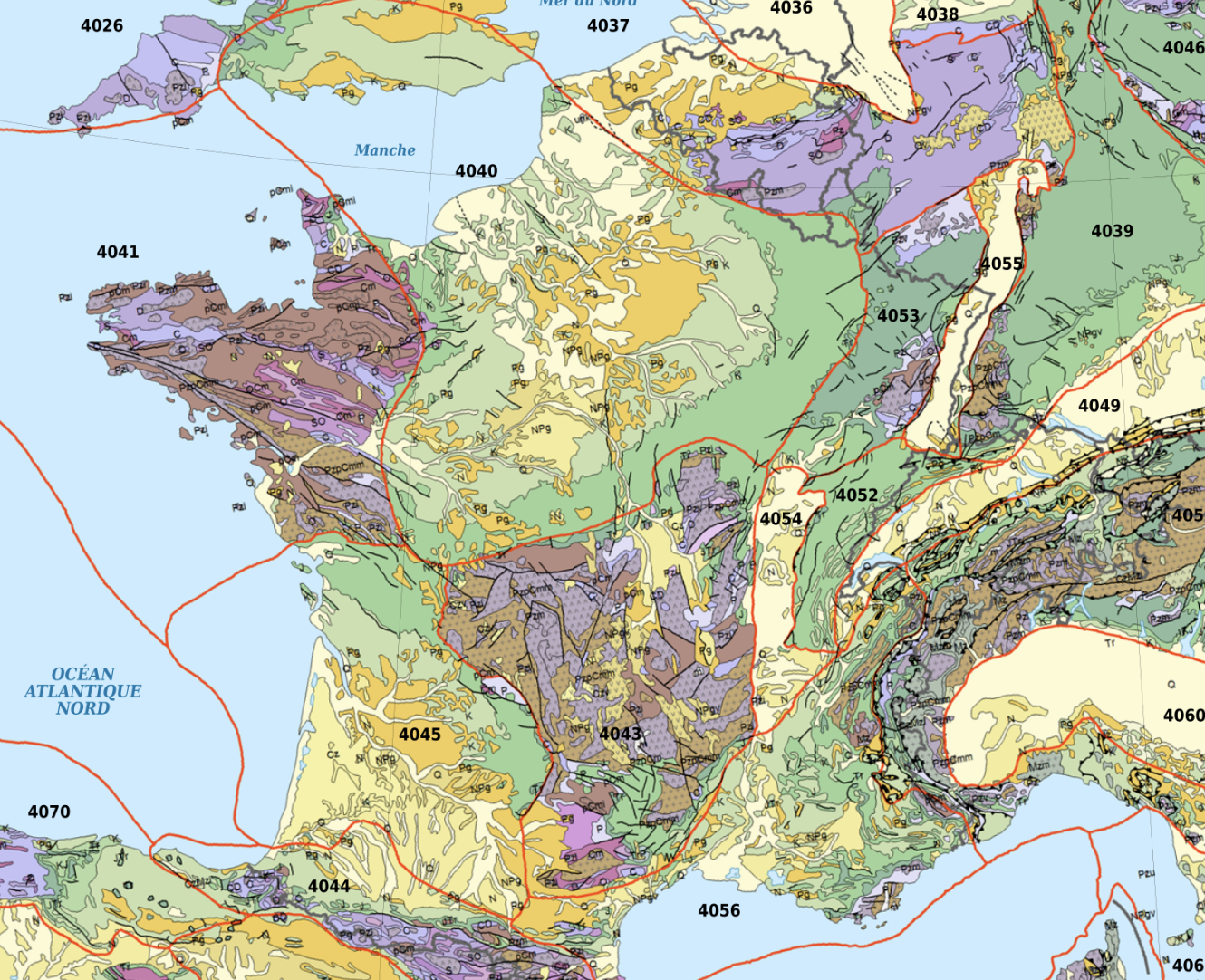
The geology of Southern France is a complex, diverse mix of Alpine mountain building, old Variscan basement, and Mediterranean limestone landscapes. Key features include the Alpine arc, the Pyrenees chain, and the karst plateaus (causses). Major structural features include the Pyrenean-Provence fold-and-thrust belt and coastal limestone areas, with significant, diverse sedimentary, metamorphic, and igneous rock formations.
Key Geological Components
The Southern Alps (Provence-Alpes-Côte d’Azur): This region features prominent limestone cliffs in the Calanques and sedimentary structures from the Mesozoic and Tertiary periods. It includes famous geological features like the “Demoiselles Coiffées” (fairy chimneys) and petrifying springs.
The Provence Chain
A fold-and-thrust belt created by late Cretaceous to Eocene compression, which was later deformed by Oligocene-Miocene rifting. It includes features like the Nîmes Fault and the Luberon Mountains.
The Pyrenees
An east-west mountain chain formed by the collision of the Iberian and Eurasian tectonic plates. This region is characterized by steep folding and intense, long-term erosion.
The Massif Central
Although partially in central France, its southern areas are characterized by extensive volcanic history, with around 450 extinct volcanoes. The region contains granite, gneiss, and schist, alongside younger sedimentary deposits.The Coastline and Karsts: The coastline is famous for its karsts (limestone landscapes), including caves and dolostones. The area has a history of sediment transport from now-vanished landmasses, forming conglomerate rocks known as “puddingstone”
The Coastline and Karsts
The coastline is famous for its karsts (limestone landscapes), including caves and dolostones. The area has a history of sediment transport from now-vanished landmasses, forming conglomerate rocks known as “puddingstone”.
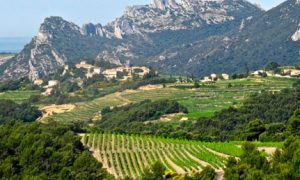
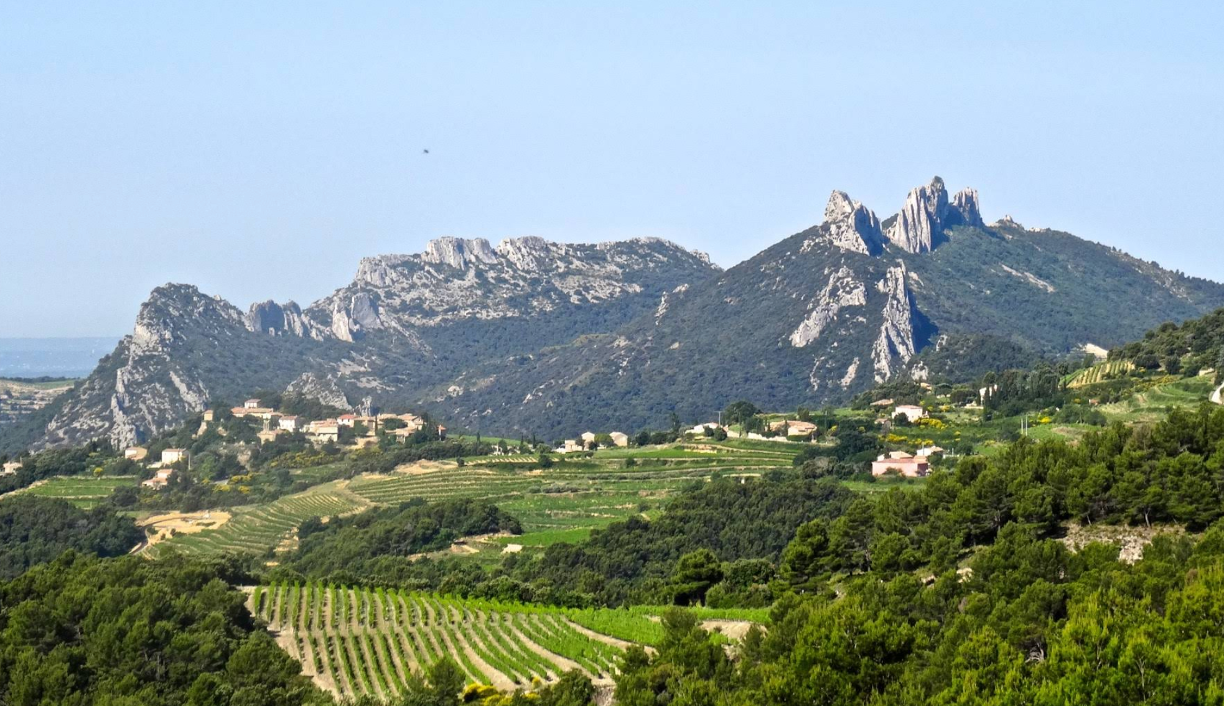
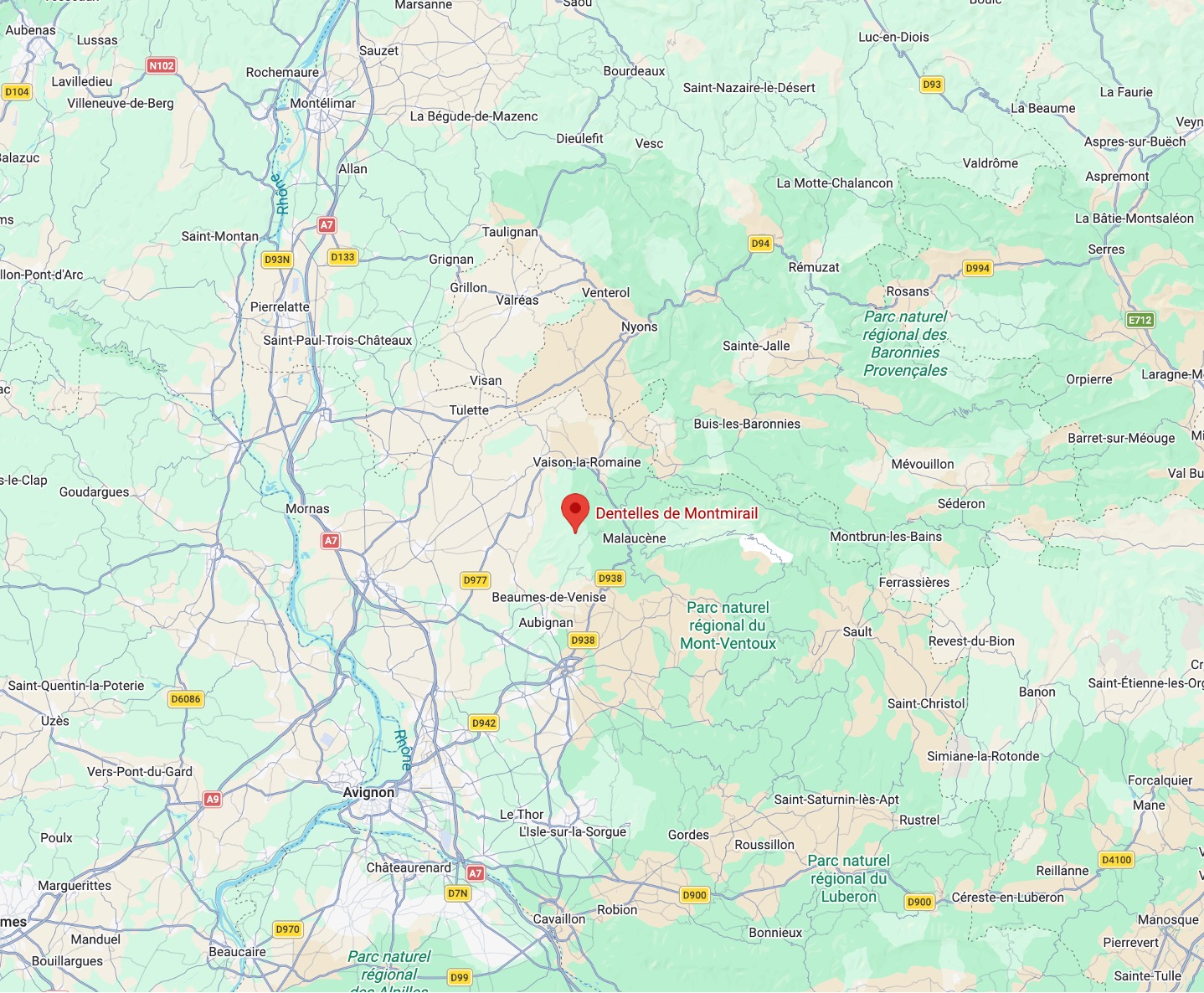
The Dentelles de Montmirail are a small chain of mountains in Provence in France, in the département of Vaucluse, located just to the south of the village of Vaison-la-Romaine. They are foothills of the highest peak in Provence, Mont Ventoux, which is situated just to the east. The dramatically jagged shape of their peaks was formed by horizontal strata of Jurassic limestone being folded and forced into a nearly upright position and subsequently eroded into sharp-edged ridges and spikes. The highest peak of the Dentelles is St-Amand, at 734 m (2,400 ft). The range, which is about 8 km wide, offers over 600 trails for walking, rock climbing, and mountain biking.[1] The foot of the Dentelles is surrounded by vineyards of the Rhône Valley. Their name dentelles, the French word for lace, refers to their shape obtained by erosion, while Montmirail is derived from the Latin mons mirabilis meaning ‘admirable mountain’.
Well Known Wine Regions of Southern France
Provence (Coastal/East)
Known as the world capital of rosé, producing over 80% pink wine, with key areas like Côtes de Provence and Bandol.
Languedoc-Roussillon (Coastal/West)
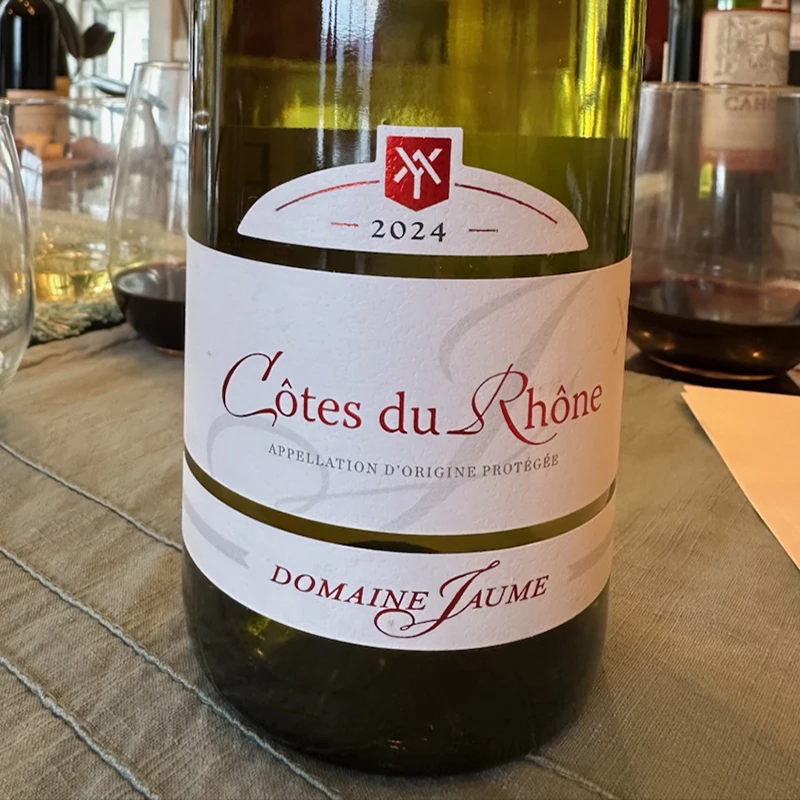
Often referred to as “the South” or Occitanie, this is France’s largest wine-producing region. It is known for its diverse terroir, producing varied red, white, and sparkling wines (e.g., in Limoux).
Southern Rhône Valley (Inland/East)
Famous for bold, blended red wines and white wines, including famous appellations like Châteauneuf-du-Pape and Gigondas.
South West France (Inland/West)
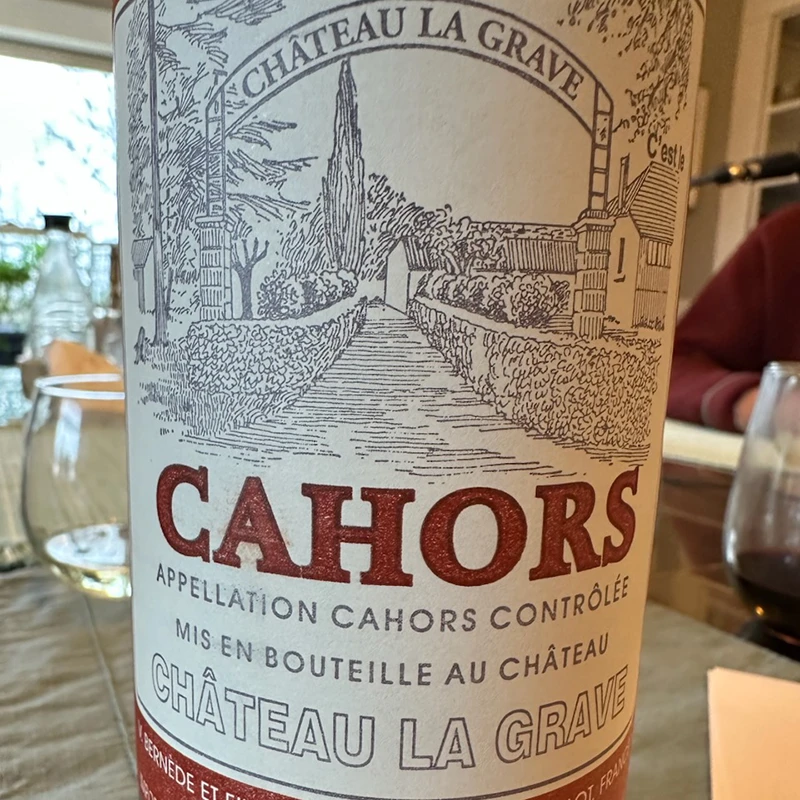
Known for distinct, unique wines such as Malbec from Cahors and structured reds.
Geology Wines
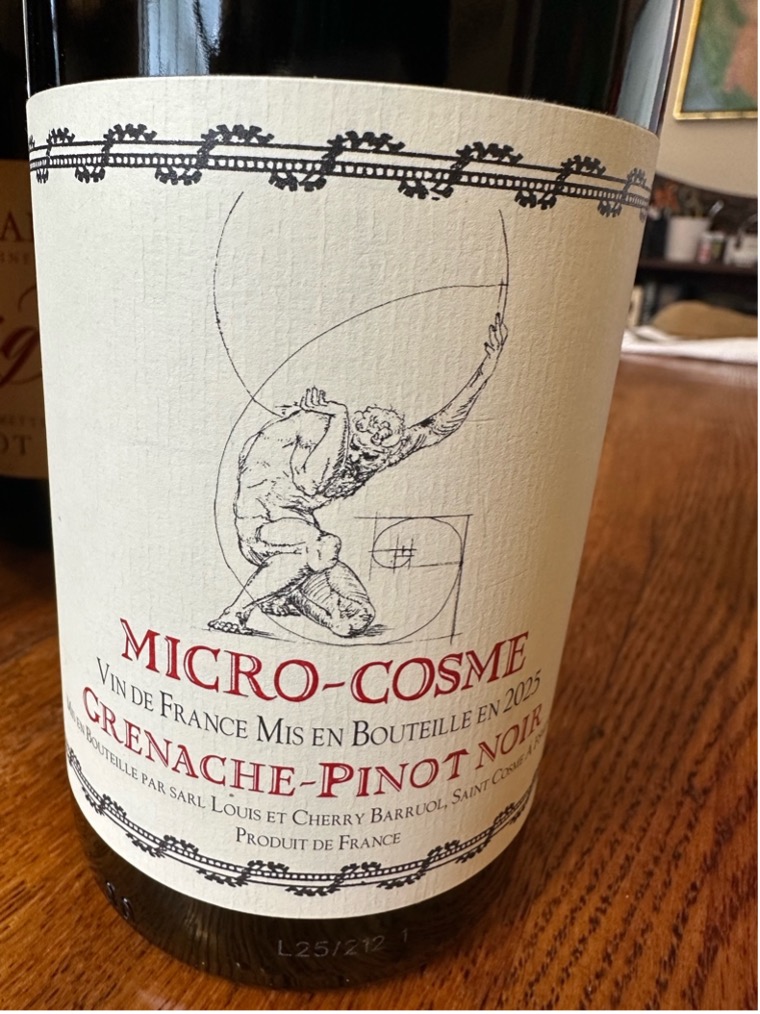
Micro Cosme Grenache-Pinot Noir
Château de Saint Cosme is the leading estate of Gigondas and produces the benchmark wines of the appellation. The property has been in the hands of the Barruol family since 1490. Louis Barruol took over from his father in 1992 making a dramatic shift to quality and converting to biodynamics in 2010.
The estate lies in the heart of Gigondas where 15 hectares of vineyard grow in the shade of the Dentelles de Montmirail mountain. In addition to the estate-grown wines labeled “Château de Saint Cosme,” Louis Barruol buys grapes from contracted growers, labeling these “négociant” wines simply as “Saint Cosme.”
Micro-Cosme Rouge carries the Vin de France designation due to its unique production method. The wine is made from blending wines from multiple vintages in concrete tanks starting with the 1999 vintage. The result is a wine that is both vibrant and complex.
This fusion of Grenache and Pinot Noir delivers aromas and flavors of strawberry, gingerbread, almond, cinnamon and heirloom rose.
Delicious with stews, grilled meats, dark fish, and tomato-based dishes such as ratatouille.
Organic, biodynamic, old vines, native yeasts.
Geology
Château de Saint Cosme is a historic wine estate located in the heart of the Gigondas appellation in the southern Rhône valley of France, just north of the village of Gigondas. The estate, owned by the Barruol family since 1490, is situated near the Dentelles de Montmirail, known for its diverse soils.
Key Details
Château de Saint Cosme is the leading estate of Gigondas and produces the appellation’s benchmark wines. Wine has been produced on the site of Saint Cosme since Roman times, evident by the ancient Gallo-Roman vats carved into the limestone below the château. The property has been in the hands of Louis Barruol’s family since 1490. Henri and Claude Barruol took over in 1957 and gradually moved Saint Cosme away from the bulk wine business. Henri was one of the first in the region to work organically beginning in the 1970s. Louis Barruol took over from his father in 1992, making a dramatic shift to quality, adding a négociant arm to the business in 1997, and converting to biodynamics in 2010.
In addition to Château de Saint Cosme, Louis Barruol is the founder and co-owner of Forge Cellars – a best-in class Finger Lakes collaboration with New York native Rick Rainey. In 2019 Louis Barruol further expanded in the Rhône Valley with the purchase of Château de Rouanne, a historic estate located in the appellation of Vinsobres.
Location of Vineyard
The estate is in the heart of Gigondas where 15 hectares of vineyard grow in the shade of the Dentelles de Montmirail. The limestone that distinguishes Gigondas from other southern Rhône appellations is visible on the jagged cliffs of the Dentelles. In addition to Gigondas and the old-vine selection Gigondas Valbelle, three single-vineyard Gigondas are produced: Hominis Fides, Le Claux, and Le Poste. Louis Barruol owns an additional 10 hectares of vineyard in Violès outside of Gigondas to produce Les Deux Albions Blanc IGP. Côtes-du-Rhône Les Deux Albions Rouge and Le Poste Côtes-du-Rhône Blanc round out the estate offerings and are labeled as “Château de Saint Cosme.” Micro-Cosme, Châteauneuf-du-Pape, and northern Rhône appellations are from contracted growers and are labeled “Saint Cosme.”
Winemaking and Viticulture Philosophy
Louis Barruol’s style combines the region’s typical ripeness with freshness, an elusive quality in the warm climate of the southern Rhône. One of the keys to freshness is the use of stems for their red wines. The stems absorb alcohol during fermentation and help retain acidity and tannin. Red wines are made by spontaneous fermentation. Louis prefers cement tanks or mostly used 228-liter Burgundian pièce for élevage with just a few traditional demi-muid for his whites. The négociant wines are transported to Gigondas in casks to avoid racking and unnecessary exposure to oxygen. Reds are bottled unfined and unfiltered. “I want to make wines which express their terroir with purity and personality. I want balanced wines with a great ability to age,” says Louis Barruol.
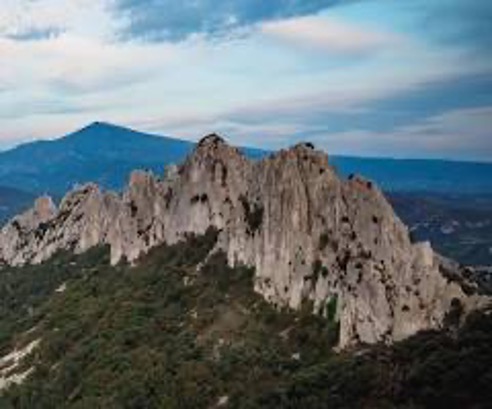
The Dentelles de Montmirail are a jagged limestone massif in Provence, France, formed by tectonic uplifting, folding, and erosion over millions of years. Stretching ~8 km, this chain consists primarily of Jurassic-period limestone (~200 million years old) tilted vertically, creating sharp, “lace-like” peaks. The area is heavily influenced by the Nîmes fault.
Geological History and Formation
Origin
The area was covered by a sea 250 million years ago, allowing for thick sediment accumulation.
Triassic & Jurassic Periods
Deposits of salt and gypsum were followed by massive limestone deposits in a tropical marine environment.
Tectonic Activity:
The range was shaped by the compressive forces of the Alpine orogeny, causing the sedimentary layers to bend, break, and rise up. The Nîmes fault, a major structural feature, played a key role in this violent geological restructuring.
Erosion
Intense erosion has sculpted the tilted layers into the dramatic, jagged ridges seen today.
Rock Composition and Landscape
Limestone Dominance
The dominant rock is hard Jurassic limestone, which forms the vertical “teeth” (dentelles) of the ridge.
Marls & Sediments
Interbedded layers of marl and soft stone are present, creating diverse, complex terroir for local vineyards.
Structure
The range consists of three parallel chains, characterized by limestone cliffs, rocky terrain, and natural cavities, offering, for example, this rock climbing opportunity.
Impact on Terroir
The geological complexity of the Dentelles, including the mixture of limestone, limestone scree, and marls, is crucial for wine production in the region, including the, for instance, Gigondas appellation.
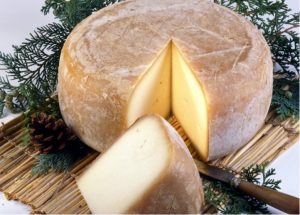
Ossau-Iraty
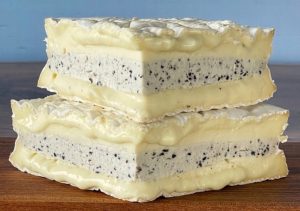
Brie with Truffles
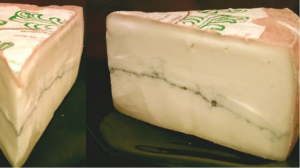
Morbier
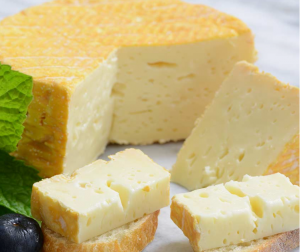
Petit Livarot
Food Pairings
Grilled Leg of Lamb with Lemon, Garlic and Rosemary
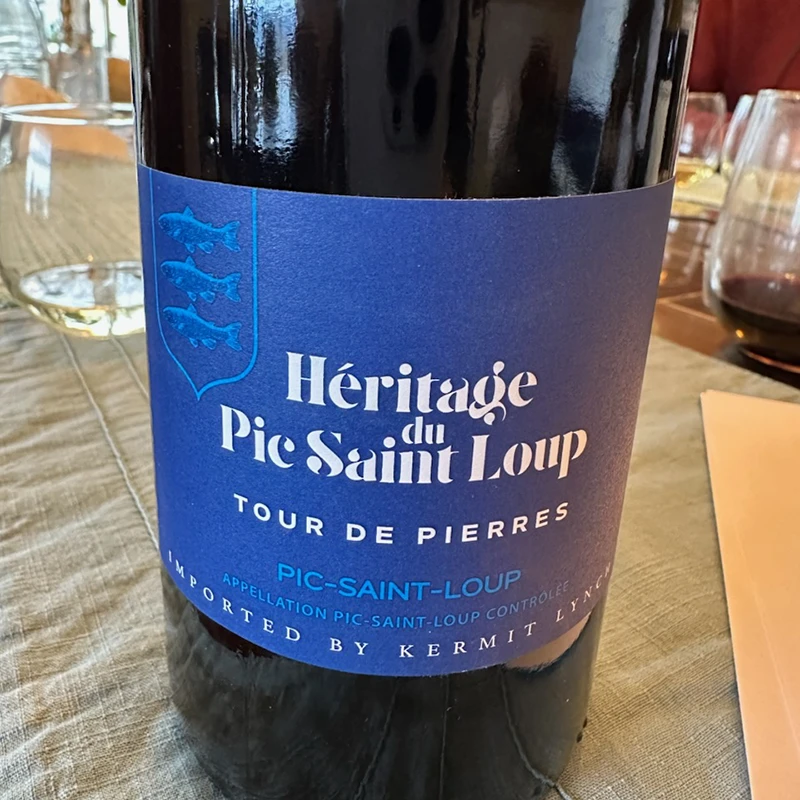
(to pair with the Heritage du Pic Saint Loup [red wine from the Languedoc])
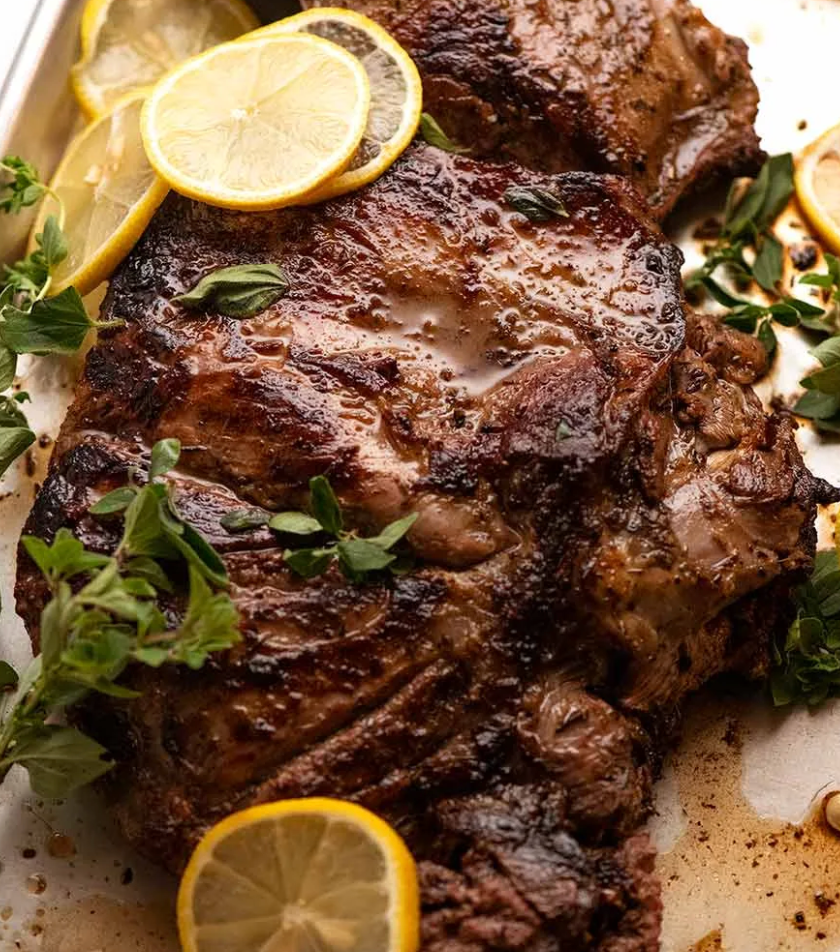
Create a paste with olive oil, minced garlic, rosemary, lemon zest, lemon juice, and Dijon mustard, spreading it evenly over the leg of lamb. Marinate the lamb in the refrigerator for 6-8 hours or overnight.
To grill: Remove your lamb from the marinade and place it on the indirect heat zone of your grill. Close the lid and allow the lamb to cook until you reach an internal temperature of 125 degrees F. This will likely take 30-45 minutes, with flipping your leg of lamb once during the cooking process.
Sear: Once your lamb reaches the correct internal temperature, move the lamb directly over the coals or high heat of your grill to get some nice char on the exterior — around 5 minutes per side. Sear until you’ve got a nice golden brown crust on all sides of the lamb leg.
Internal Temperature: 135 degrees for medium rare.
IAllow the lamb to rest for 15 minutes before slicing to ensure juiciness.