
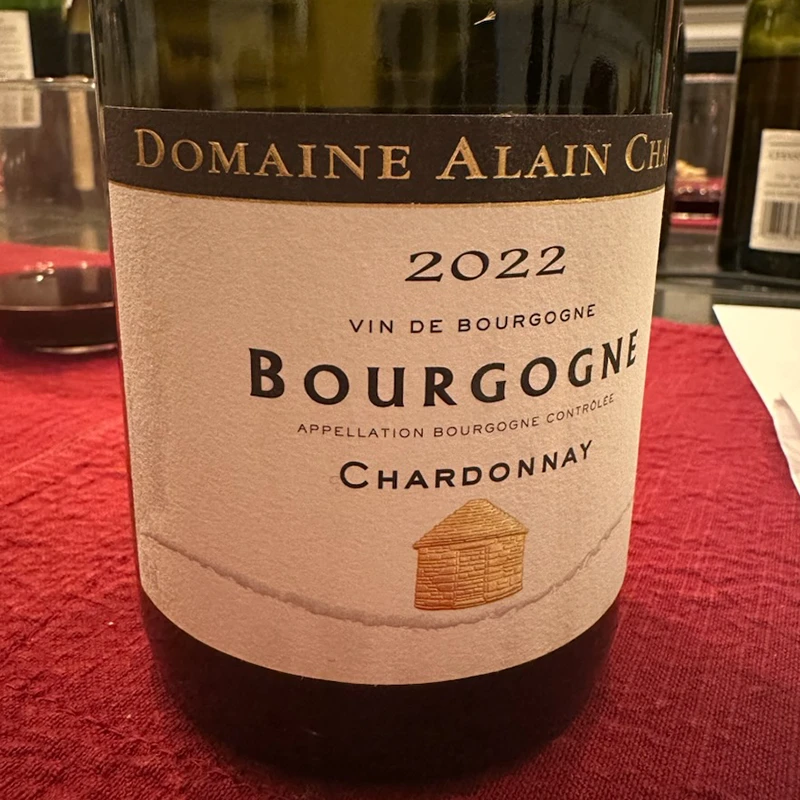
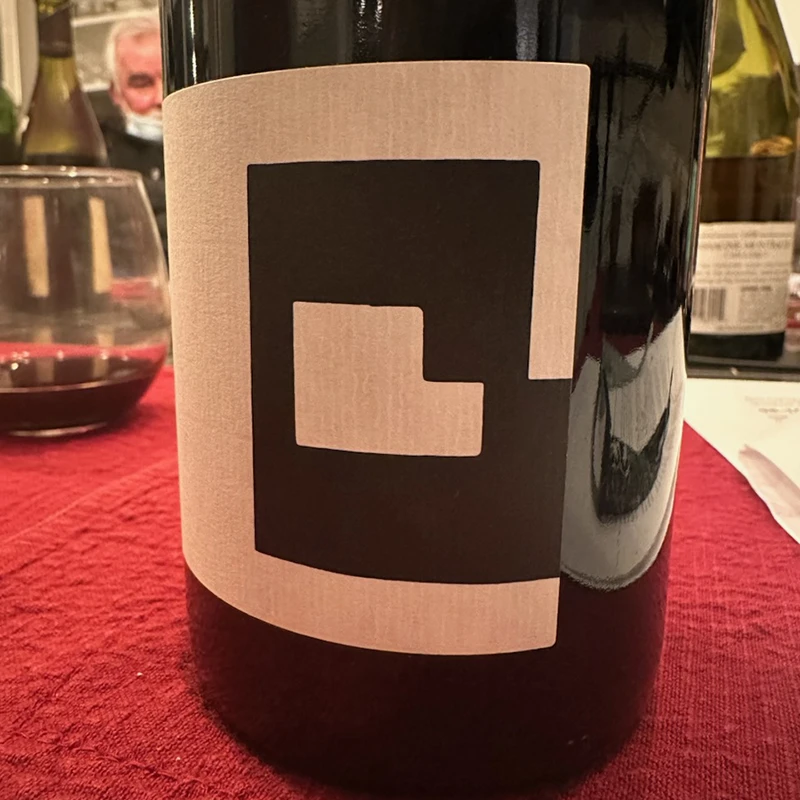
Old World – New World 1
Generally speaking, Old World wines – typically European — focus on tradition, terroir, and restrained, earthy flavor profiles. New World wines – again, typically non-European — emphasize fruit-forward, modern techniques. But thesedistinctions no longer hold true across the board. Many New World producers are adopting Old World techniques to reduce alcohol levels and oak, and some Old World producers are taking a more modern approach to fermentation. There is innovation happening everywhere in the world of winemaking.
Wines Tasted
Old World
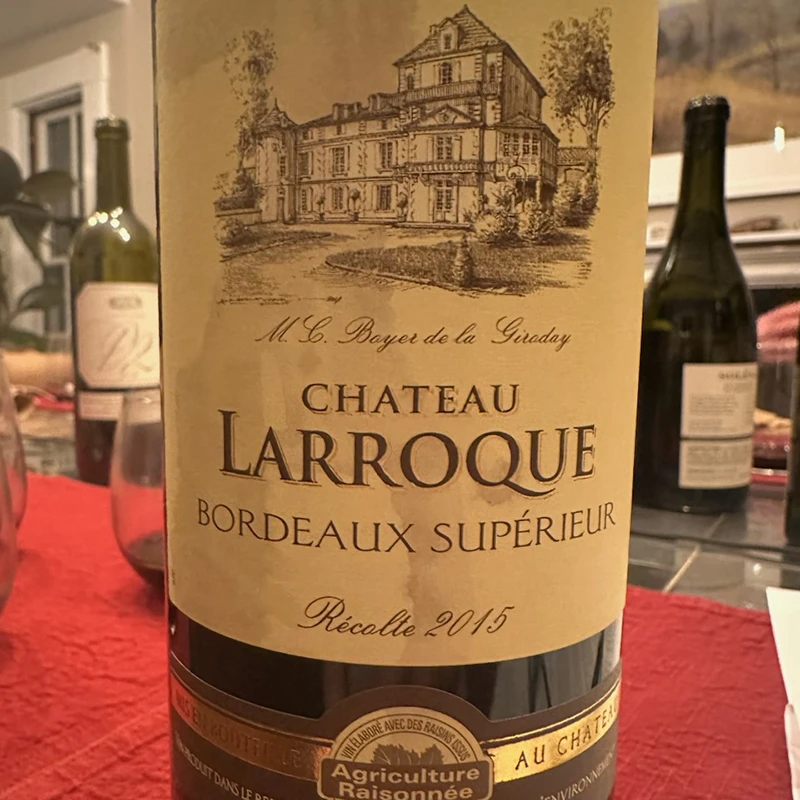
Old World wines tend to have lower alcohol levels and higher acidity, and are often named by region, e.g., Chianti or Bordeaux. Rooted in history, tradition, and terroir – which is the expression of the specific soil/climate – Old World style wines are typically lighter in body, with earthy, mineral, and rustic notes.
Their wine making practices are often regulated by strict regional laws (AOC, DOCG), which govern the type of grape varietals the vintners can use, and at time technique (think Beaujolais Nouveau), percentages of blended grapes, and length of time for fermentation. These honored traditions of winemaking guide the finesse and restraint that one often finds in the wines from the Old World.
Old World style wines are usually named for their region of origin, e.g., Bordeaux, Barolo.
Old World style refers to wines from France, Italy, Germany, Austria, Spain, Portugal and central Europe.
New World
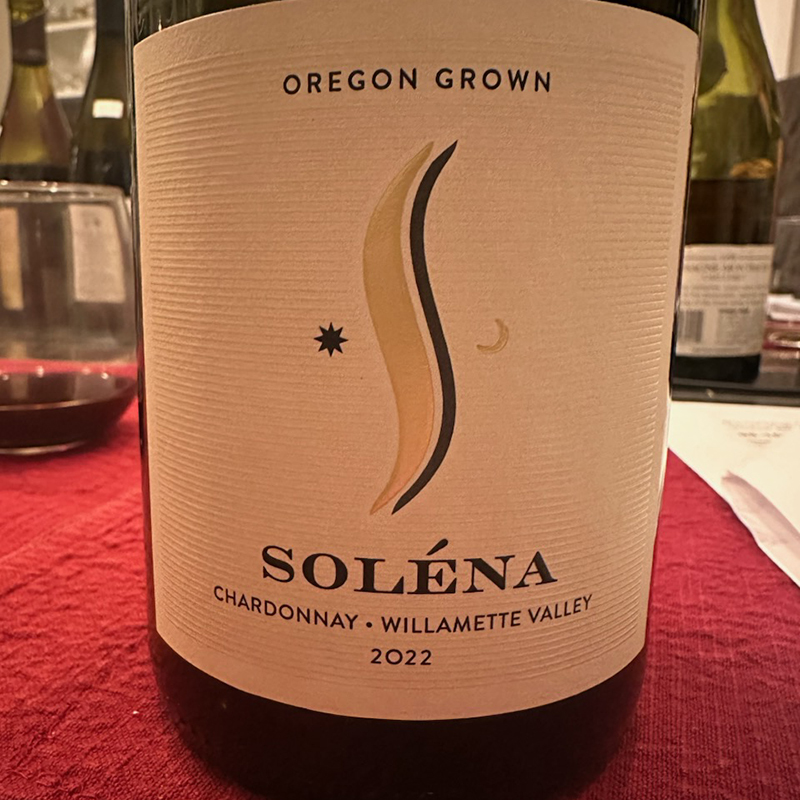
New World wines are generally higher in alcohol and named by grape variety, e.g., Merlot, Cabernet Sauvignon, Chardonnay. These wines tend to be experimental, technologically driven, and consumer-focused, highlighting the flavor of the varietal or blend. The style of winemaking often produces wines that are higher in alcohol, lower in acidity, full-bodied, fruit-forward, and often with noticeable oak.
Generally, the winemaking is much less regulated than the Old World style of winemaking, allowing for producers and winemakers to experiment with blends, ageing, different approaches to fermentation. Their use of modern technology includes stainless steel tanks, micro-oxygenation, and extensive oak treatment, and fosters a spirit of innovation.
New World style of wines typically refer to the winegrowing regions of the United States, Australia, South America, South Africa, New Zealand, Chile, Argentina.
Some of the wines we tried…
Sierra Foothills CA
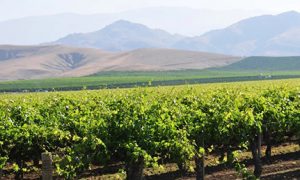
The region lies along the north-western foothills of the Sierra Nevada mountain range that separates California from the state of Nevada in the east. Vineyards run all the way along this 160-mile (260-km) stretch of mountains, usually at altitudes ranging from 1,000ft to 3,000ft (300–900m) above sea level. The vast, agricultural Central Valley is to the west of the foothills.
The discovery of gold near Sutter Mill in El Dorado County in 1848 led to the California Gold Rush, when a huge influx of settlers arrived in the state in search of fortune. Many were from southern Europe, and vineyards were quickly established by enterprising individuals to supply them with wine.
By the 1860s, the Sierra Foothills wine industry was booming. This dropped off in the depression that followed the end of the Gold Rush, and the beginning of Prohibition in 1920 killed off whatever was left.
Happily, many of the vineyards throughout the region were simply abandoned rather than ripped out, and vignerons exploring the viticultural potential of the Sierra Foothills in the 1970s were rewarded with the discovery of many old vines producing extremely low yields of high-quality Zinfandel grapes. The 140-year-old Grandpere vineyard in California Shenandoah Valley is said to be the oldest still in production in the state.
Grape growers have been drawn to the Sierra Foothills in the past 25 years by land prices that are considerably lower than in other grape-growing areas of California. Consumers inturn are attracted to wines that are more modestly priced than those from many coastal regions.
Terroir and grape varieties
This vast region has a huge array of terroirs. The warm, high-altitude terroir here is well suited to the production of big, ripe, red wines made from Zinfandel, Syrah and Italian varieties such as Barbera.
The rocky soils vary, with low fertility commonplace – making grape growing difficult but producing high-quality wines. The vines are forced to dig their roots deep into the ground to find water and nutrients, and the end result is often small yields of grapes with intense, concentrated flavors.
Climate
Warm, sunny days in the inland AVA are followed by much cooler nights as a result of alpine winds that blow down the slopes of the Sierra Nevada mountains in the evenings. This diurnal temperature variation, experienced across the whole region, allows grapes to ripen more slowly, leading to the development of rich, complex flavors and aromas that do not come at the expense of acidity.
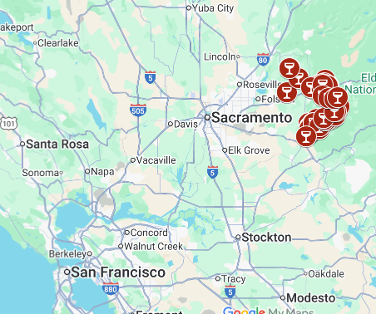
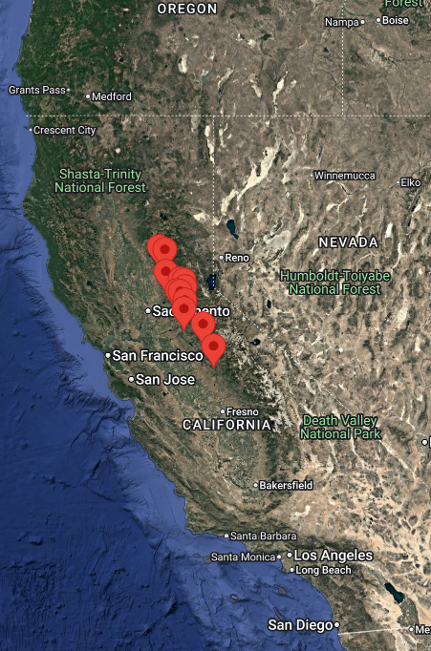
The Sierra Foothills is a vast, historic California wine region in the foothills of the Sierra Nevada mountains, known for its rugged, high-elevation terroir, Gold Rush history, and producing robust, intense wines, particularly Zinfandel, Syrah, and Barbera, with key areas like Amador and El Dorado Counties featuring unique microclimates and diverse grapes. It’s one of the largest AVAs in the US, offering a less commercialized, authentic experience with diverse soils and elevations producing everything from old-vine reds to Rhône whites.
Key Characteristics
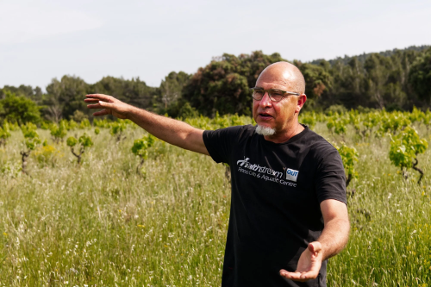
| Location: | Spans from Yosemite to Yuba County, east of Sacramento, in the Sierra Nevada foothills. |
|---|---|
| History: | Dates back to the Gold Rush era when European immigrants planted vines, with a resurgence in recent decades. |
| Terroir: | High altitude (1,500-3,000 ft), shallow, rocky soils, warm days, cool nights, and diverse microclimates |
| Grape Varieties: | Famous for powerful Zinfandel, Syrah, Barbera, and increasingly exploring Rhône and Italian varieties like Viognier, Sangiovese, and Grenache. |
| Notable Sub-Regions (AVAs): | Amador County (Shenandoah Valley, Fiddletown), El Dorado County, Calaveras County, Placer County, Nevada County, Yuba County. |
| Release: | Bottled in April 2024 |
Wine Style
- Often bold, ripe, and intense due to stressed vines in tough soils.
- Offers a contrast to more commercial wine regions, with many family-owned wineries and personalized tastings.
Wine Notes
The “Tête-à-Tête” 2016 Sierra Foothills red wine is a popular Rhône-style blend by Domaine de la Terre Rouge, known for its juicy, spicy profile with notes of plum, cherry, pepper, and smoky, meaty complexity from Grenache, Mourvèdre, and Syrah, designed for easy drinking with rich terroir character. It offers great current drinkability, with reviewers praising its balance of fruit, spice, good acidity, and texture, making it a versatile food wine.
Domaine de la Terre Rouge
At Terre Rouge and Easton we strive to manage our business and vineyards with as little impact on the environment as possible. Our vineyards are farmed sustainably and organically. The winery and tasting room facilities are solar-powered. The sun provides about 90% of our needed electrical power to run pumps, wine press, and cooling units. Our solar panels keep our wine cellar and customers cool and happy on hot summer days.
Crawford Beck Vineyard
As Oregon’s leading wine region, the Willamette Valley is over 100 miles long and spans up to 60 miles wide. Nestled between the Cascade Mountains and Coast Range, its 24,000 acres of vineyards are offered a beautiful cool growing climate, ideal for crafting delicate yet complex Pinot Noir.
Key Characteristics
| Producer: | Domaine de la Terre Rouge (founded by Bill Easton & Jane O'Riordan). |
|---|---|
| Style: | Mediterranean/Rhône-style Red Blend (GSM: Grenache, Mourvèdre, Syrah). 14.5% alcohol |
| Flavor Profile: | Deep boysenberry, plum, macerated cherry, black pepper, with earthy, smoky, gamey, and meaty notes. |
| Texture: | Full-bodied, mouth-filling, creamy, with good acidity and moderate tannins. |
| Terroir | Highlights the Sierra Foothills mountain terroir. |
| Drinking Window: | Intended as an "everyday bottle" for current enjoyment. |
| Why it's Popular | It's seen as a California equivalent to a solid Côtes-du-Rhône-Villages wine, offering complexity without being overly heavy. |
Tis 2015 has our typically deep boysenberry fruit aromatics, with smoky/meaty/gamey complex flavor components that emphasize our terroir, and a lengthy creamy texture. Aged for 16 months in a mixture of French barrels. This is a great California wine value !
90 Points – Wine Enthusiast:
“This meaty, savory wine made from Mourvèdre, Syrah and Grenache puts earth, mineral and wild berry flavors in the forefront, backing them with good acidity and moderate tannins for a snappy, mouth-cleansing texture.”
— Jim Gordon
Old World / Not Quite GSM Blend
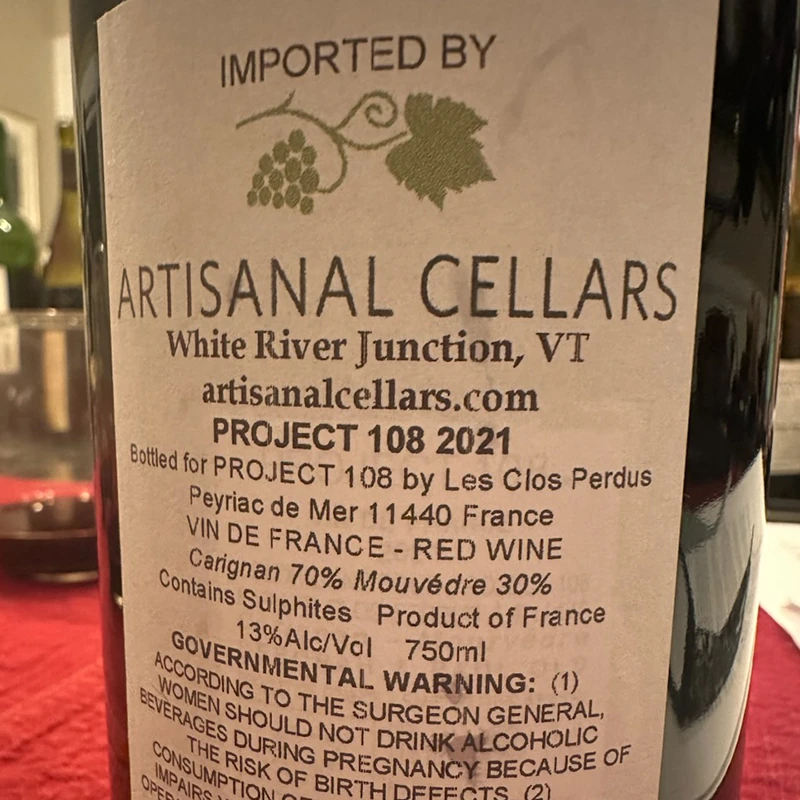
PROJECT 108 / les Clos Perdus
70% Carignan
30% Mourvedre
13% alcohol
An even blend of Carignan and Mourvèdre, this dry red comes from old vine parcels that had been previously abandoned. Much like the phoenix, these have been coaxed back to life. The Project 108 is the first wine from the producer that sees no additives, and has dark fruit and herbaceous aromas. Pair this medium bodied red with lamb burgers and harissa.
Hand-harvested Mourvèdre grown on the clay-limestone soils of Corbières Maritime. Majority whole-bunch, with a little destemmed fruit, macerated in stainless steel with fairly regular plunges for five days before basket pressing back to its tank. Racked once before bottling with no additions.
“In 2018 we started a small negociant offshoot of Les Clos Perdus called Project 108. The number 108 has strong spiritual, astrological and mathematical connections. The weight of the number encourages me to stay true to its aim of producing clean enjoyable natural wines without any additives, finning or filtration. The information gained from the project also informs me as a winemaker on how best to improve and construct the Les Clos Perdus wines. The learning curve continues.”
Paul Old / Project 108
My Picking Criteria Has Begun To Change.
“Instead of waiting for a picking window when the levels of sugars, acids and phenolic maturity are harmonious and satisfying. I’m now realizing certain vineyards at lower sugar levels achieve a high-pitched tension in the fruit which is both delicate and complex. Reminding me of my walks in the Pyrenees where tasting a wild strawberry or raspberry can send your head into a giddy space beyond anything commercial. The resulting wines lose a level of fruit concentration but gain in transparency, freshness and drinkability. I’m hoping that you recognize and enjoy these qualities when the 2023 and 2024 wines reach the market.”
Paul Old / Project 108
| Producer: | Weingut Dr. Fischer (owned by Martin Foradori Hofstätter and Nik Weis). |
|---|---|
| Region: | Mosel/Saar, Germany |
| Style: | Dry (Trocken) white wine |
| Characteristics: | High, "electric" acidity with bright lemon, lime, and slate-driven mineral notes. |
| Pairing: | Ideal for seafood, spicy, or fatty dishes like pork belly. |
| Alcohol | Approximately 11-12% |
Commentary from a distributor
The annual Red release from Project 108 is Paul Old’s zero-zero project, a workshop allowing experimentation beyond his ‘vision-driven’ Les Clos Perdus: the 20-hectare biodynamic domaine he founded in Corbières with Hugo Stewart 20 years ago.
Paul makes two 108 wines each year: a different red – dependent on what parcel he’s hoping to experiment with – and a macerated Muscat from a breathtaking patch of old vines high in the hills of Tautavel, named for the nearby Queribous castle.
We love this annual release, always a brilliant opportunity to see where Paul’s decisions – or lack of – have led him.
In the cellar, Paul’s rule for 108 is: “leave it” – an evolving experiment, the choice of vessels, maceration times and ageing can change each year, but the idea remains pure: adding nothing, doing as little as possible for the best result.
Working biodynamically since the early 2000’s, Paul’s approach has developed alongside climate change. Now no-till, prioritizing soil health and diversity, increasing aerobic bacteria. For Paul, it’s all about the soil: reducing the use of sulfur and copper in the vines (he hasn’t sprayed copper in four years) swapping in compost teas and algae treatments.
Last year we spoke at length with Paul about soil health and farming, an edited excerpt of that conversation is republished below the info about the new releases. It’s always a joy to speak with Paul, offering great insight into his process and decisions as a grower and winemaker.
His Methodology
Q:
With the hydric stress and the way temperatures have been going down there, have you had to adjust with your approach in the vines?
A:
“Absolutely. We stopped working the soil a few years ago, so we’ve got lots of grass growing – which helps create airflow in the soil as each blade of grass is creating channels. Stopping working the soil hugely reduces that soil temperature, and of course, you maintain much more of whatever water you’ve been blessed with; there’s much less evaporation.
“Primarily, it’s all about microbes in the soil, you need to get that root system established and protected. In recent years I think people have really realised it’s not just soil: it’s like the Amazon down there. There’s so much happening, and if it’s not happening, it can’t sufficiently feed the vine.
“We’ve actually been doing a bit of work with Professor Elaine Ingham – one of the world’s foremost soil biologists – really looking at how to best develop that balance of bacteria and microbe populations. The key is to encourage aerobic bacteria and funghi in the soil. There’s a huge difference between aerobic and anaerobic (no-oxygen) microorganisms. To put it simply, Aerobic bacteria are the good guys, anaerobic bacteria are really the breeding ground of disease for the plant.
“Twice a year I go out with this very potent compost tea, we pump it full of air and it begins to ferment like crazy, the temperature rockets up, and you’re really brewing microorganisms. That gets sprayed everywhere for this very high population of aerobic fungi, bacteria, and microorganisms.
“Now we’re almost entirely down to exclusively using compost teas and natural bio-stimulants for the vines – lots of algae-based treatments. We’ve gotten to a point where we’re using tiny, tiny doses of sulphur and haven’t sprayed copper in three years. Keeping the soil copper-free is vital. Increasing all that accessible nitrogen in the soil for the plants has become very, very important as we’ve faced a few consecutive years of hydric stress.”
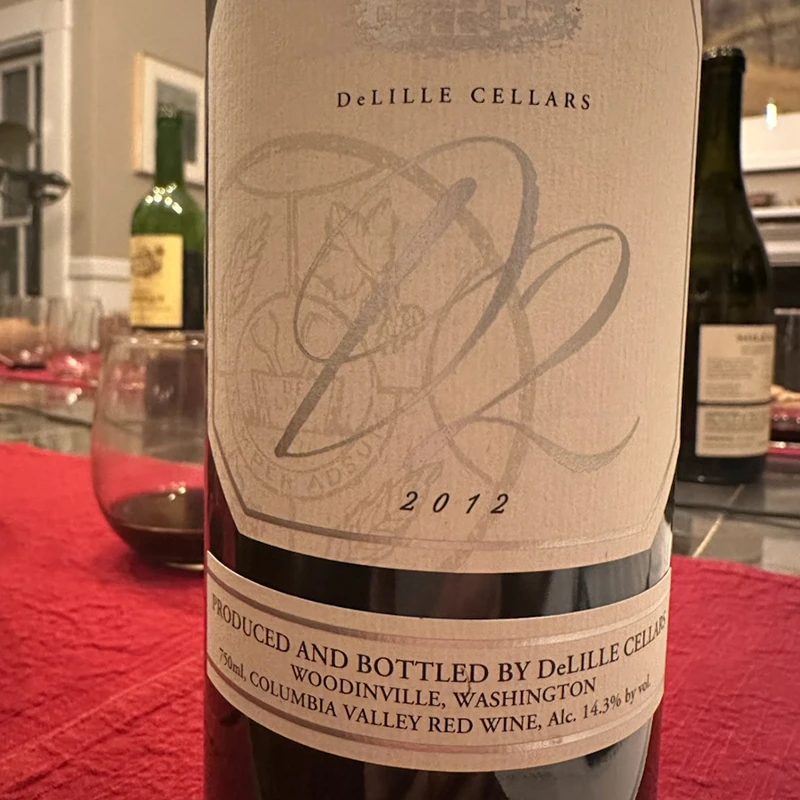
DeLille Cellars D2
DeLille Cellars D2 is a premier Bordeaux-style blend from Washington’s Columbia Valley.
2022 D2 Red Blend
Columbia Valley AVA
The 2022 D2 is elegant and plush, showcasing the high quality of this stellar vintage. The initial aromas of black currant, wild strawberry, cherry cola, and hints of mocha leap from the glass, lingering with each sip. On the palate, the tannins are refined and broad, creating a luscious mouthfeel lifted by the mouthwatering acidity and warm oak flavors. There is a savory throughline that brilliantly complements the bright red and dark fruit medley. The transition from the juicy mid-palate to the lengthy finish is seamless. Drink with confidence now after a hefty decant or cellar for 12+ years.
Varietal
56% Merlot
32% Cabernet Sauvignon
6% Malbec
4% Petit Verdot
2% Cabernet Franc
D2 is sourced from over a dozen Columbia Valley Vineyards, including Red Willow, Harrison Hill, Ciel du Cheval, Klipsun, Boushey, DuBrul, Upchurch and Grand Ciel.
Rated 93 points Wine Enthusiast / 92 Points from Vinous
The 2022 DeLille D2 from the Columbia Valley is a refined and expressive Bordeaux-style blend, led by 56% Merlot alongside 32% Cabernet Sauvignon, 6% Malbec, 4% Petit Verdot, and 2% Cabernet Franc.
Deep garnet in color, the nose unfolds with layers of black cherry, ripe plum, and cassis, complemented by hints of cedar, tobacco leaf, and crushed graphite. The palate is supple yet structured, with juicy red and blue fruit weaving through nuances of dark cocoa, dried sage, and a whisper of baking spice. Silky tannins create a seamless texture, leading into a finish marked by polished acidity and lingering notes of espresso and blackcurrant.
Crafted from Premier Washington Vineyards
DeLille Cellars is regarded as a top American producer of Bordeaux-style blends, showcasing a tradition of quality and excellence over its 30-year history. DeLille remains a principal influence in establishing Washington State as a premier viticultural region, with a focus on the Red Mountain AVA and other prestigious vineyard sites throughout the Columbia Valley.
Founded on the concept of crafting world-class wine from Washington State, DeLille Cellars was founded by Chris Upchurch, Jay A. Soloff, Greg Lill, and his father Charles Lill. The four founders believed that all good blends transcend the sum of their individual parts, and this principle and company philosophy of “always seeking” guides the winery’s commitment to constant improvement, continuous discovery in the cellar, and ultimately the creation of exceptional wines and experiences.
DeLille was one of the first five wineries in Washington to receive Robert Parker’s 5-star excellence rating. The winery’s legacy of consistent quality and acclaim includes over 900 individual 90+ ratings from top international critics, numerous placements on Top 100 lists, and five Wine & Spirits Top 100 Wineries of the World accolades (2017-2020 & 2022).
Scoring Wine
98-100
Classic
The Pinnacle of quality
94-97
Superb
A great achievement
90-93
Excellent
Highly recommended
7-89
Very Good
Often good value; well recommended
83-86
Good
Suitable for everyday consumption, often good value
Cheese Pairings

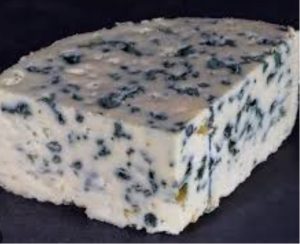
Roquefort

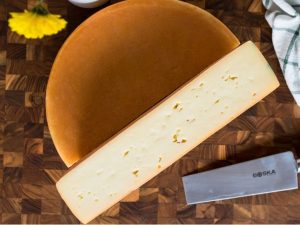
Raclette

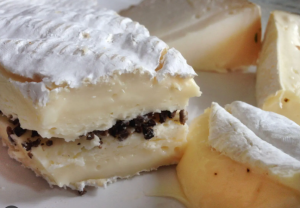
Truffle Brie

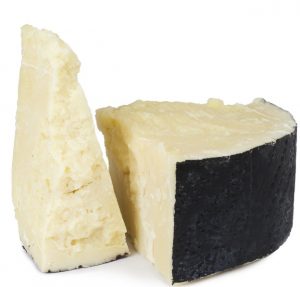
Pecorino
Food Pairings
Chicken Marsala
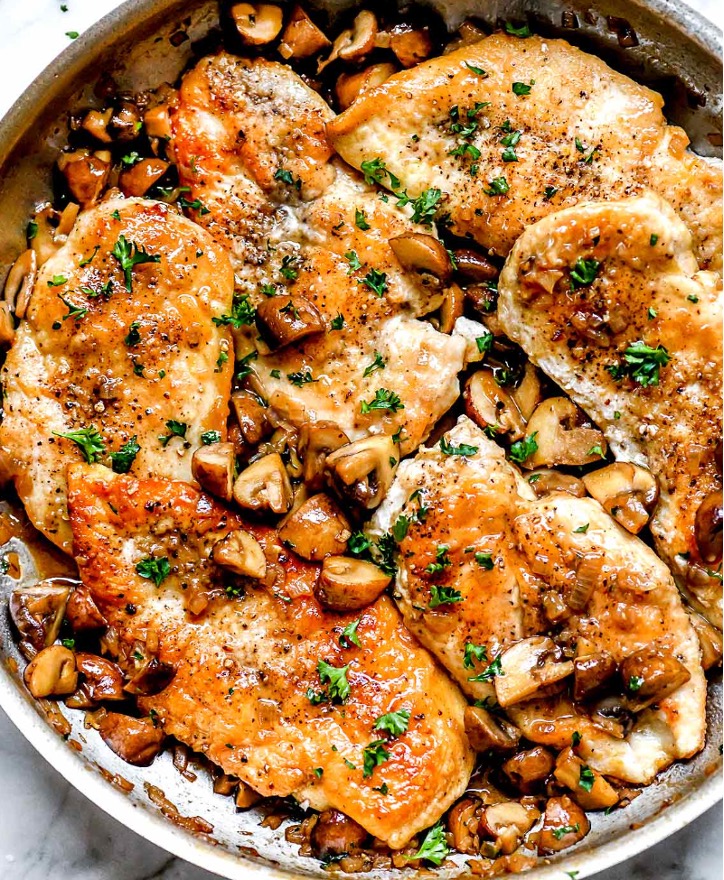
Pound boneless chicken breasts fairly thin and drizzle them olive oil, herbs, salt and pepper. Dredge them in seasoned flour and pan fry in butter and olive oil until golden brown on both sides. Set aside.
In the same pan, render your aromatics – shallots, mushrooms, a bit of garlic – and then deglaze with ½ c dry Marsala wine. When the alcohol has cooked off, add in a cup of chicken stock and bring to a simmer for 5-10 minutes to allow the flavors to meld.
Add a bit of cream and a pat of butter; if you prefer your sauce a bit thicker, add a roue and cook thoroughly before seasoning to taste.
Serve chicken over pasta or rice, with a generous napping of the Marsala cream sauce, and a generous sprinkling of fresh parsley.