


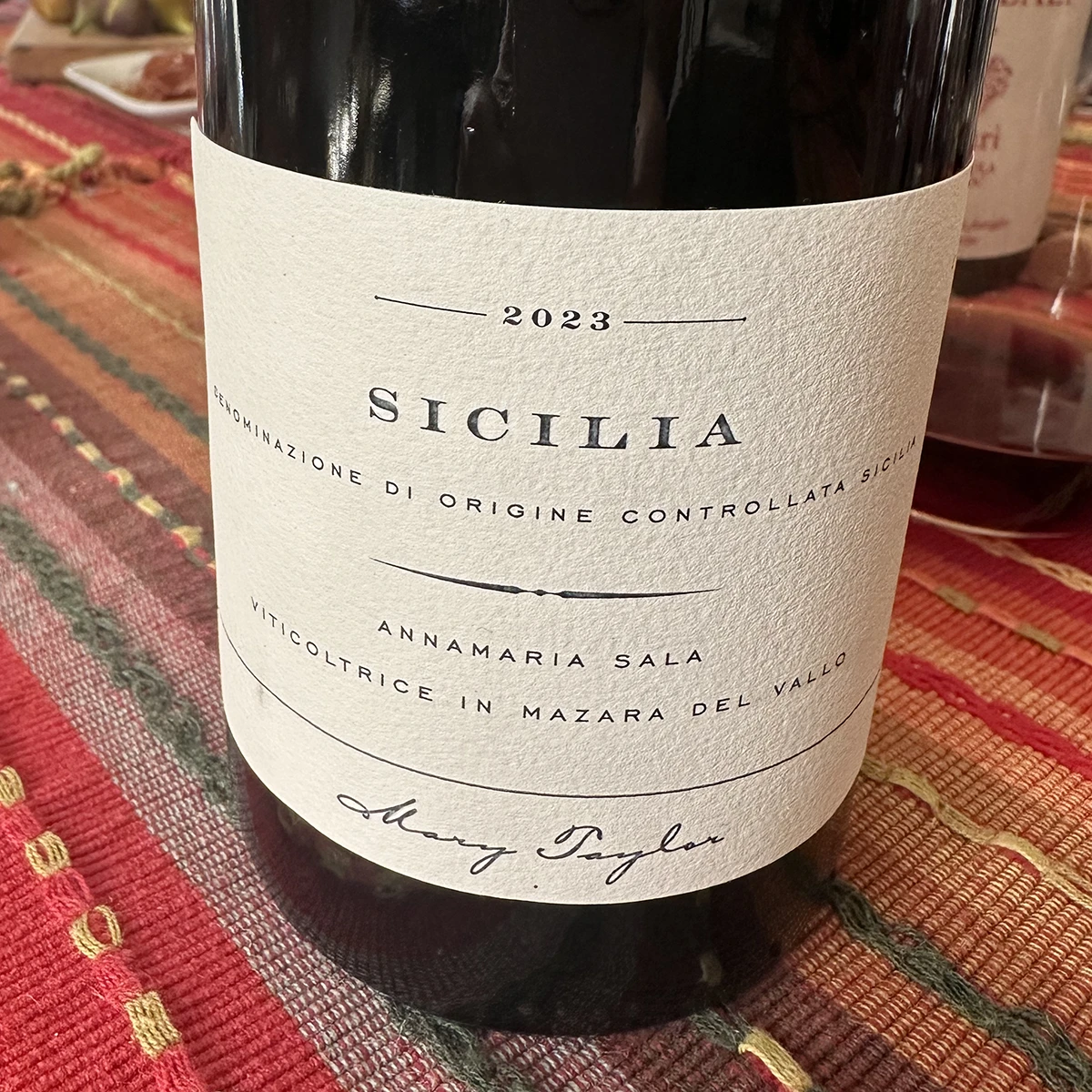
Today over 30% of the vineyards are certified organic.
SICILY: Perfect Wine Growing Conditions
The Southern Italian island has been one of the most sought-after sun-dappled patches of land—conveniently located at the crossroads of Europe and Africa—for millennia. Everyone from the Greeks, Romans, Phoenicians, Normans, Spaniards and more wanted, and for a time, possessed a piece of it. Their influence can be felt everywhere, from the food, to architecture, to ruins, and yes, the wine.
While organized viticulture has existed in Sicily since at least the eighth century B.C. when Greeks introduced widespread vine cultivation to the island, in many ways, Sicily’s current viticultural scene is more New World than Old. “Sicily has been selling tons of bulk wine everywhere in Italy and Europe for decades,” says Italian wine expert Filippo Bartolotta. “Those wines were bulk wines or blending wines and the request was for big and bold. The late 90’s were all about jammy, extractive and round, so Sicily found its spot in the market with ‘international style wines.’ Today, Sicily is bottling its own wines and wine growers found out that a lot of the indigenous varieties in Sicily are actually light bodied.”
During much of the 20th century, largely due to economic challenges, wine growing was approached as a commodity crop project intended for bulk wine, instead of a cultural point of pride, or a way to express this unique island’s shockingly diverse array of microclimates. As the economy’s stranglehold loosened, producers began to explore the more serious side of wine-growing and production—single estate bottling, wild instead of commercial yeast, biodynamic and organic farming.
Arguably one of the most significant developments came in 2012, with the establishment of the Consorzio di Tutela Vini DOC Sicilia, which was created with the sole goal of unifying, protecting and promoting Sicilian wine on the world stage.
Tying up Sicily into a neat, marketable package is no small task: Sicily is the largest island in the Mediterranean Sea, covering 15,820 square miles, 242,163 acres of which is under vine. To put that in perspective, that’s the about the same number of acres under vine in all of South Africa, and all of Germany. It’s three times the size of the acres of grapes farmed in New Zealand. Harvest, across the island, often takes 100 days to complete from start to finish. There are about 7,863 winegrowers and 504 winemakers (independent, co-op and negociant) across the island. That presents serious challenges to the average wine lover who just wants to know—at least broadly—what to expect when seeking out a Sicilian wine.
The Perfect Climate for Organic Wine Growing
But what really makes Sicily both stand out from the increasingly crowded field of progressive, cutting-edge regions, and make its broad identity more bite-sized and digestible, is its climate—low rainfall, arid, easy-breezy, Mediterranean. Sicily, writ large, seems designed for organic agriculture, bristling with old and unsung varietals suitable for low-intervention winemaking. “The dry climate and the consistently windy conditions make it a perfect place for organic grape production,” says Bartolotta. “It happens to be fashionable right now, but it is also easier to do here than many other wine-growing regions. And the human influence, from Phoenicians to the Etruscans, to the Greeks on the viticulture here, means that the biodiversity of the grapes in Sicily is unparalleled. Winemakers these days, are more likely than ever to let those grapes speak clearly, without the influence of oak.”
The Evolution of Wine Growing in Sicily
But it took several decades of evolution to go from cranking out bulk wine to make terroir-driven single estate bottles of grapes that sommeliers adore and the average wine-lover may not know how to pronounce. “In the 1980s, a lot of international varieties were planted,” Bartolotta explains. “Powerful Sicilian families were bringing in famous enologists to figure out what would work here. And at that point, the world was accustomed to drinking Cabernet Sauvignon, Chardonnay and Syrah. They wanted aromas and colors they were used to.”
In the early aughts, winemakers and growers began experimenting in earnest with ancient varieties that had historically thrived in Sicily, but were being left behind. Modern winemaking, Bartolotta says, really began then.
The Modern Era in Sicily & Rediscovery of Native Grapes
“That’s when you saw producers dig into the terroir, literally, and begin to explore how different native grapes expressed themselves differently, from site to site, and region to region,” he says. “That’s also when the industry elsewhere began to see what Sicily was capable of.”
Indeed, more than 70 varieties are grown on the island, with a greater focus on indigenous as opposed to international grapes with each passing year, most winemakers favor wild yeast instead of commercial, and most of the fermenting and aging of grapes happens in stainless steel, instead of wood or amphora. What you taste in the glass is the land of Sicily, not the hand of the winemaker.
Several grapes have risen to prominence in Sicily, including whites like grillo, catarratto, inzolia, and reds like: nerello mascalese, frappato and nero d’Avola, though internationals like chardonnay and syrah also thrive there.
The two grapes that seem to hold the most promise for both the international market and happen to reflect Sicily’s terroir and its producers’ paradigm are grillo and nero d’Avola.
“With grillo, you get a crunchy and vertical white,” Bartolotta says. “Nero d’Avola can be a structured wine with aging potential, but without oak, it’s an easy-drinking and fun red.”
Two producers in particular embody the diversity and symphony of flavor available in Sicily. At Riofavara, perched on the Southern tip of Sicily, the Padova family has been farming grapes for almost a century. In 1993, they began making their own wine. Over lunch with winemaker Massimo Padova, and his daughter Clementina, we discussed their incredible dedication to both the terroir and the wine.
“It is all connected,” Massimo explains, of his decision to farm organically, use wild yeast, harvest by hand. “The climate is changing, and I see it as a responsibility to do my part to care for the earth and explore ancient varieties that have been abandoned by most vine-growers, even here. Some of these grapes, like Orizi, can grow in desert conditions, complete drought, and still produce bright flavors. The white calcareous soils we have in our vineyards also help give them energy, juiciness and retain acidity.”
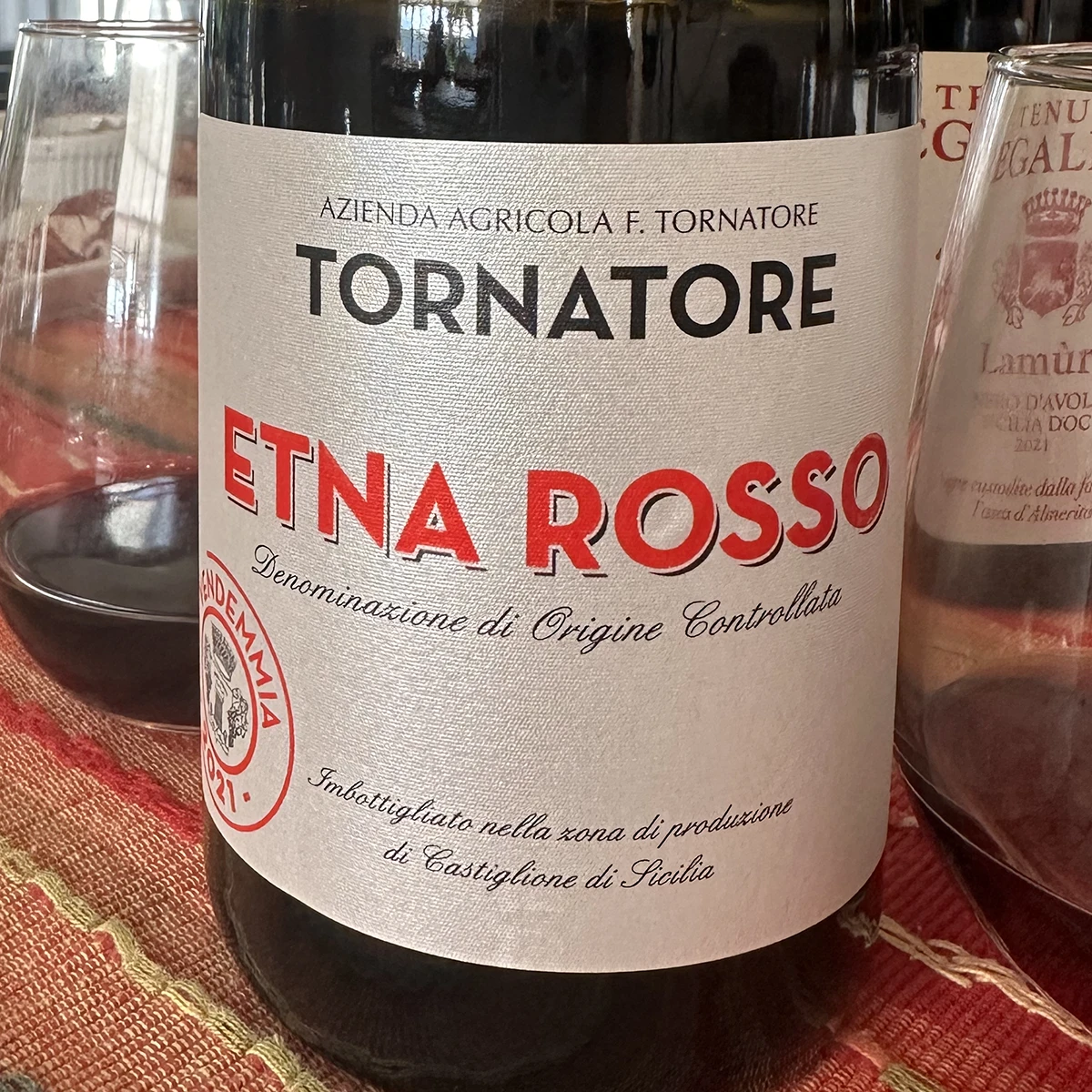
Sicily’s volcanic history, centered on Mount Etna, and its tectonic position on the Eurasian and African plates have created diverse geological landscapes vital for winemaking. Volcanic soils, rich in minerals, give unique characteristics to wines, particularly in eastern Sicily, while western areas benefit from limestone and clay soils. The island’s varied topography, from volcanic slopes to coastal plains, combined with a Mediterranean climate, supports a wide range of indigenous and foreign grape varieties, resulting in a complex and diverse wine scene.
Sicily History of Winemaking
Ancient Origins & Early Influences
- Prehistoric: Evidence suggests wine production in Sicily dates back to 4000 BC.
- Phoenicians & Greeks (c. 1100 – 800 BC): These civilizations brought advanced viticulture techniques and new grape varieties to the island.
- Romans (c. 241 BC – 440 AD): The Romans further refined techniques and expanded the wine trade, recognizing the value of Sicily’s volcanic soils for growing grapes.
Medieval & Modern Eras
Arab Influence:
While less detailed in sources, Arab rule introduced further cultural and agricultural developments that contributed to Sicily’s diverse winemaking landscape.
Norman & Spanish Rule (15th-18th Centuries):
The Normans established vineyard estates, while the Spanish introduced grape varieties like Nero d’Avola and implemented quality control measures.
Marsala’s Golden Age (Late 18th Century):
Englishman John Woodhouse helped establish recognition for the island’s fortified Marsala wine.
A widespread vine pest devastated much of the island’s wine production, similar to the rest of Europe.
Some of the Wines We Looked At
Planeta
“It is a new way of thinking about the journey through Sicily; after Menfi, Vittoria, then Noto, then Etna, then Milazzo. Not a random route, but one strongly linked to the variety of countryside, to the winds, to the character of the people and thus of their wine…” –Diego Planeta
Planeta encompasses six distinct wine estates across Sicily, each one inspired and constructed in harmony with its surroundings and dedicated to its terroir.
For five centuries and seventeen generations, the Planeta family has been involved in the Sicilian agricultural sector. Their work on the island has contributed to the revitalization of Sicilian winemaking, now one of the most dynamic and sought-after viticultural regions in the world. Planeta’s journey begins at Sambuca di Sicilia, on the estate owned by the family since the 1600s. Here on Italy’s most enchanting island, three enthusiastic young Sicilians, Alessio, Francesca and Santi Planeta, under the guidance of Diego Planeta, began their winemaking venture in the mid-1980s. Subsequent years were spent matching the extraordinarily diverse Sicilian soils with both indigenous and international varieties. Years of careful research paid off when the Planeta wines were met with immediate critical acclaim upon introduction in the U.S. in the late 1990s.
Planeta’s six boutique wineries include: Ulmo at Sambuca di Sicilia, Dispensa at Menfi, Dorilli at Vittoria, Buonivini at Noto, Sciara Nuova on Etna at Castiglione di Sicilia, and the newest addition, La Baronia at Capo Milazzo. Each vineyard site is carefully cultivated with grapes that best compliment the local terroir.
Santi, daughter of Diego Planeta, leads the international marketing and sales component of the wineries. Alessio, the head winemaker and viticulturist since 1996, has been instrumental in identifying the best grape varieties for the diverse Sicilian soils. Santi leads as head of sales for the European market and spearheads the marketing initiatives for the wineries. Alessio, Francesca and Santi Planeta established the company and their comprehensive winemaking approach, but the whole family is with them, rooted in Sicilian agriculture for generations. They are a family and a company of ambitious aims, following strict principles of quality, a rigorous respect for the environment and social responsibility.
La Segreta 2023 Bianco 12.5%
Pale yellow with beautiful sea green reflections; on the nose aromas of white peaches, not too ripe apricots, Sicilian citrus fruits, white melons, tropical fruits, chestnut honey, freshly cut hay. Fresh acidity and excellent persistence, thanks to a slim and balanced texture. The sensations of fruit and salinity return to the palate, together with a pleasant freshness.
Tasting notes: The nose opens with springtime aromas of fresh tennis balls, wet slate, lemon, orange zest and salt, which all receive a lift from a sudden burst of Mediterranean spices and flowers. The orange note is sweeter and fuller on the palate, but more salt and slate and Mediterranean herbs act as a sophisticated anchor.
A fruity, juicy and mellow white showing notes of warm lemons, herbs and mild spices on the nose, following through to a medium body with fresh acidity. Vivid and agreeable.
Colosi
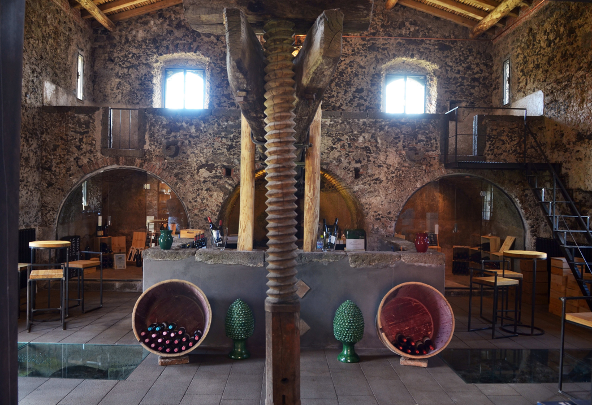
On Salina, island in the volcanic Aeolian archipelago, amidst the fragrances of the Mediterranean scrub and the breath-taking views, the Colosi family cultivates vineyards on characteristic terraces overlooking the sea and produces unique wines that reflect shimmering light, wind, sun and color.
With its 10 hectares of vineyards between Capo Faro and Porri, Colosi is one of the most representative producers of the island. The area is considered to be one of the best because of its exposure and the chemical-physical characteristics of the volcanic soil. The vines were planted on terraces, restoring the old dry walls, and they include grape varieties typical of Mediterranean island wine-making: Corinto Nero, Nerello Cappuccio, Nerello Mascalese, Inzolia, Catarratto and Malvasia. Malvasia is without doubt the most important vine variety of the island and of the Colosi company.
Colosi’s wine-making cellar is literally immersed among the vines, and is partially buried in order to comply with the strict regulations on the protection of the territory and landscape of the Aeolian archipelago. This location allows the temperature to be kept constant, ideal for the optimal preservation of the wines.
Regaleali
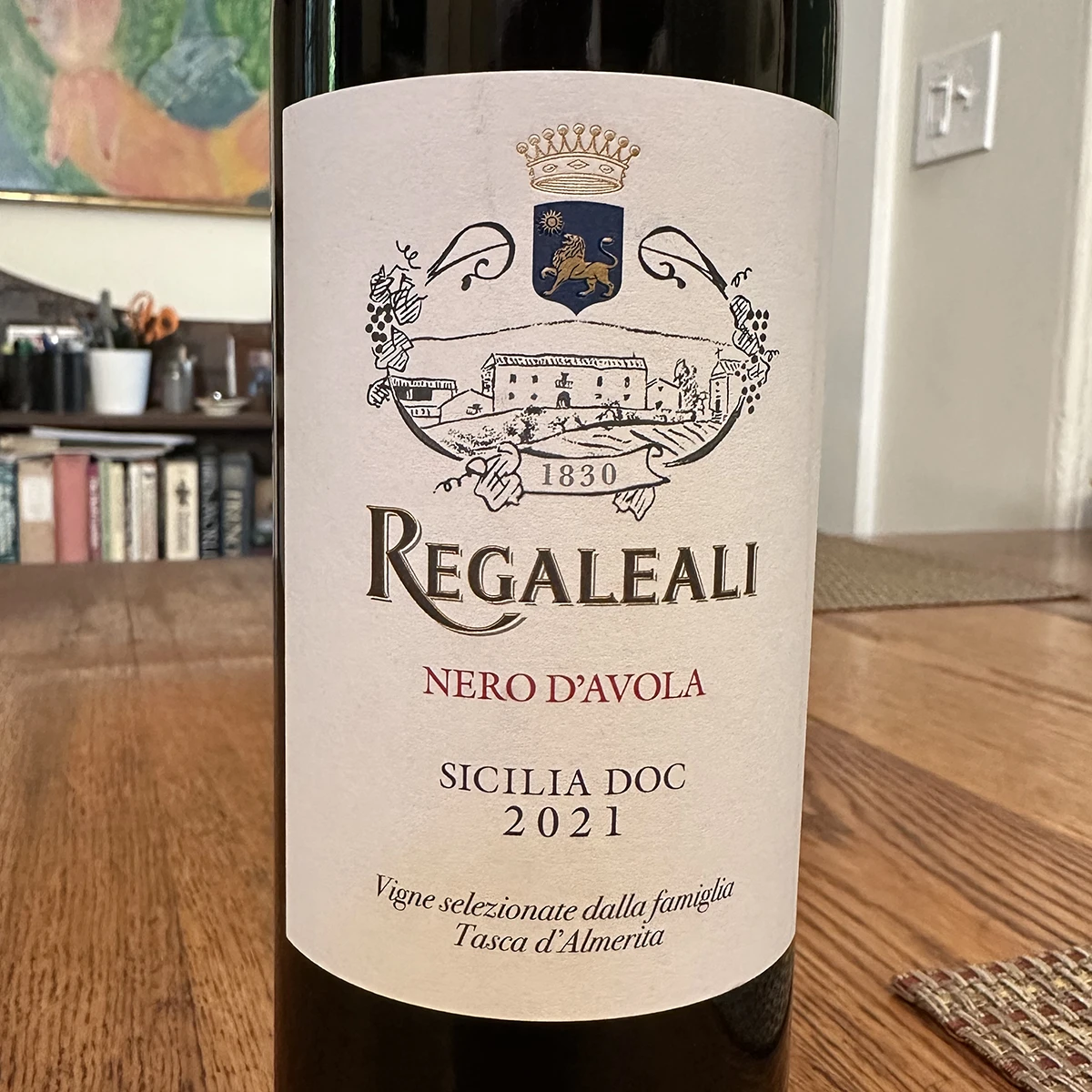
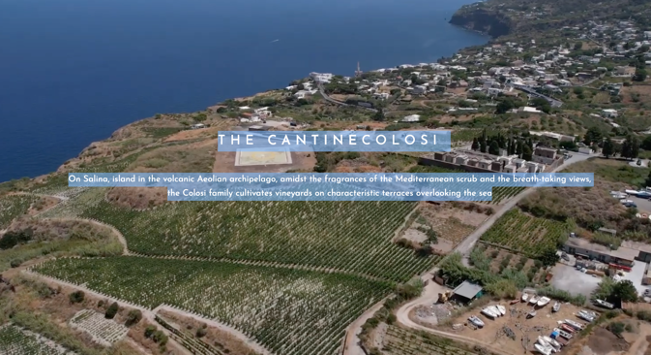
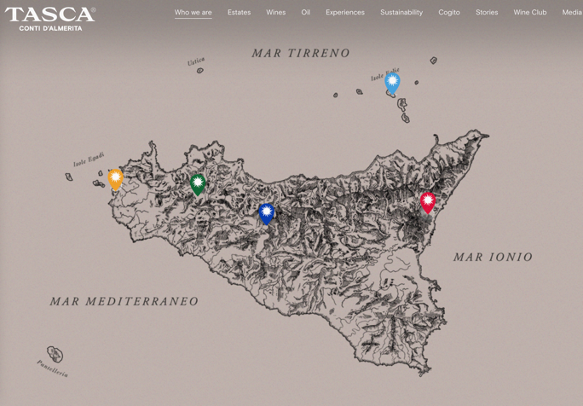
At the Regaleali mother estate, 550 hectares in the heart of the Sicily owned by the Tasca d’Almerita family since 1830, over the years 4 more Estates have been added: Capofaro, in Salina, Tascante on Etna, the historic estate Whitaker in the ancient island of Mozia and Sallier de La Tour, in Monreale
Each estate has its own strong personality and tells of a Sicily that is always different. Next to the vineyards grow olive trees, wheat fields and almond trees. In the vegetable gardens, in the pastures, in the orchards, men and women work who they help to keep pace with the seasons and produce the best fruits.
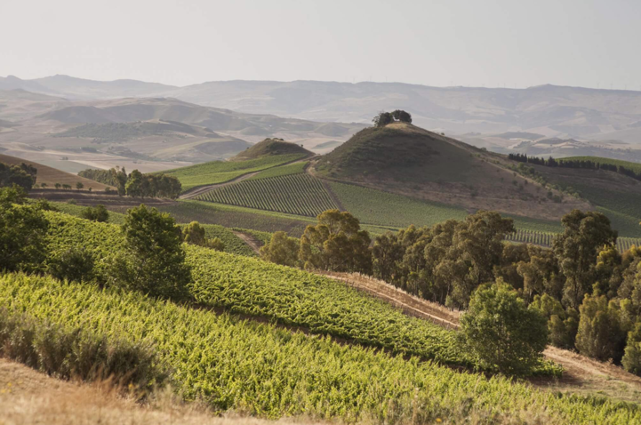
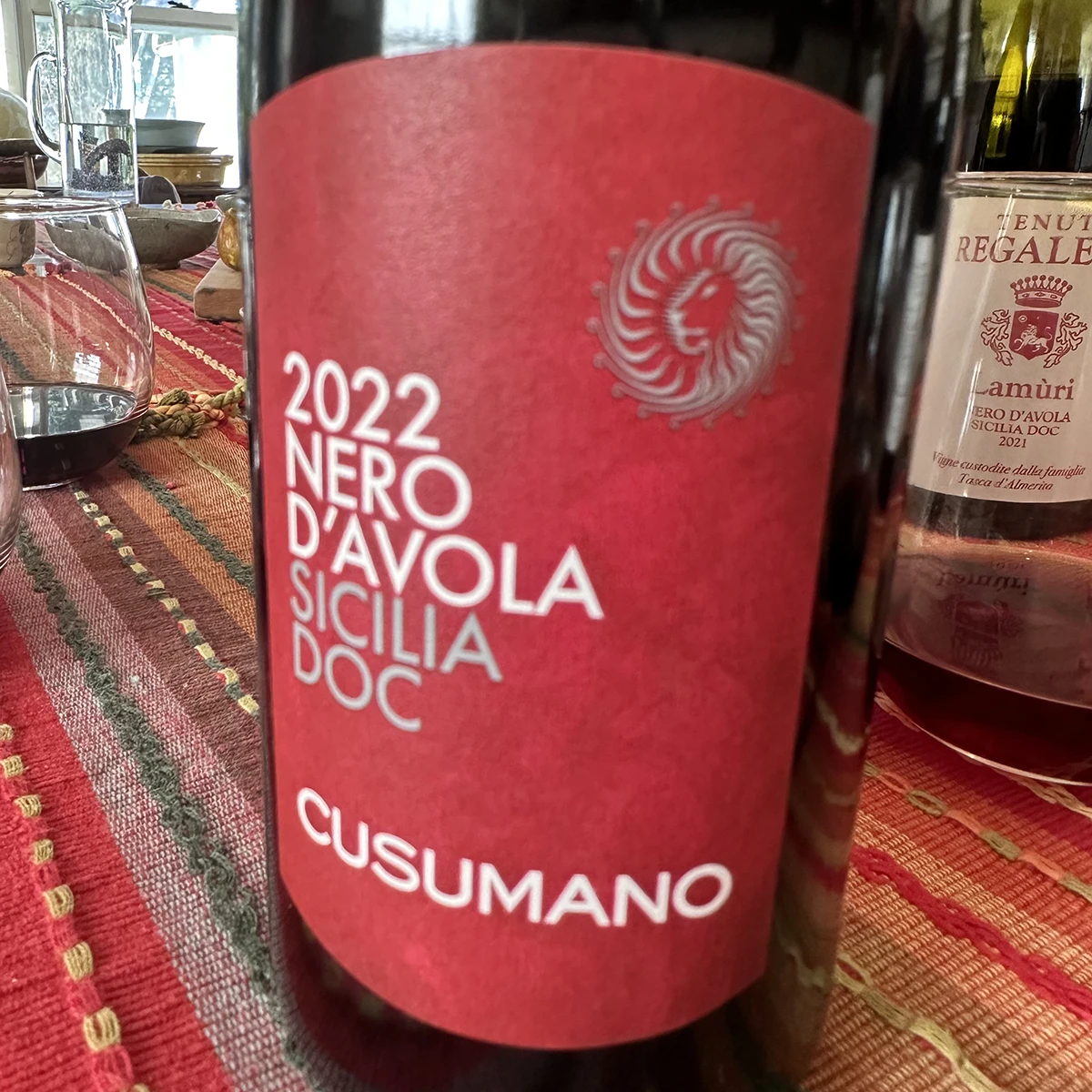
From the Regaleali Estate, the Tasca winery, focusing on Nero d’Avola grapes (black grape variety also called ‘Calabrese’ not because it comes from Calabria, but as it derives from the ancient Calabrese family originating in the area of Modica – Avola), produces this Ruby red wine, which has an exceptional aroma that brings to mind harmonious fruity notes well blended with typical Mediterranean spices. On the palate, an intense flavor of ripe fruit comes along with a pleasantly tannic background.
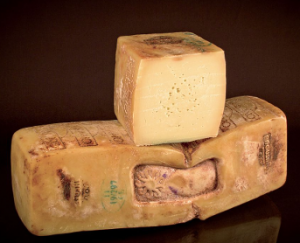
Ragusano
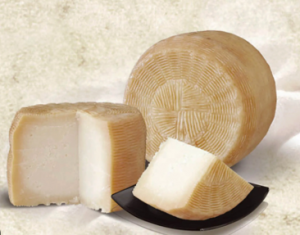
Pecorino Siciliano
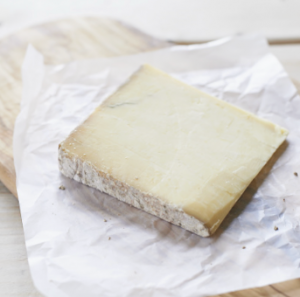
Hafod Cheddar
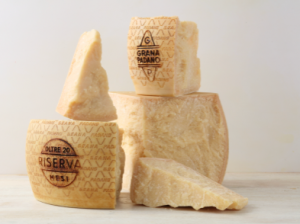
Grana Padano
Food Pairings
Pasta alla Norma with Eggplant
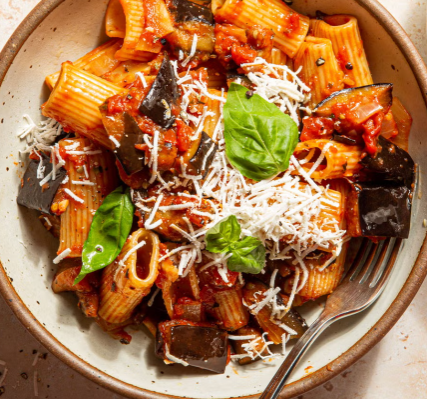
This is a dish that celebrates Italian pasta – Rigatoni is ideal — traditional tomato sauce with lots of garlic and herbs, and eggplant. The key to this dish is cooking the eggplant low and slow to preserve its dense, rich texture, and the addition of Ricotta Insalata, that wonderful salty, crumbly cheese. If you can’t find the Ricotta Insalata, in a pinch a blend of a good sheep’s milk feta and Pecorino Romano will do nicely.
Select Japanese eggplant or young eggplant for a dense texture that will soak up the Italian olive oil.