
Williamette
0:00
/
0:00
WILLIAMETTE WINES EPISODE
The buzz surrounding Oregon wines continues to build, as today’s wines astonish on their own merits, consistently rating highly among wine experts and the wine drinking public. Over fifty years ago, the pioneers of Oregon winemaking planted vines and produced a Pinot Noir that stood glass to glass with its Burgundian relative, amazing the wine world with a 10th place in the 1979 Wine Olympics blind tasting competition held in Paris. That wine, David Lett’s Eyrie Vineyards 1975 South Block Reserve Pinot Noir, opened the door to a parallel existence with Burgundian winemaking for years, but now Oregon winemakers are charting their own course, defining their terroir, planting the best clones, and discovering the best vineyard and winemaking practices that stamp their wines as unique. Attracting French Burgundy producers since the mid-1980’s, today’s Oregon wine scene encompasses 1,200 vineyards and 900 wineries, quite an achievement for a mere 50 years in existence.
Williamette Pinot Noir Wines
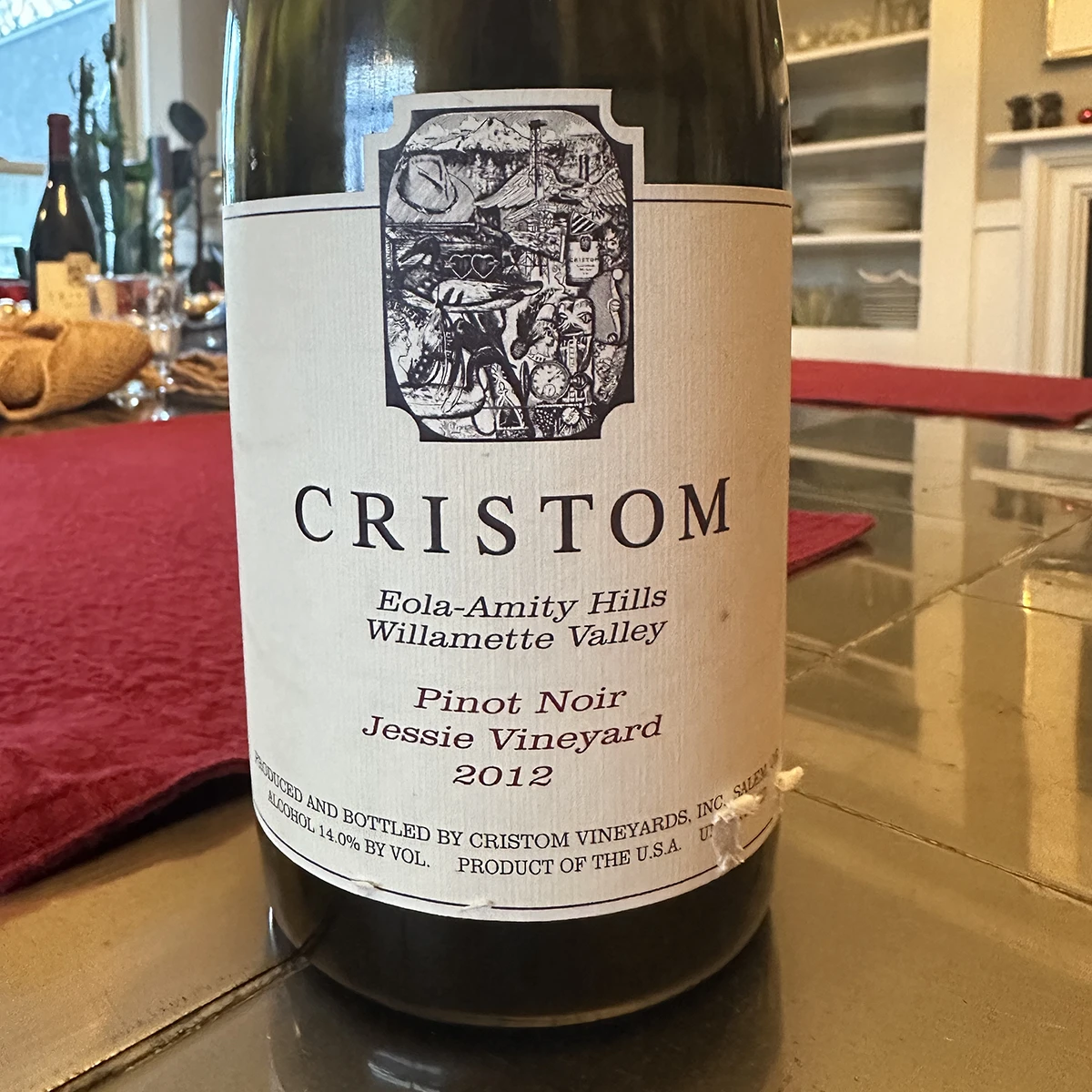
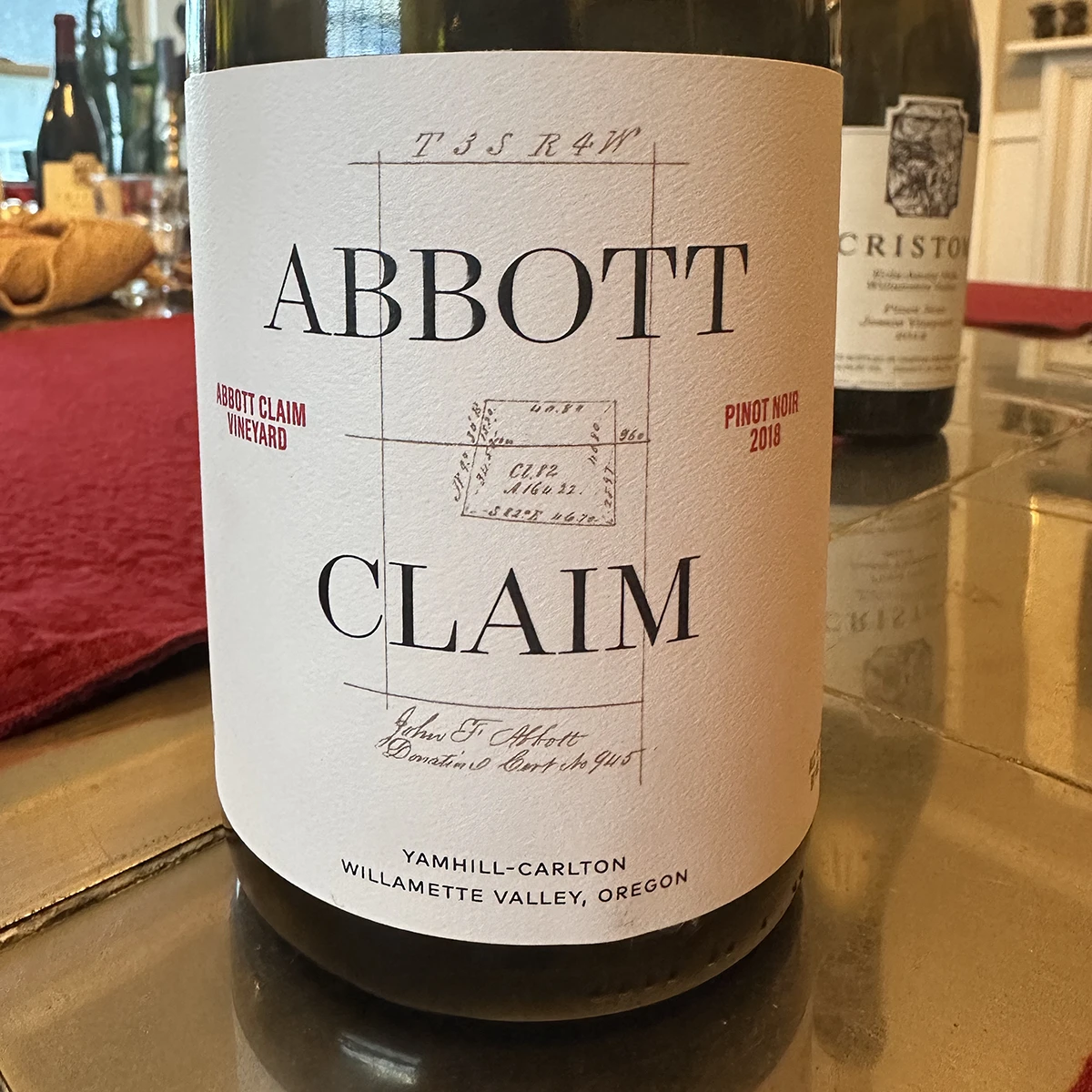
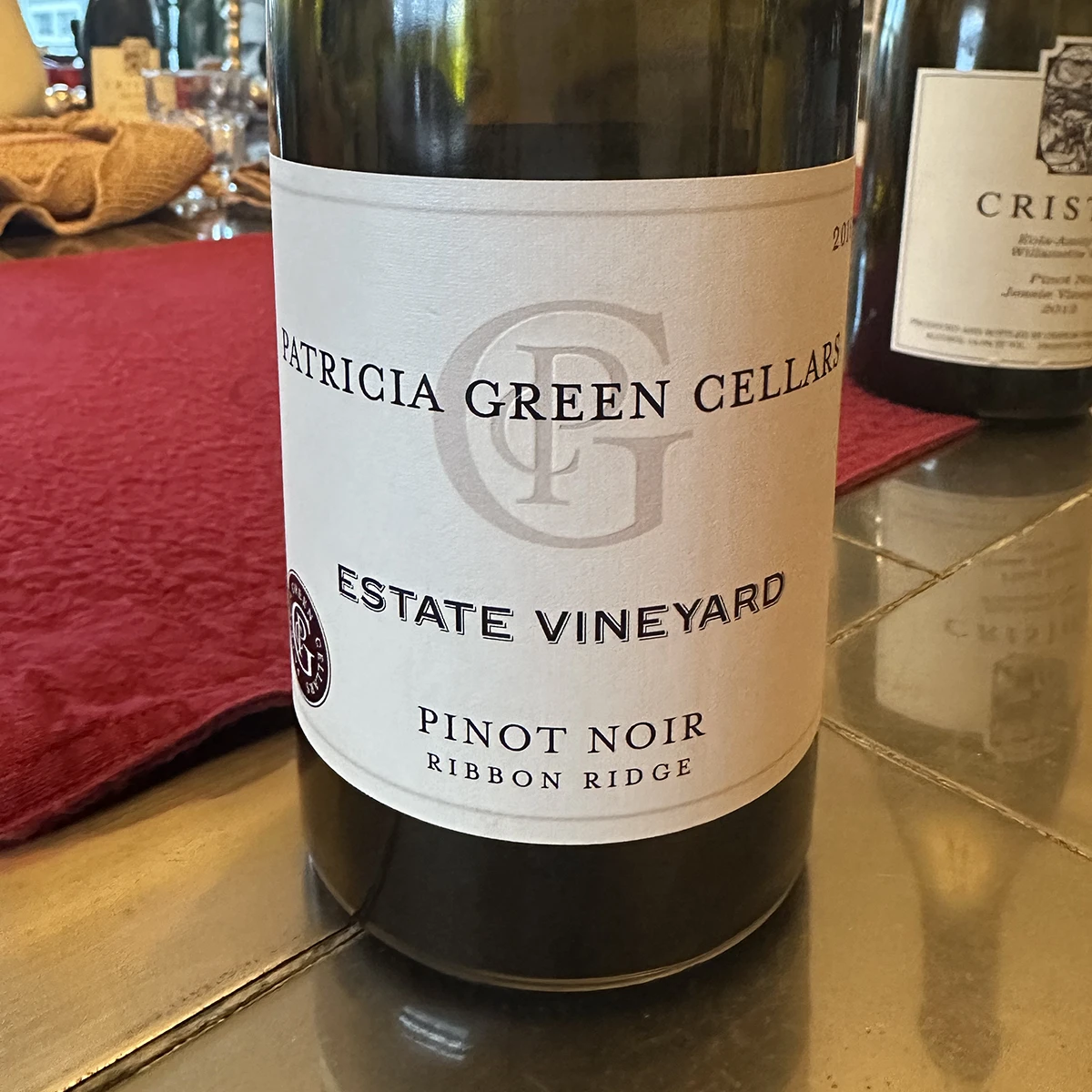
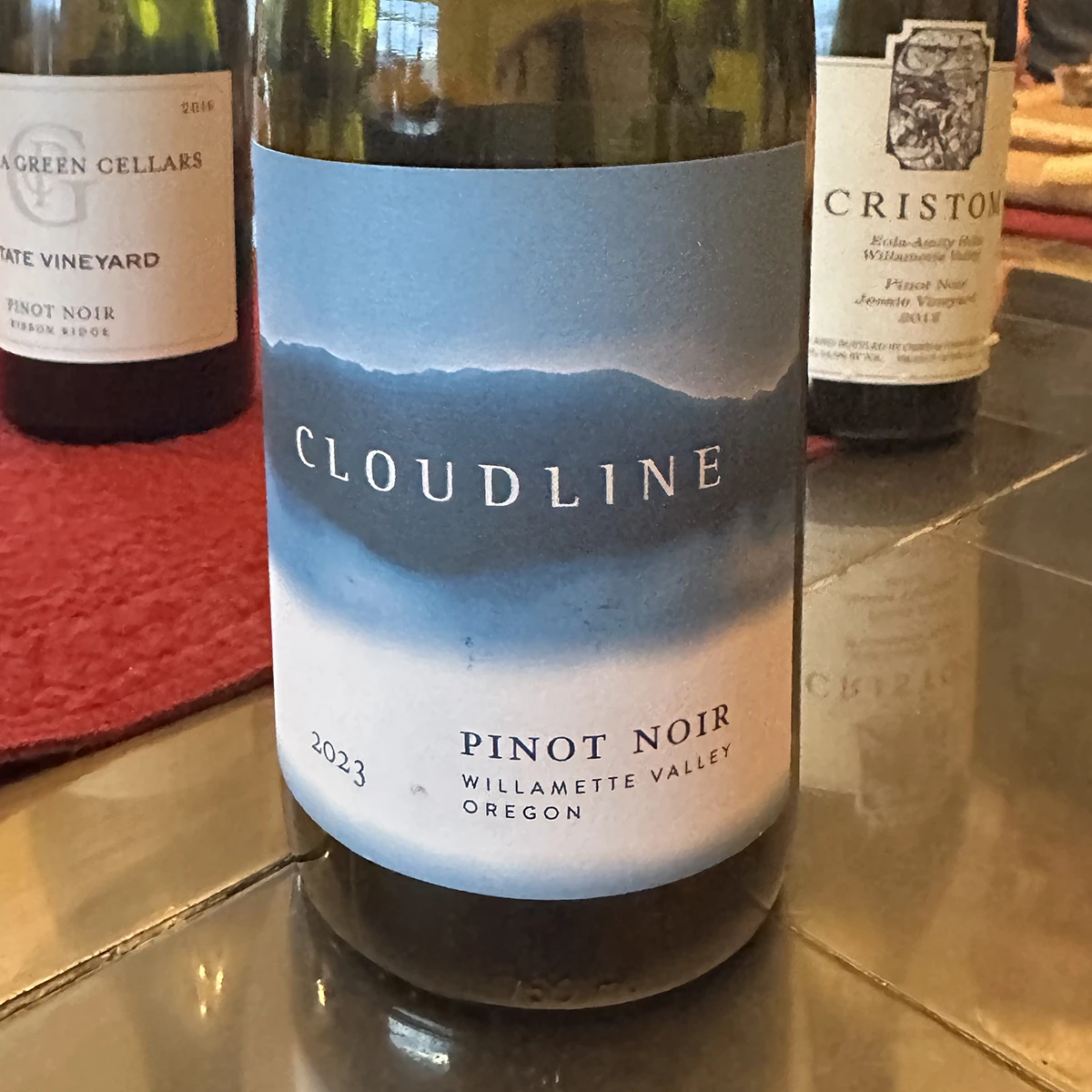
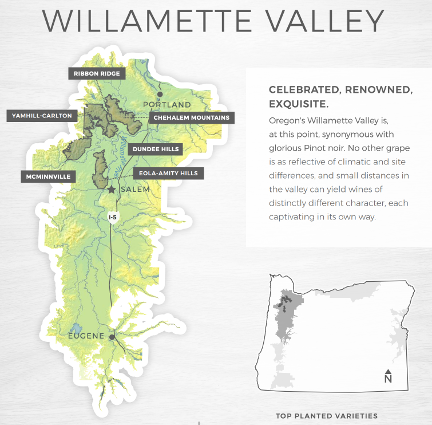
Willamette Valley wines have a unique expression, which comes from a layer cake of geology, with a jumble of ancient soils, where cataclysmic floods, glaciers and volcanoes carved out the bedrock of today’s vineyards. Small scale wineries took root here, with a determined focus on sustainable viticulture. Climate coddles the wine grapes, with cool weather to preserve its character, diurnal temperature swings that impart lively acidity, and fifteen hours of summer sunshine to slowly ripen and concentrate the fruit. The hallmark of these Pinot Noir wines are red fruit flavors, high acidity, and an earthy structure that is a shared trait, but many microclimates impart uniquely different nuances. There are nine nested AVAs within the Willamette Valley, and each has a distinctive style due to the soil types and wind conditions.

Willamette Valley wines have a unique expression, which comes from a layer cake of geology, with a jumble of ancient soils, where cataclysmic floods, glaciers and volcanoes carved out the bedrock of today’s vineyards. Small scale wineries took root here, with a determined focus on sustainable viticulture. Climate coddles the wine grapes, with cool weather to preserve its character, diurnal temperature swings that impart lively acidity, and fifteen hours of summer sunshine to slowly ripen and concentrate the fruit. The hallmark of these Pinot Noir wines are red fruit flavors, high acidity, and an earthy structure that is a shared trait, but many microclimates impart uniquely different nuances. There are nine nested AVAs within the Willamette Valley, and each has a distinctive style due to the soil types and wind conditions.
History and viticulture
The history of Oregon’s Willamette Valley Wine Region is a story of climate, soil, craft and culture. All these elements converge in a “perfect storm” for world-class Pinot Noir. Oregon is the third largest wine producer in the United States behind California and Washington. Oregon’s Willamette Valley is the state’s largest wine region. The Willamette Valley’s leading varietal is Pinot Noir, but producers are captivating audiences with Pinot Gris, Pinot Blanc, Chardonnay, Riesling, among some 72 other varietals.
Shaped by millions of years of plate subduction and volcanic activity, Oregon’s Willamette Valley is one of the premier Pinot noir producing areas in the world. The Willamette Valley AVA was established in 1983, with the initial vineyard plantings beginning in 1966. This 100-mile long, 60-mile wide valley stretches between the Columbia River in the north, to just south of Eugene with the Oregon Coast Range in the west and the Cascade Mountains in the East. Due to the protection of the mountains on eastern and western boundaries, the Willamette Valley is a cooler climate region that provides for a long, gentle growing season, perfect for deliciously complex Pinot noir.
Pinot Noir wine makes up 88% of winegrapes grown in the Willamette Valley. Over 12,560 acres of Pinot Noir are planted in Oregon with a value over 53.8 million dollars in 2011 (USDA 2012).
Soil types
The Willamette Valley has a variety of soil types, including volcanic, sedimentary, and loess soils:
- Jory soils: These basaltic soils are rich in clay, iron, and nutrients, and are highly sought after for Pinot Noir production.
- Loess soils: These windblown soils are silty loam and have good drainage.
- Willakenzie soils: These marine sediments are deep and well-drained, and are known for their dark fruit characteristics and tannins.
- Ice Age floods: The Missoula Floods left up to 200 feet of fertile sediment on the Willamette Valley floor and hillsides.
Columbia River Basalt Flow: This lava flow covered the northern Willamette Valley 15 million years ago.
The Willamette Valley has nine nested AVAs, each with its own distinctive style due to the soil types and wind conditions.
Parent materials
The parent materials for these soils include volcanic bedrock, marine sediments, and Quaternary eolian or windblown silt (loess).
Geological events
The Willamette Valley’s geology is the result of a number of geological events, including:
Ice Age floods: The Missoula Floods left up to 200 feet of fertile sediment on the Willamette Valley floor and hillsides.
Columbia River Basalt Flow: This lava flow covered the northern Willamette Valley 15 million years ago.
The Willamette Valley has nine nested AVAs, each with its own distinctive style due to the soil types and wind conditions.
The three major soil series groups that are used for growing Pinot Noir winegrapes in the Willamette Valley of Oregon are the Jory, the Willakenzie, and the Laurelwood soil series (Burns 2012). These soils develop on different bedrock and parent material and vary slightly in their age and horizon development (Moore 2002). Parent material for the soil includes material added over time like Quaternary eolian or windblown silt (loess). The Laurelwood soil series has loess overlying volcanic bedrock parent material while the Jory soil series has volcanic parent material and the Willakenzie soil series has marine sediment parent material. The winemakers in the Willamette Valley have noticed variation in the flavor of their Pinot Noir wine produced from vines on each of these soil groups. The hypothesis is that the physical and chemical differences in the soil can be compared to the grape juice and wine chemistry to determine the contribution of soil to the terroir of this region. Using Pinot Noir, a natural laboratory exists in the Willamette Valley, one where if wine-making techniques are kept constant when comparing soil, grape juice, and wine from each winery then the main variation between the wines is the soil type on which the grapes are grown (Burns 2012). In general, wine-makers determined that the tannin, fruit flavors, and mouthfeel were so different between soil types that a cause for these differences was desired. Experimental constants include the macro-climate, grape varietal (Pinot Noir) and winemaking techniques (same winemaker for the three different soil types) (Burns 2012). Different types of bedrock and parent material have created three different groups of soils that affect the flavor of wine in the Willamette Valley (Moore 2005). Therefore, the vineyards selected for this study are located throughout the Willamette Valley on various types of geologic bedrock and parent material. The geomorphic surfaces above approximately 90 meters (300 feet) elevation, or the valley sides, are the result of the uplift of volcanic rock or marine sediments. The lower elevations are mostly Missoula Flood sediments or alluvial terraces. In some instances, loess was accumulated to the slopes of volcanic rock, creating a unique soil that has both volcanic rock and weathered loess as parent material. The weathered loess, in this case, dominates the soil properties.
Cheese Pairings
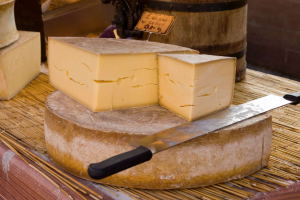
Gruyere
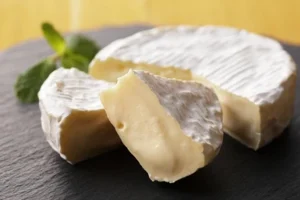
Camembert
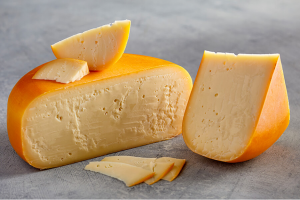
Gouda
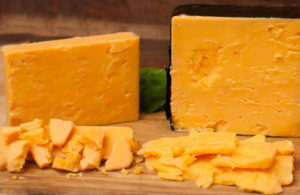
Sharp Cheddar
Food Pairings
Quail with Herbed Pork Sausage, lemon preserves and herbs

Here, the grill brings everything to the party: Quail grilled over applewood embers is sublime. The quail has a bit of herbed pork sausage slipped inside to add fat and flavor; each bird is brushed with a marinade of olive oil, lemon marmalade, lemon juice, fresh herbs, salt and pepper. When plating, add a slice of fresh lemon and drizzle more of the juice over each quail. Serve with potatoes sauteed over high heat in duck fat, and you have a thing of beauty.