




History
Australian winemaking began in 1788 with the First Fleet’s vine cuttings, but it was the arrival of European settlers with their expertise, notably James Busby in the 1830s, and the post-WWII migration of Italian and other families that truly established the industry. Early growth focused on fortified wines for the British Empire, followed by an era of innovation in the mid-20th century with pioneers like Max Schubert creating Penfolds Grange. The late 20th century saw a boom in fruit-forward table wines, leading to Australia’s global reputation for quality and value, which continues to evolve with a focus on regional distinction and freshness.
Early Beginnings & Fortified Wines (1788-Early 1900s)
1788:
Vine cuttings from the Cape of Good Hope were planted by Governor Phillip with the First Fleet in New South Wales, marking the start of Australian viticulture.
1820s:
Australian-made wine became available domestically, with pioneers like Gregory Blaxland exporting it to England.
1830s:
James Busby, “the father of Australian wine,” brought a significant collection of vine cuttings from Europe, including Shiraz and Grenache.
Mid-19th Century:
Many vineyards, particularly in the Barossa Valley, focused on producing fortified wines for the British market.
Late 19th Century:
The industry expanded across all states except the Northern Territory, facing devastation from the phylloxera pest in the 1870s.
Innovation & Revival (Mid-20th Century)
Post-WWII:
European migrants with winemaking knowledge significantly contributed to the industry’s growth.
1950s-1960s:
Max Schubert developed Penfolds Grange Hermitage, a groundbreaking innovation in premium wine. This was a pivotal shift from the previous focus on fortified wines.
Global Boom & Modern Evolution (1970s-Present)
1970s:
A cultural shift saw table wine consumption surpass fortified wine, as the Australian drinking culture evolved beyond its colonial roots.
1980s:
Australia experienced a surge in its global export market with vibrant, fruit-forward table wines.
Late 1990s-Early 2000s:
Intense, concentrated examples of Shiraz and other red blends became a hallmark of Australian fine wine.
Present:
The Australian wine industry continues to evolve, with a growing focus on freshness, natural acidity, premium regional wines, and sustainable practices, reflecting its resilience and innovative spirit.
Comparison to French Wines
Early Australian winemakers faced many difficulties, particularly due to the unfamiliar Australian climate. But because it is also warm, dry, and Mediterranean overall, making Australia ideal for wine production, they eventually achieved considerable success. “At the 1873 Vienna Exhibition the French judges, tasting blind, praised some wines from Victoria, but withdrew in protest when the provenance of the wine was revealed, on the grounds that wines of that quality must clearly be French.” Australian wines continued to win high honors in French competitions. A Victorian Syrah (also called Shiraz) competing in the 1878 Paris Exhibition was likened to Château Margaux and “its taste completed its trinity of perfection.” One Australian wine won a gold medal “first class” at the 1882 Bordeaux International Exhibition and another won a gold medal “against the world” at the 1889 Paris International Exhibition.[15] That was all before the destructive effects on the industry of the phylloxera epidemic.
Australia has rapidly become a world leader in both the quantity and quality of wines it produces. For example, Australian wine exports to the US rose from 578,000 cases in 1990 to 20,000,000 cases in 2004 and in 2000 it exported more wine than France to the UK for the first time in history.
The industry has at times suffered from its own productivity. In the late 1980s, governments sponsored growers to pull out their vines when Australia was a net importer of wine. Low grape prices in 2005 and 2006 led to calls for another sponsored vine pull. Cleanskin wines were introduced into Australia during the 1960s as a means to combat oversupply and poor sales.
During the Black Summer bushfires of 2019 to 2020, winemaking was adversely affected in production areas struck by fire or smoke, which affects flavor through smoke taint. The Adelaide Hills wine region was particularly badly hit, losing up to 30% of its vineyards.
Primary Grape Varieties
Shiraz:
Often considered Australia’s flagship red grape, particularly strong in the Barossa Valley and Hunter Valley.
Cabernet Sauvignon:
Especially renowned from the Coonawarra and Margaret River regions, known for their structured and age-worthy wines.
Riesling:
The Clare Valley is famous for its bone-dry, citrusy, and floral Rieslings.
Chardonnay:
Prominent from Margaret River and Tasmania, showcasing the potential for both oaked and unoaked styles.
Pinot Noir:
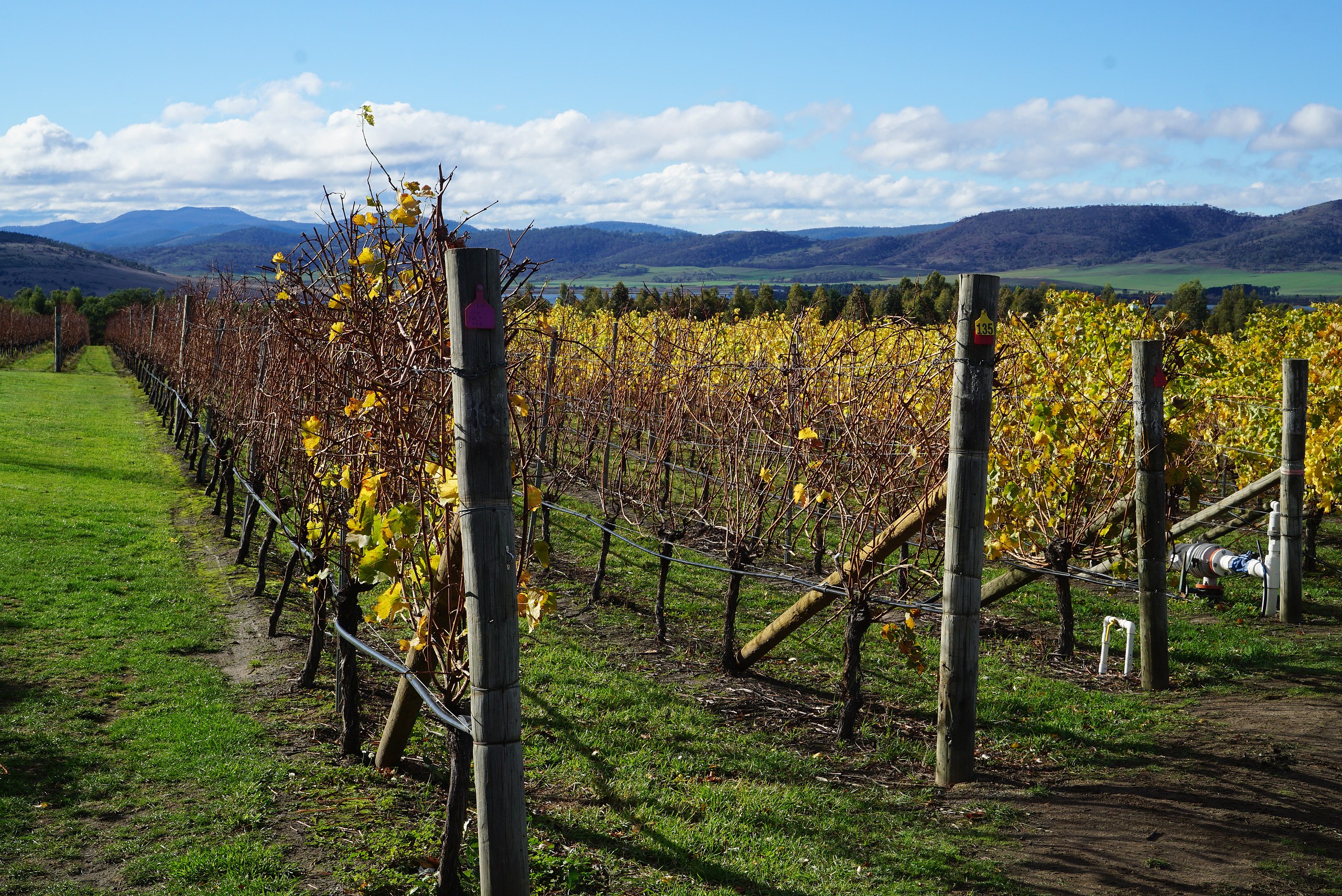
Excellent examples can be found in Tasmania and the Yarra Valley, with producers like William Downie gaining acclaim.
The country has no native grapes, and Vitis vinifera varieties were introduced from Europe and South Africa in the late 18th and early 19th centuries. The most widely cultivated grape variety in Australia is Shiraz.
About 130 different grape varieties are used by commercial winemakers in Australia. Major grape varieties are Shiraz, Pinot noir, Cabernet Sauvignon,[22] Merlot, Chardonnay,[22] Sauvignon blanc, Sémillon, and Riesling. Over recent years many winemakers have been rediscovering so-called “alternative varieties” other than those listed above. Many varieties from France, Italy and Spain, for example Petit Verdot, Pinot grigio, Sangiovese, Tempranillo, Nebbiolo, Malbec, Barbera, Arneis, Fiano (grape) and Viognier are becoming more common. Wines from many other varieties are being produced.
Australians have innovated in canopy management and other viticultural and in wine-making techniques, and they have a general attitude toward their work that sets them apart from producers in Europe. Australian winemakers travel the wine world as highly skilled seasonal workers, relocating to the northern hemisphere during the off-season at home. They are an important resource in the globalization of wine and wine critic Matt Kramer notes that “the most powerful influence in wine today” comes from Australia.
GSM Blend: Grenache, Shiraz, Mourvedre:
GSM is a name commonly used for a red wine consisting of a blend of Grenache, Shiraz (Syrah), and Mourvèdre. Blends where Shiraz is the main component are sometimes referred to instead as SGM. This blend originated from those used in some Southern Rhône wines, including Châteauneuf-du-Pape, though it is also found in South Australia, California (particularly Paso Robles, originating with Tablas Creek Vineyard), and Washington (Columbia Valley); smaller production exists in Argentina and South Africa. A very similar blend is traditional to Priorat (in Catalonia, Spain), still based on Garnacha (Grenache), but adding Mazuelo (Carignan), Syrah, and Merlot (same GS, different M’s).
Grenache is the lightest of the three grapes, producing a pale red juice with soft berry scents and a bit of spiciness. As a blending component, it contributes alcohol, warmth and fruitiness without added tannins. Shiraz can contribute full-bodied, fleshy flavors of black fruits and pepper. It adds color, backbone and tannins and provides the sense of balance such blends require. Mourvèdre contributes elegance, structure and acidity to the blend, producing flavors of sweet plums, roasted game and hints of tobacco.
Terrior:
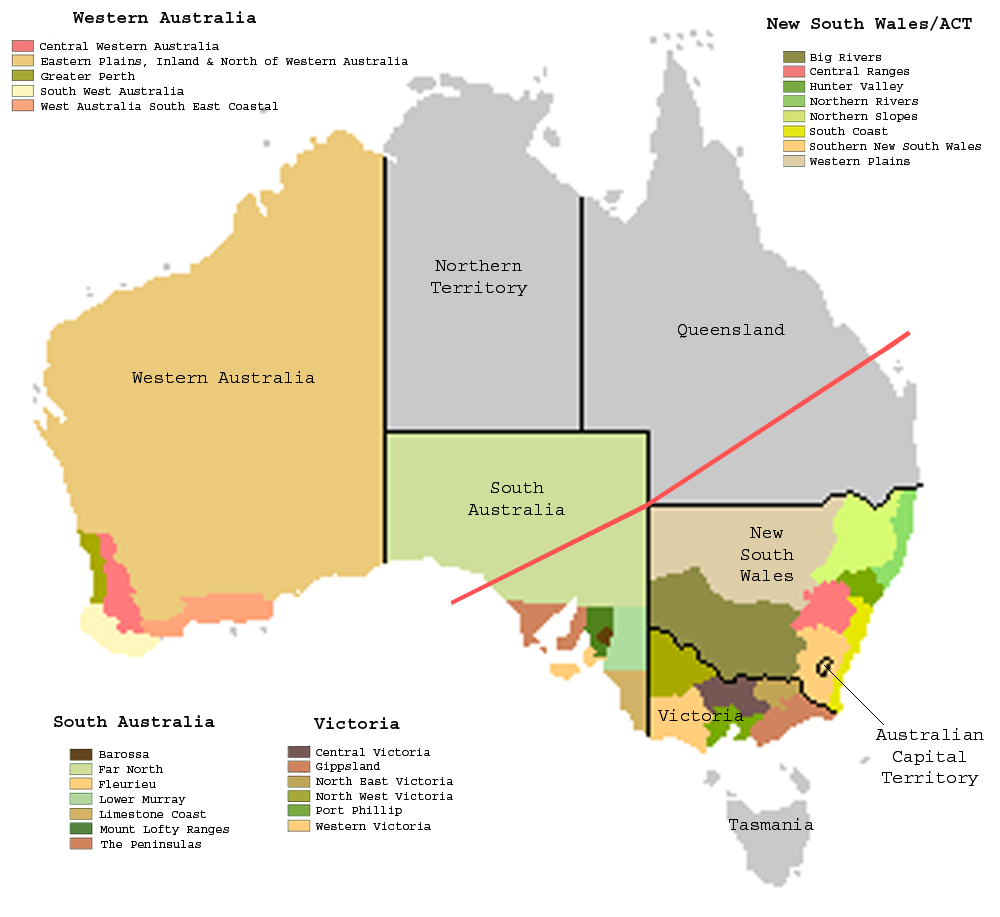
Australia’s winemaking terroir is defined by a diverse range of climates, with most vineyards located in the cooler southern half of the continent, influenced by maritime conditions and ancient soils. Key influences include the warm, dry summers and cool evenings of the Barossa Valley, the maritime climate of Margaret River, the high-altitude volcanic soils of Orange, and the cold, high-elevation soils of Tasmania. These varied geographical features create unique environments for distinctive wines like the bold Shiraz of the Barossa, the Cabernet Sauvignon of Margaret River, and the sparkling wines of Tasmania.
Key Components of Australian Terroir
Climate:
Australia’s vast size allows for a wide range of climates, from tropical in the north to Mediterranean in the south and alpine in the southeast. Cool ocean winds and the Southern Ocean temper temperatures in the crucial southern regions.
Soils:
Soils vary dramatically across the country, from the famous red terra rossa (red clay over limestone) in Coonawarra and Wrattonbully to the volcanic soils in regions like Orange and the ancient Cambrian soils in Heathcote.
Geography & Topography:
The country’s geography, including elevations and proximity to the coast, creates unique microclimates and affects grape ripening.
Ancient Soils & Purity:
Australia’s soils are ancient, and a low population density combined with rigorous environmental controls results in grapes grown in a very pure environment, free from significant pollution.
Examples of Terroir in Australian Wine Regions
Barossa Valley (South Australia):
Known for its warm, continental climate and diverse soils, this region produces world-class Shiraz.
Margaret River (Western Australia):
A unique terroir with a Mediterranean climate, strong maritime influence, and ancient soils that produce fine Cabernet Sauvignon and Chardonnay.
Tasmania:
The southernmost wine region, with a cool maritime climate ideal for high-quality Pinot Noir, Chardonnay, and traditional method sparkling wines.
Heathcote (Victoria):
Famous for its ancient Cambrian soils and the cultivation of bold, peppery Shiraz.
Mornington Peninsula (Victoria):
Known for its refined Pinot Noir and Chardonnay, produced in its cool, maritime climate.
Hunter Valley (New South Wales):
One of Australia’s oldest regions, recognized for its unique, age-worthy Semillon
Wine Regions
The Barossa Valley wine region is one of Australia’s oldest and most premier wine regions.
Located in South Australia, the Barossa Valley is about 56 km (35 miles) northeast of the city of Adelaide. In the 1980s, the emergence of several boutique families specializing in old vine Shiraz wines began to capture international attention for the distinctive style of Barossa Shiraz, a full bodied red wine with rich chocolate and spice notes. This led to a renaissance in the Barossa Valley which catapulted the region to the forefront of the Australian wine industry.
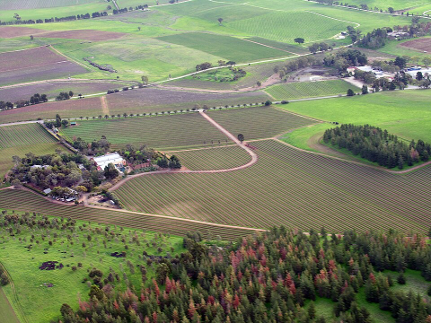
McLaren Vale is a wine region in the Australian state of South Australia. It is internationally renowned for the wines it produces and is included within the Great Wine Capitals of the World.
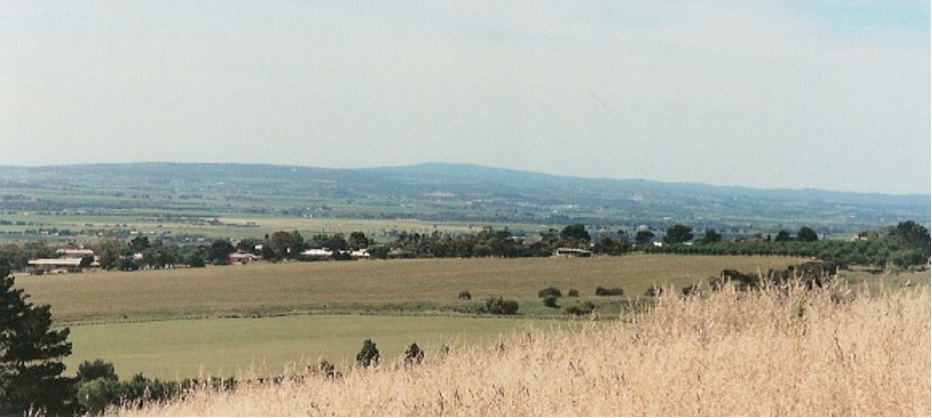
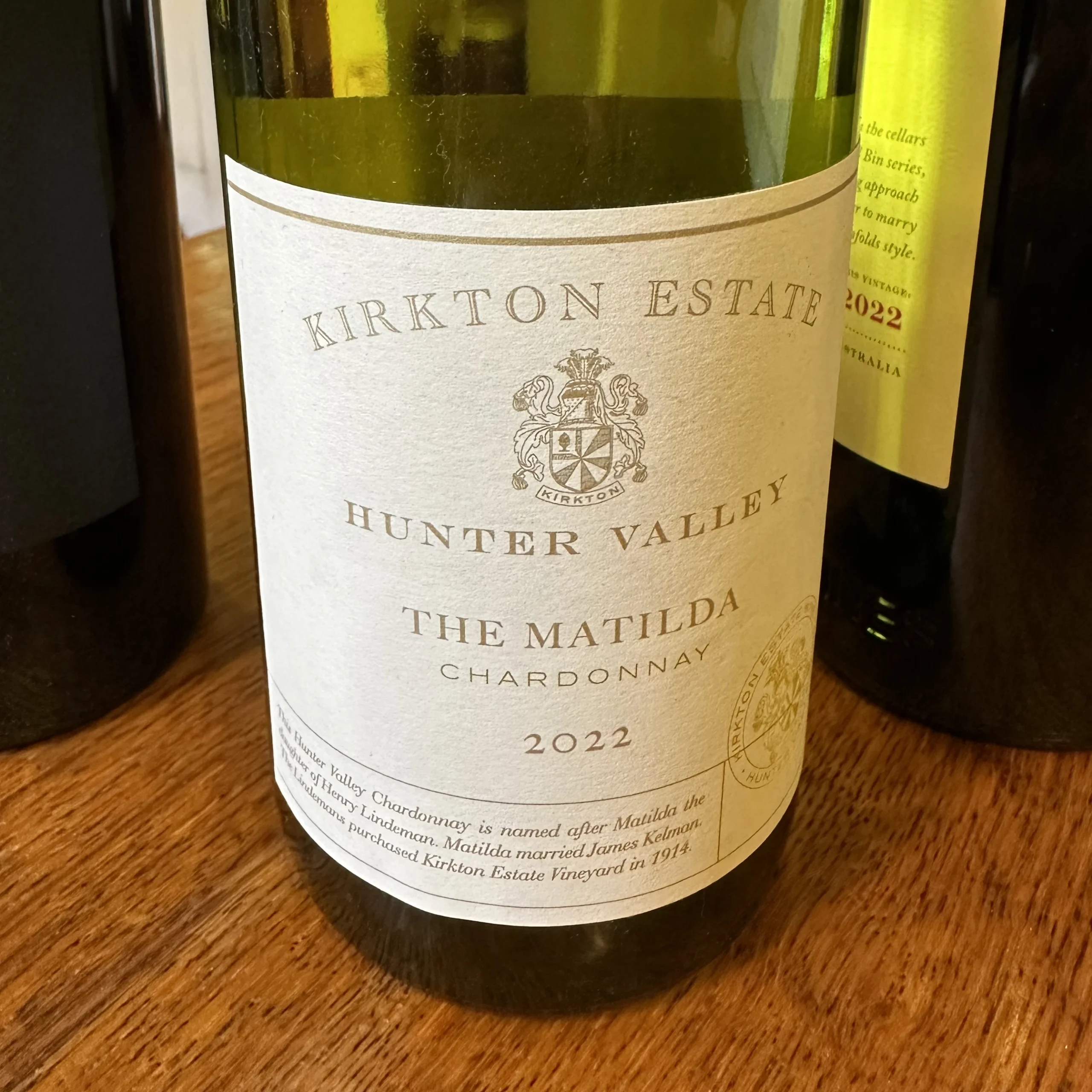
The Hunter Valley is one of Australia’s wine regions. Located in the state of New South Wales and first cultivated in the early 19th century, it was one of the first Australian wine regions.[2] As well as Hunter Valley Sémillon, the region produces wine from a variety of grapes including Shiraz, Chardonnay, Cabernet Sauvignon and Verdelho.
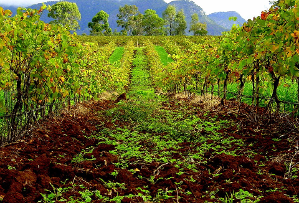
The Mornington Peninsula is an Australian wine region located south of Melbourne, Victoria. The region has a cool climate making wine growing ideal and focuses on Pinot noir production but has had success with other varietals including Chardonnay, Pinot gris and Tempranillo. The region is known for its medium bodied, dry wines and sparkling wines that show structure and complexity. The still wine versions of Chardonnay reflect a diversity of styles, all typically oaked, from more citrus to more tropical fruit flavors.
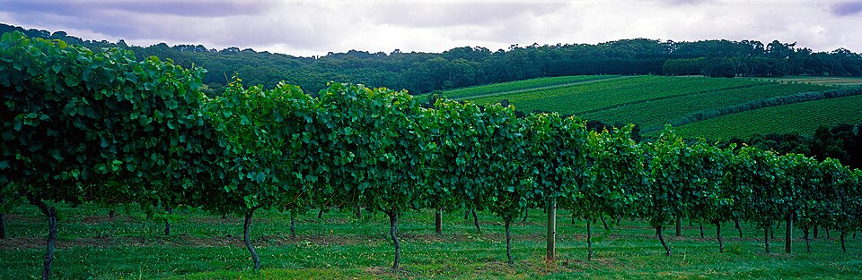
The Yarra Valley is an Australian wine region located east of Melbourne, Victoria. It is a cool climate region that is best known for producing Chardonnay, sparkling wine and Pinot Noir.
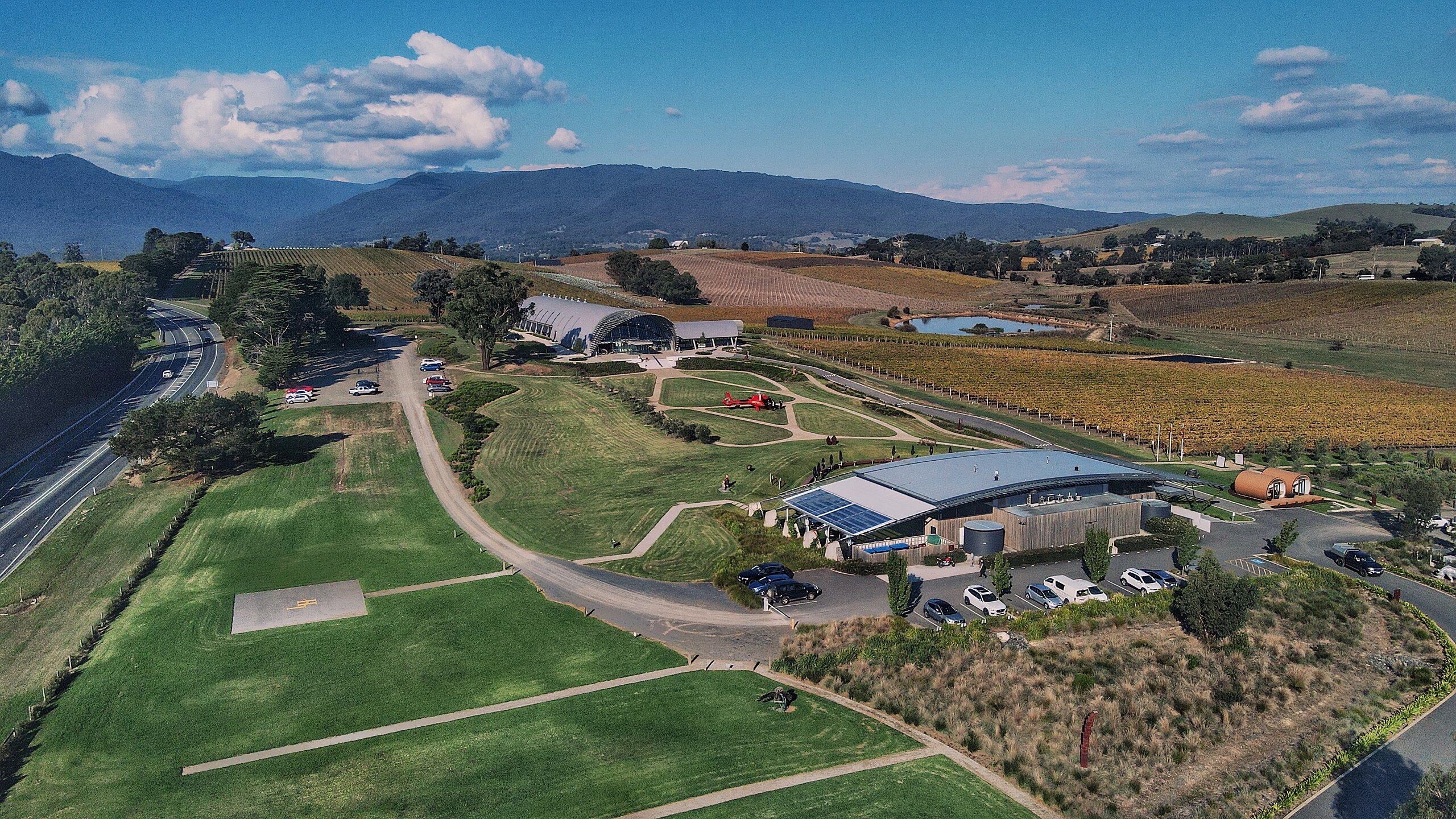
The Coonawarra wine region is a wine region centered on the town of Coonawarra in the Limestone Coast zone of South Australia. It is known for the Cabernet Sauvignon wines produced on its “terra rossa” soil.
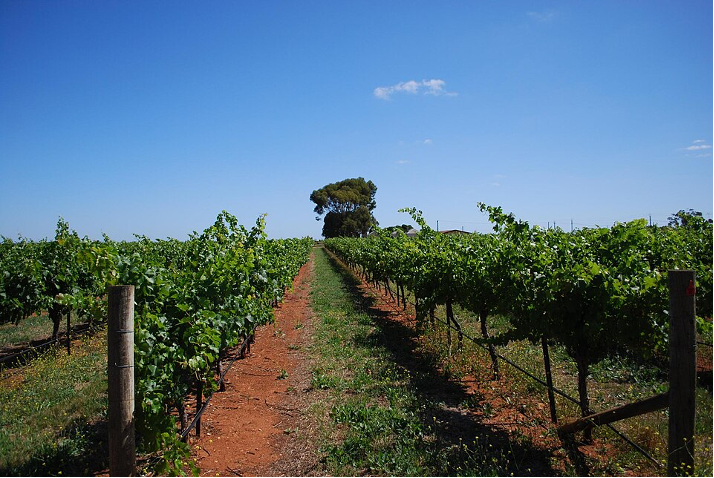
The Clare Valley wine region is one of Australia’s oldest wine regions, best known for Riesling wines.
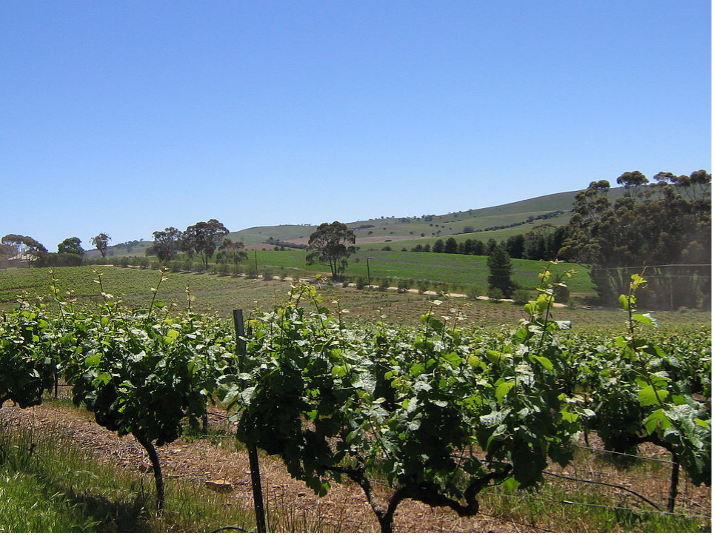
Margaret River
Cooling ocean winds, ancient soils, and isolated coastline are only part of Margaret River’s terroir story – dig into a one-of-a-kind wine region with fascinating conditions that all add up to world-class Cabernet Sauvignon and Chardonnay. Margaret River vineyards were founded on the idea that this place had the most idyllic terroir to grow high quality grapes. And after 50 years, it’s quite easy to see that because of its unique terroir, Margaret River produces not only some of the finest wines in Australia, but the world. This is a unique spot on the planet for a number of reasons, but there are three main components that really set it apart from the rest of the wine world.
- Isolated Location
- Proximity to the Ocean
- Ancient soils
- Margaret River is the most geographically isolated wine region in the world. Africa is 5,000 miles (8,000 km) to the west, and Antarctica is 2,200 miles (3,500 km) to the south. Even Sydney, within its own country, is a 43-hour drive to the east. The closest major city is Perth, considered the most isolated major city on Earth.
- Because it’s so isolated, Margaret River has been able to focus on quality over quantity. And that means that pretty much any wine you encounter from this region will be excellent.
- The isolation also means that Margaret River is still phylloxera-free, meaning grapes can be planted on local rootstocks if producers wish. This is thought by some to produce higher quality wines.
- A unique ocean current runs “the wrong way” compared to most ocean currents, from the tropics to the south pole. This ensures the waters surrounding Margaret River are warmer in the winter and cooler in the summer, allowing for even-ripening.
- It also ensures that Margaret River gets enough rainfall to support vines — even more than the Bordeaux region. However, most of it falls during winter, making for a perfect Mediterranean-like climate.
Ancient Soils bring Warmth and Freshness
Margaret River’s geology dates back to 1.6 billion years ago! That predates the geology of any viticultural areas in Europe. In fact, it’s had the longest continuous human occupation, going back 50,000 years – the Wadandi people have been the caretakers of these lands for millennia.
The main soil, Ironstone Gravels, known locally as Forest Grove soils and not found anywhere else on Earth, are so key to the success of Margaret River for two reasons:
- The gravel drains well but retains heat, helping to ripen the grapes evenly.
- Below the gravel is a layer of clay, which holds onto water during the summer – like a natural reservoir for the wines to access in summer.
This combination leads to balanced and even ripening with ripe fruit flavors but with freshness of acidity. The resulting wines are powerful, fresh, and age-worthy for red and white wines.
- The unique soils here can store the water for months, so the vines can use it slowly and evenly – making for perfectly ripened grapes.
Geology
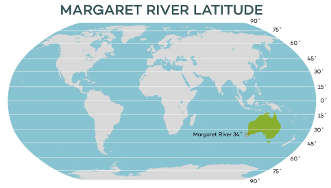
The geology of Australia includes virtually all known rock types, spanning a geological time period of over 3.8 billion years, including some of the oldest rocks on earth. Australia is a continent situated on the Indo-Australian plate.
The continental crust is composed primarily of Archaean, Proterozoic and some Palaeozoic granites and gneisses. A thin veneer of mainly Phanerozoic sedimentary basins cover much of the Australian landmass (these are up to 7 kilometres or 4.3 miles thick).
Australia as a separate continent began to form after the breakup of Gondwana in the Permian, with the separation of the continental landmass from the African continent and Indian subcontinent. Australia rifted from Antarctica in the Cretaceous.
These in turn are currently undergoing erosion by a combination of aeolian and fluvial processes, forming extensive sand dune systems, deep and prolonged development of laterite and saprolite profiles, and development of playa lakes, salt lakes and ephemeral drainage.
Latitude
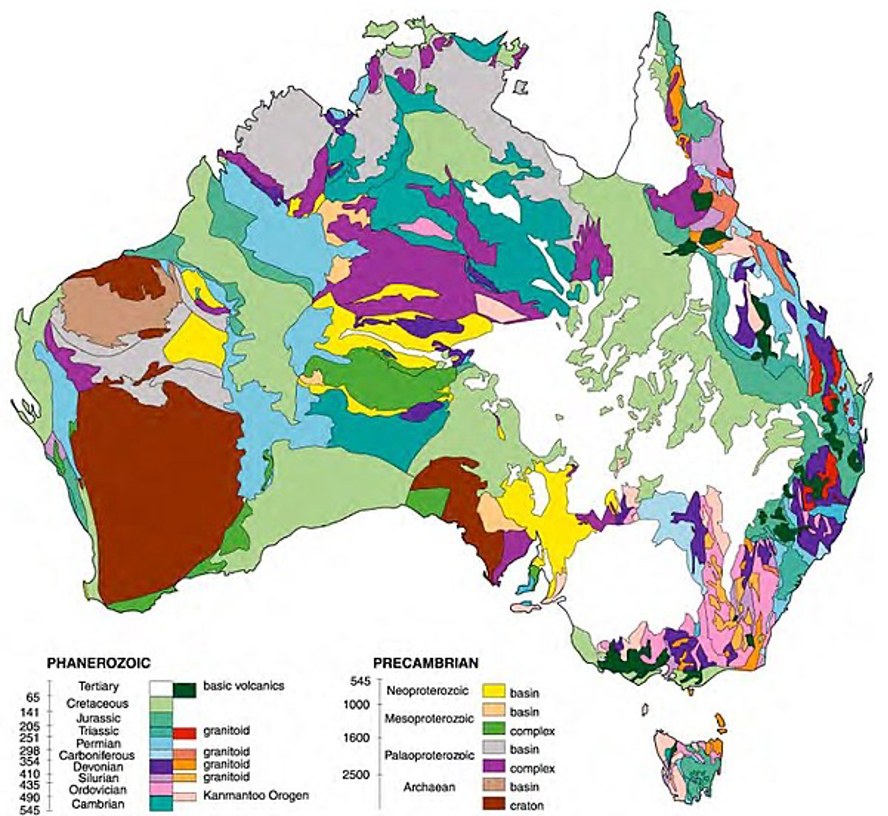
Margaret River, for example, sits around 34°S of the equator, which can be a great spot to grow grapes. Stellenbosch in South Africa and Mendoza in Argentina also sit on this latitude. The equivalent latitude in North America is Dallas, Texas.
However, the sun is much stronger in the southern hemisphere, particularly in Australia, for two reasons:
- The Earth’s orbit brings Australia closer to the sun than Europe during its summer, meaning more UV.
- Being so isolated, the atmosphere is much clearer from dust and pollution, so more UV can get through.
This means we see 15% more UV at the same latitude compared to the northern hemisphere. But how does it affect grapes? More UV equals more tannin, and riper tannins – perfect for creating amazing Cabernet Sauvignon.
The Effect of the Ocean
Sitting at this latitude with all that sunshine and UV, you’d think it might be really warm here. But the average growing season temperature is just 1 degree Celsius warmer than Bordeaux (66°CF, 19°C). With an 80 mile (130 km) coastline, where the Indian Ocean meets the Southern Ocean, Margaret River sits next to a large air conditioner. The cooling effect allows for the slow accumulation of complex flavors and the retention of more delicate aromas – creating complex, age-worthy, yet fresh wines.
These oceans bring plentiful rainfall in the winter; cooling summer winds, moderate temperatures – never too hot or too cold
Most Well-Known Vineyard: Penfolds Grange
Australia’s most famous wine is Penfolds Grange. The great 1955 vintage was submitted to competitions beginning in 1962 and over the years has won more than 50 gold medals. The vintage of 1971 won first prize in Syrah/Shiraz at the Wine Olympics in Paris. The 1990 vintage was named ‘Red Wine of the Year’ by the Wine Spectator magazine in 1995, which later rated the 1998 vintage 99 points out of a possible 100. Wine critic Hugh Johnson has called Grange the only First Growth of the Southern Hemisphere. The influential wine critic Robert Parker, who is well known for his love of Bordeaux wines, has written that Grange “has replaced Bordeaux’s Pétrus as the world’s most exotic and concentrated wine.-

Aged Cheddar
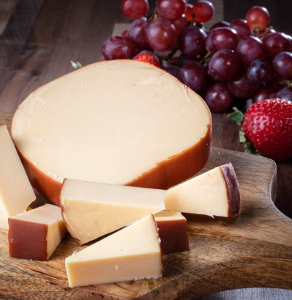
Smoked Gouda
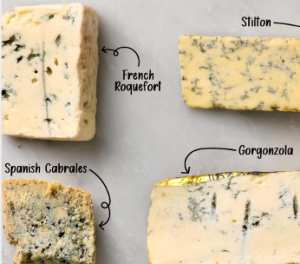
Blue Cheese

Washed Rind Cheeses
Food Pairings
Smoked Brisket
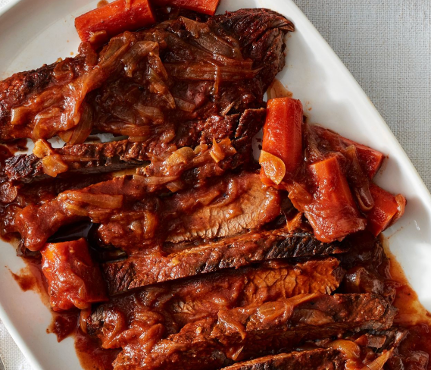
The idea is to create a dish with deep, unctuous flavors with beef as its bass note. Brisket is the perfect cut of beef for low and slow cooking and, for an Australian Red pairing, the smokiness of the spices along with your cooking method will accentuate the harmony between this dish and the wine.
The brisket is seared off in hot olive oil, and then set aside while the onions and garlic are rendered out. Then comes the symphony of tomato paste, tomato sauce, smoked paprika, red pepper flakes, cumin, coriander, a little vinegar and sugar, all of which comes to a simmer before reintroducing the brisket back into the pot. A good couple of hours in a 325 degree oven will be the perfect point to add in carrots and any other vegetables / aromatics you wish, and to turn the brisket. Continue cooking for another hour or two, until the beef is fork tender. Let it rest – or better yet, wait to serve it the next day, gently reheated.