
Loire White Wines
The Loire is France’s longest river, meandering 1,000 kilometers from the center of France to the Atlantic, and its entire Valley has been named a UNESCO World Heritage site. Its sumptuous Renaissance châteaux and landscapes are its outstanding features, which includes 70,000 hectares of vineyards. With more than 80 different appellations and denominations of wine, the Loire is France’s third-largest wine-growing region for appellation wines after Bordeaux and Languedoc-Roussillon. It is the leading producer of AOP (Appellation d’Origine Contrôlée) white wines and fine bubbles (excluding Champagne).
Loire White Wines
History
The Loire Valley, often referred to as the “Garden of France,” has a winemaking history that stretches back over two thousand years. Viticulture in this region began during Roman times, with early evidence of vine cultivation found in archaeological sites dating to the 1st century AD. The Romans introduced the art of winemaking to Gaul, and the region’s favorable climate and fertile soils helped establish it as one of France’s most important wine-producing areas. However, it wasn’t until the Middle Ages that the Loire Valley’s winemaking began to take on a deeper cultural and religious significance.
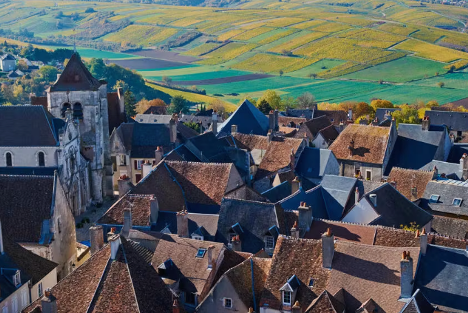
Monastic orders, particularly the Benedictines and Cistercians, played a crucial role in developing the region’s wine culture – alike in Champagne. These monks refined viticulture techniques, protected vine varieties, and spread knowledge of winemaking across Europe. For centuries, the Loire’s wines were produced primarily by the church, with many vineyards owned by religious institutions and used in ecclesiastical ceremonies or as offerings.
During the 16th and 17th centuries, the Loire Valley’s wine reputation flourished, thanks to its proximity to the political and cultural center of Paris.
The region’s wines became favored by the French nobility, particularly in areas like Anjou and Touraine, which developed a reputation for producing fine wines. Under the reign of kings such as Louis XI, Loire wines became synonymous with sophistication, elegance, and royal patronage. By the 17th century, the Loire’s wines were recognized as luxury products, deeply associated with French aristocracy—a tradition that continues today.
Loire Whites
Loire Valley white wines are diverse, with key grape varieties being Sauvignon Blanc (in appellations like Sancerre and Pouilly-Fumé) and Chenin Blanc (in Vouvray and Savennières), which produce fresh, mineral, and versatile wines. Other significant white wines are made from Melon de Bourgogne in the Muscadet region and a variety of other grapes, resulting in everything from crisp, dry whites to sweet and sparkling wines.
Key grape varieties and regions
Sauvignon Blanc
This is a dominant grape, particularly in the central Loire.
Sancerre and Pouilly-Fumé
Produce renowned Sauvignon Blancs known for high acidity, citrus, and flinty notes.
Chenin Blanc
A versatile grape that can produce a wide range of styles, from dry to sweet and sparkling.
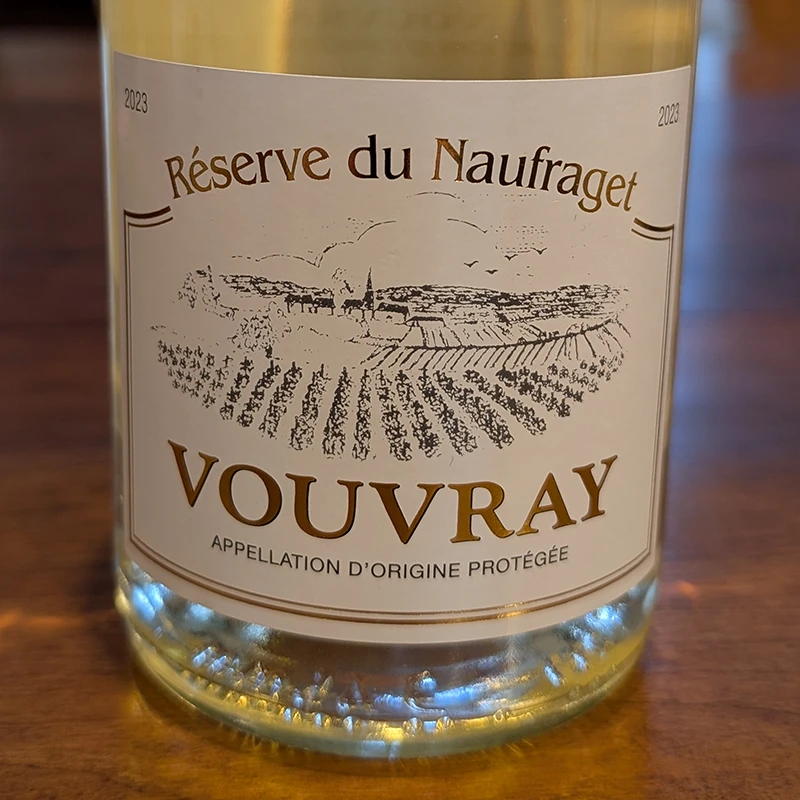
Vouvray and Montlouis-sur-Loire
The area around Tours is famous for its Chenin Blanc wines.
Anjou and Savennières
These regions are also key producers of Chenin Blanc, offering dry and sometimes sweet wines.
Melon de Bourgogne
This grape is the signature of the western Loire, near the Atlantic.
Muscadet
Wines from this region, especially Muscadet Sèvre et Maine, are known for their lemony freshness and are traditionally paired with oysters.
Other white wines and producers
Other white grapes
The Loire Valley also has wines made from other varieties such as Chardonnay, Folle Blanche (Gros Plant), and Romorantin, adding to the region’s diversity.
Sparkling wines
Chardonnay and Chenin Blanc are used to produce the sparkling Crémants de Loire.
Producers
Many producers work with these grapes and appellations, such as Domaine de la Noblaie, Baron de Ladoucette, and Domaine des Fines Caillottes
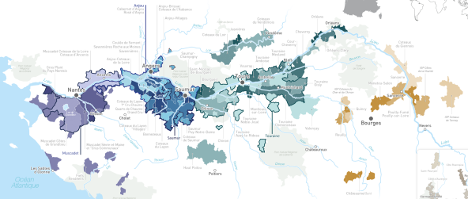
The Loire Valley’s terroir is defined by its diverse range of soils, from the schist and granite near the Atlantic to the limestone and clay in the central and eastern regions, which contribute to distinct wine styles. This diversity is further influenced by a temperate maritime climate in the west, with oceanic breezes, and a more continental climate in the east, resulting in mild, humid summers and cool, sometimes harsh winters, creating varied microclimates across the valley.
Terrior
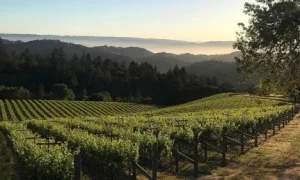
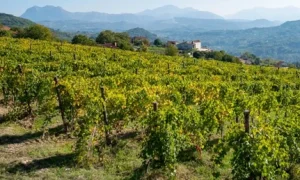
Terroir—the combination of soil, climate, and geography—is the defining factor in the Loire Valley’s wine production. The region’s diverse terroirs are a result of millions of years of geological activity, which has left behind a patchwork of soils that range from limestone and chalk to clay and volcanic rock. The vineyards are primarily located on hillsides, terraces, and riverbanks, with the careful positioning of vines on slopes to maximize sun exposure and drainage.
In the Loire Valley, south-facing slopes are especially prized for their ability to capture the sun’s rays, which is crucial for ripening grapes to their full potential. These slopes also provide excellent drainage, preventing the soil from becoming waterlogged and ensuring that vines receive just the right amount of moisture. The varying steepness of the slopes creates microclimates that impart subtle differences to the wines, even within the same region.
The Loire River also plays an important role in shaping the valley’s terroir. As the river winds its way through the region, it leaves behind fertile soils and deposits of limestone, clay, and other mineral-rich materials, all of which contribute to the region’s wine character. The river’s influence can be seen in areas such as Sancerre and Pouilly-Fumé, where the combination of chalky soils and the river’s moderating effect helps produce wines with remarkable minerality and acidity.
The Loire: Four specific areas
With its four territories and numerous terroirs, the range of wines on offer offers something for every palate.
- The king of the Pays Nantais vineyards is Muscadet. This grape variety is Melon de Bourgogne, with citrus aromas of lemon and grapefruit and a lively bouquet. The micaschist and gneiss soils add a saline touch to the wines, reflecting the oceanic influence of the region.
- The vineyards of Anjou-Saumur and Haut-Poitou have a semi-oceanic climate and soils composed of schist, clay and tuffeau. Tuffeau is the region’s signature limestone. It plays a major role in regulating soil moisture and giving wines a distinctive minerality. It’s in this stone that we find troglodytic cellars, veritable labyrinths, ideal for vinification and ageing wines. The range of wines in this vineyard is 360°. You’ll enjoy dry, semi-dry, sweet and sparkling whites, made mainly from Chenin, the Loire Valley’s flagship grape variety. The king of reds is Cabernet Franc, with its notes of ripe red fruits such as strawberries, raspberries and redcurrants.
- Touraine is marked by a climate that is oceanic and continental, and soils that are flinty clay, limestone and sand. This is where you’ll find the majestic châteaux of Chambord, Azay-le-Rideau, Chenonceaux and Chaumont-sur-Loire, built from the stone of kings: the tuffeau! Nonetheless, white wines are mainly made from Sauvignon Blanc and red wines from Gamay. The fine bubbles dance mainly with Chenin and Chardonnay.
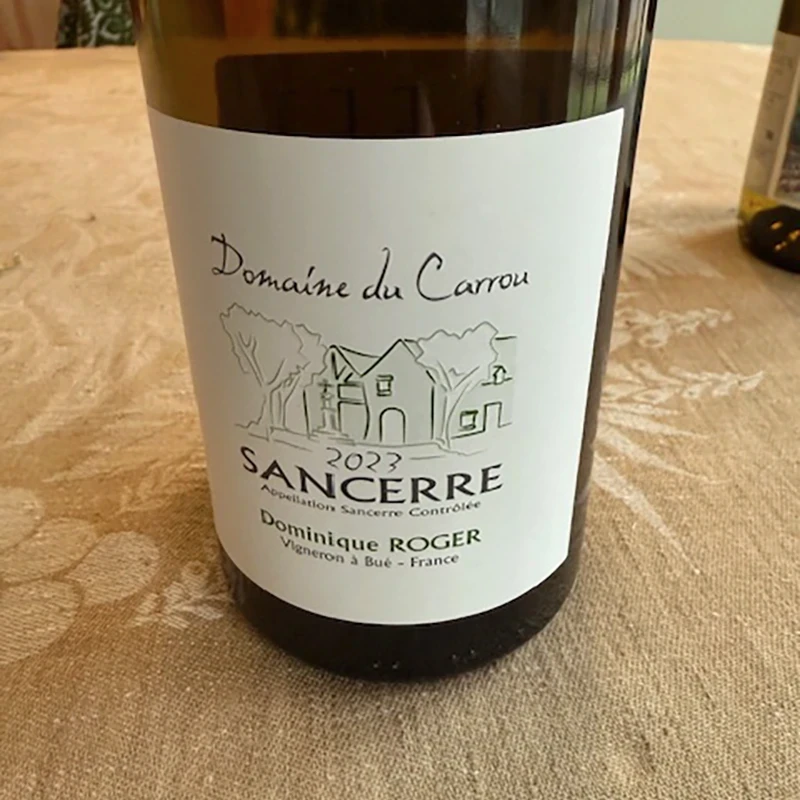
- In the vineyards of the Centre Loire, the two stars are the Sancerre and Pouilly Fumé appellations, with their clay-limestone, chalk and flint soils and semi-continental climate. Their king is Sauvignon Blanc. In Sancerre, its aromatic palette is characterised by white fruit aromas such as pear, citrus and exotic fruit. Its pronounced minerality is an expression of the diversity of the soils in the appellation. For reds, pinot noir is the ambassador. In Pouilly Fumé, the bouquet gives off a hint of gunflint, typical of wines made from flinty soils.
Soils
Pays Nantais (West)
Soils are often based on granite, schist, and gneiss, which are well-drained and impart minerality.
Anjou-Saumur & Touraine (Central)
This area has limestone, clay, and flinty soils, which are ideal for grapes like Chenin Blanc and Cabernet Franc.
Centre-Loire (East)
This region is known for its Kimmeridgian marl and flint soils, which are characteristic of Sauvignon Blanc from appellations like Sancerre and Pouilly-Fumé.
Climate
The Loire Valley’s climate is as diverse as its wines, shaped by a range of factors that provide the region with a broad spectrum of growing conditions. The valley stretches over 1,000 kilometers from the Atlantic coast to the center of France, which results in a variety of microclimates, each influencing the style of wine produced.
Grape Varietals
The Loire Valley is renowned for its broad range of grape varieties, each uniquely suited to the diverse soils of the region. Some of the most iconic grape varieties include:
Sauvignon Blanc
Grown in regions like Sancerre and Pouilly-Fumé, Sauvignon Blanc thrives in the chalky and limestone soils of the central Loire. The result is crisp, mineral-driven wines with vibrant acidity, citrus, and green fruit flavors.
Chenin Blanc
This versatile variety excels in the clay and tuffeau soils of Vouvray and Anjou, producing wines that range from dry to sweet, with complex flavors of honey, quince, and apricot. The high acidity of Chenin Blanc allows for excellent aging potential.
Cabernet Franc
A hallmark grape of the Loire, Cabernet Franc flourishes in the limestone and gravel soils of Chinon, Bourgueil, and Saumur. The wines are known for their aromatic qualities, with red fruit flavors and earthy, herbal notes.
Melon de Bourgogne
Grown in the cooler, coastal soils of the Nantes region, it produces light, crisp wines with a characteristic minerality and fresh citrus flavors.
Each of these grape varieties benefits from the unique soil compositions of their respective regions, allowing winemakers to craft wines that express the full potential of the Loire Valley’s terroir. The interplay of soil, climate, and grape variety is what gives Loire wines their distinctiveness, from the sharp, mineral-driven whites to the elegant, earthy reds.
The Loire Valley is one of France’s most exciting and diverse wine regions, offering a remarkable range of styles and expressions due to its varied terroirs, soils, and climates. Whether it’s the crisp, mineral whites of Sancerre, the rich, complex reds of Chinon, or the elegant, age-worthy whites of Vouvray, the Loire Valley’s wines continue to captivate wine lovers around the world. Rooted in centuries of tradition and innovation, the wines of the Loire reflect the region’s deep connection to its land, history, and culture. With its diverse terroir, rich history, and extraordinary range of wine styles, the Loire Valley remains a vital and beloved wine-producing region, offering wines that are celebrated for their freshness, balance, and sense of place.
Some of the wines we tasted
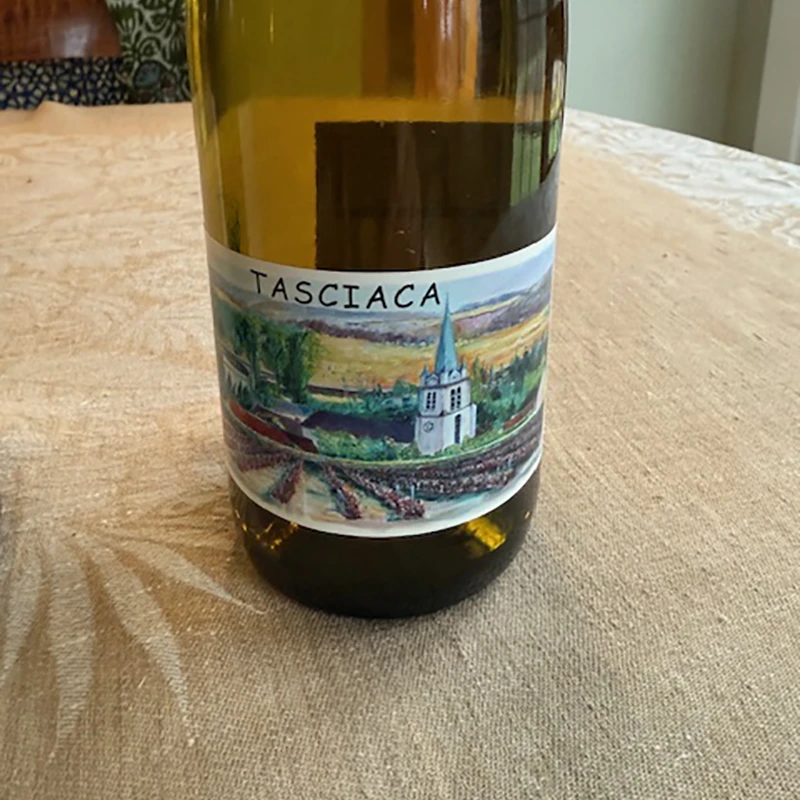
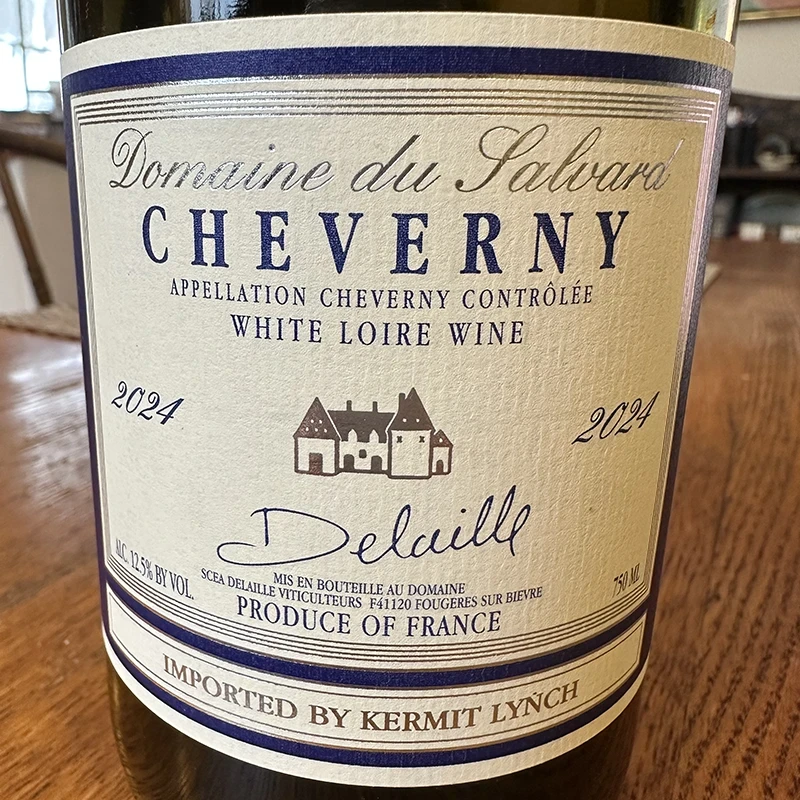
1. Cheverny
“Cheverny is in the Touraine, in the Loire, in the country of those incredible chateaux. This is Sauvignon Blanc territory, unbeatable for its freshness, its floral and fruit bouquet, its zest and lightness. Nowhere else, even at Sancerre, will you find such a little jewel.” —Kermit Lynch, June 1997 Newsletter
While not untrue, calling Cheverny a value alternative to Sancerre would completely overlook the virtues unique to this appellation. It is a much zippier expression of Sauvignon Blanc compared to its famous neighbor, more citrusy than grassy. When Kermit Lynch introduced this wine in July 1993, he said, “Salvard makes the most drinkable, quaffable Sauvignon Blanc I have ever tasted.”
Thierry and Emmanuel Delaille of Domaine du Salvard specialize in crisp, mouthwatering Sauvignon Blanc, but for this cuvée, they add a splash of Chardonnay, which brings complexity, flesh, and notes of Meyer lemon and orchard fruit. The base of Sauvignon Blanc, meanwhile, provides freshness and liveliness as well as its characteristic flavors of passion fruit and lime zest. The two grape varieties combine for outstanding versatility, such that this bottle will serve you well alongside all kinds of seasonal spring fare.
Wine Characteristics
| Blend | 85% Sauvignon Blanc, 15% Chardonnay |
|---|---|
| Appellation: | Cheverny |
| Producer: | Domaine du Salvard |
| Winemaker: | Emmanuel & Thierry Delaille |
| Vineyard: | 10 - 65 years |
| Soil: | Chalk, Limestone, Sand |
| Farming: | Lutte Raisonnée |
| Alcohol: | 12.5% |
| Flavor profile: | Notes of citrus, herbs, and passion fruit from the Sauvignon Blanc are complemented by the fleshiness and Meyer lemon/orchard fruit notes from the Chardonnay. |
| Style: | Crisp and lively with a refreshing, mineral finish |
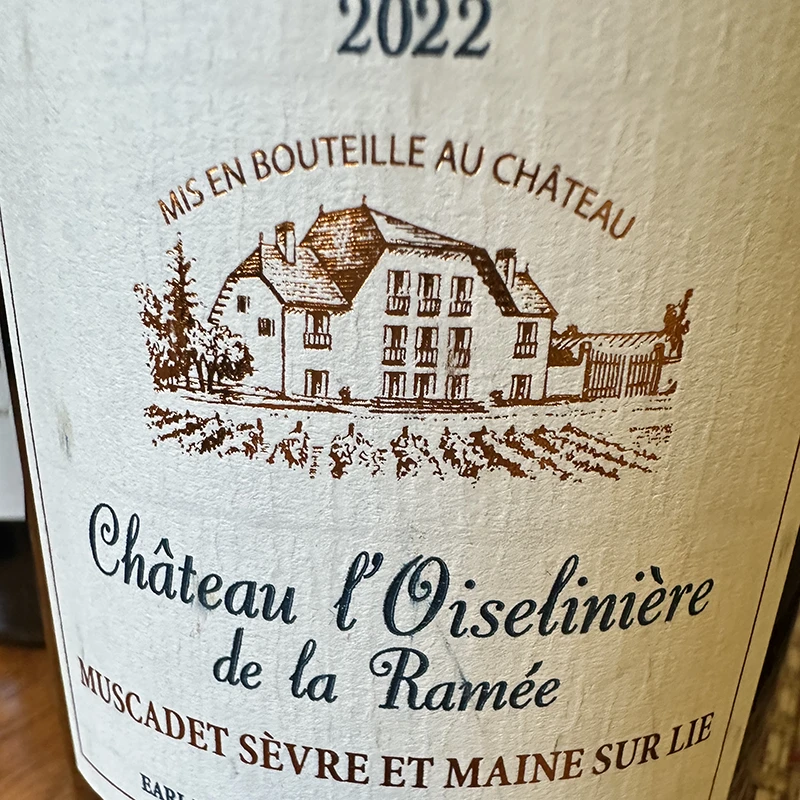
2. Muscadet
Chateaus l’Oiselinierre de la Ramee Muscadet Severe at Maine sure lie 2022
This Muscadet is a delightful white wine known for its light body and dry profile. Crafted from Melon de Bourgogne grapes, it showcases a medley of refreshing flavors including zesty lemon, tangy lime, crisp green apple, and succulent pear. Perfect for those seeking a vibrant and fruit-forward experience. Renowned for its balance and complexity, each sip reveals new layers of depth.
Aromatically, this single-vineyard Muscadet shows notes of white nectarine, golden apple, dried white blossom, pineapple slice and lemon curd. Orchard fruit shines on the firm, rich midpalate that is dripping in complexity. Hints of baking spice play on the lingering finish.
Heritage
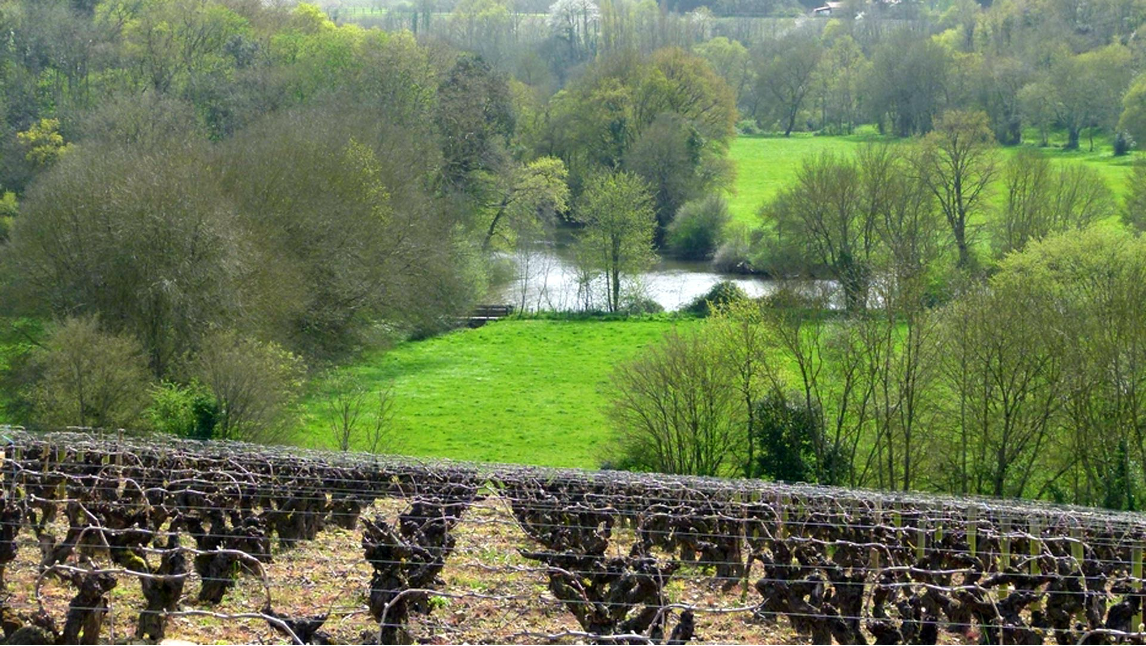
Just 10 minutes from Nantes, the château stands in a peaceful setting, protected by the surrounding woods. The cellars and the various farm buildings are typical of vineyard architecture, made of schist stones covered with tiles from the southern Loire region.
Location
The estate is exceptionally well situated at the confluence of the Sèvre and Maine Rivers which give the appellation its name: Muscadet de Sèvre et Maine.
The vines
The 30 to 80-year-old Melon de Bourgogne grapes are planted on orthogneiss soil, which is ideal for producing Muscadet that will age well. The southern exposure is an additional advantage for the maturity of the grapes we harvest mainly by hand. The quality of the terroir enables us to produce wine in the village appellation of La Haye-Fouassière. After vinification lasting no less than 17 months on lees, the wines are stored in bottles for several years before they are sold.
The grape variety
The Muscadet appellation is planted with only Melon de Bourgogne, a variety brought to the Nantes area by monks from Burgundy in the 19th century. After a harsh winter in the area, the wine growers had to plant a new variety that would withstand the cold. The variety was obtained by crossing Pinot Blanc with Gouais Blanc.
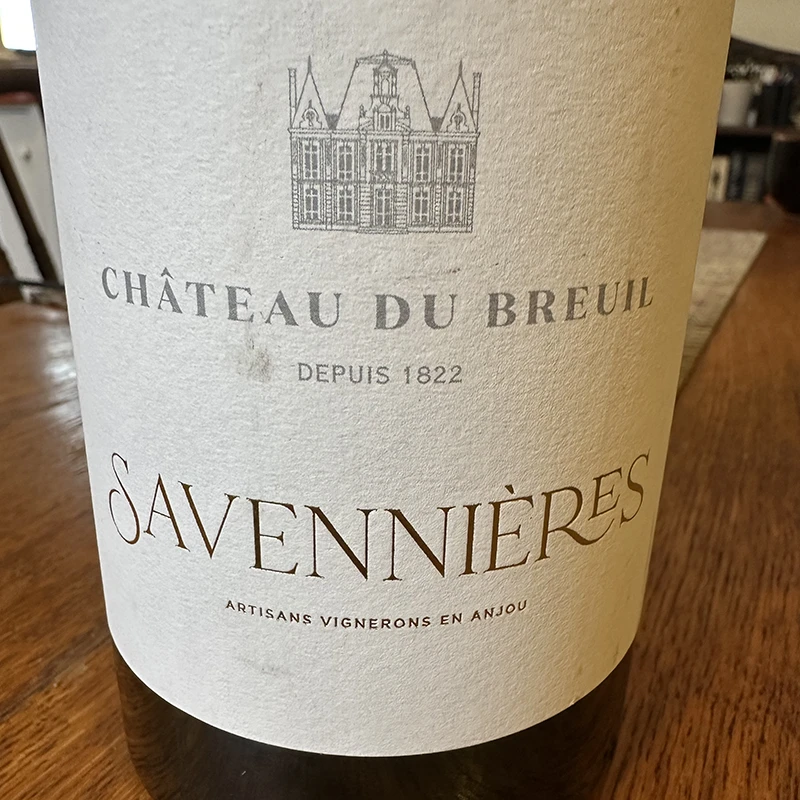
3. The Château du Breuil Savennières 2019
The Château du Breuil Savennières 2019 is a white wine from the Loire Valley, France, made from 100% Chenin Blanc grapes grown in schist soils. It is described as having mineral, stone, and fruit notes with a dry, acidic finish. The 2019 vintage is characterized by intense minerality and ripeness from the warm vintage, resulting in a wine with both power and elegance.
Wine Characteristics
| Varietal: | 100% Chenin Blanc |
|---|---|
| Region: | Savennières appellation in the Loire Valley, France • Vintage: 2019 |
| Tasting notes: | Notes often include quince, acacia, wet stone, and honey, with flavors of ripe pear and citrus peel on the palate.zvc |
| Flavor profile: | The wine is known for its striking minerality, dry character, and taut acidity, balanced by ripe fruit and a saline finish. |
| Vineyard: | 10 - 65 years |
| Soil: | Chalk, Limestone, Sand |
| Farming: | Lutte Raisonnée |
| Alcohol: | 12.5% |
| Flavor profile: | Notes of citrus, herbs, and passion fruit from the Sauvignon Blanc are complemented by the fleshiness and Meyer lemon/orchard fruit notes from the Chardonnay. |
| Style: | Crisp and lively with a refreshing, mineral finish |
In France’s majestic Loire Valley lies Châteaux du Breuil et de la Roche…
situated on the right bank of the Layon river near the village of Beaulieu-sur-Layon, 20 minutes south of Angers. Built in 1822, Le Breuil’s vines are planted on prime L’Anjou Noir plots: south-facing slopes of the Coteaux du Layon, resting on a bed of schist just above a seam of spilite that runs between the towns of Beaulieu-sur-Layon and Rochefort-sur-Loire. The winery also owns a prime vineyard across the Loire river, in the heart of Savennières. The Anjou region lies in a climatic transition between the oceanic climate of the coast and the continental climate of the upper Loire and central France. Châteaux du Breuil primarily focuses their work on producing exceptional dry chenin blanc, as well as other local grape varieties, like grolleau, cabernet franc, sauvignon blanc and gris, and chardonnay.
Anjou is famous for the supreme complexity of its geology, with a multitude of diverse volcanic rocks present; yielding some of France’s most substantial, exciting white wines, both dry and sweet, from the chenin blanc grape variety.
The modern era of Châteaux du Breuil et de la Roche began when French businessman and wine-lover Michel Petitbois bought the estate in 2006 with the intention of making great wine. Michel, a forward-thinking collector of fine wines from Burgundy, fell in love with the complexities of the Loire Valley and saw the potential in the exceptional vineyards owned by Châteaux du Breuil to produce exceptional wines. Some of their notable, direct neighbors include Château Pierre-Bise, Château Soucherie, and Château Plaisance, while just a footpath separates their Savennières vineyard from those of Nicolas Joly. The philosophy of Châteaux du Breuil et de la Roche begins with its exceptional vineyards and regenerative farming methods.
Once Michel Petitbois purchased the historic estate in 2006, he reorganized and revitalized the vineyards and modernized the cellar. From the beginning, Michel knew that if he wanted to secure Châteaux du Breuil’s future on a world-class level, there was considerable work to be done in both the vineyard and cellar. Starting with 24 hectares of vineyards from previous owners, his team pulled up 12 hectares of vines that were haphazardly planted; they reorganized and replanted the vineyards according to the correct terroir, with old clones selected for quality and complexity. Over the ensuing two decades, Michel gradually purchased key vineyards, bringing the estate to its current 33 hectares of vines. Châteaux du Breuil now produces wines in the Protected Designation of Origin regions of: Anjou, Savennières, Coteaux du Layon, Coteaux du Layon Beaulieu, Crémant de Loire, and Rosé d’Anjou.
Châteaux du Breuil has a magnificent two-hectare parcel of chenin blanc on the Savennières Plateau, called ‘L’Enclos’ at 180 meters, near the neighboring vineyards of Nicolas Joly, Domaine Roche Aux Moines, and Belargus. The region’s famous schist soils are clearly evident at the surface of the vineyard. ‘L’Enclos’ routinely produces world-class wines that are the perfect combination of power, elegance, and grace, with an everlasting finish.
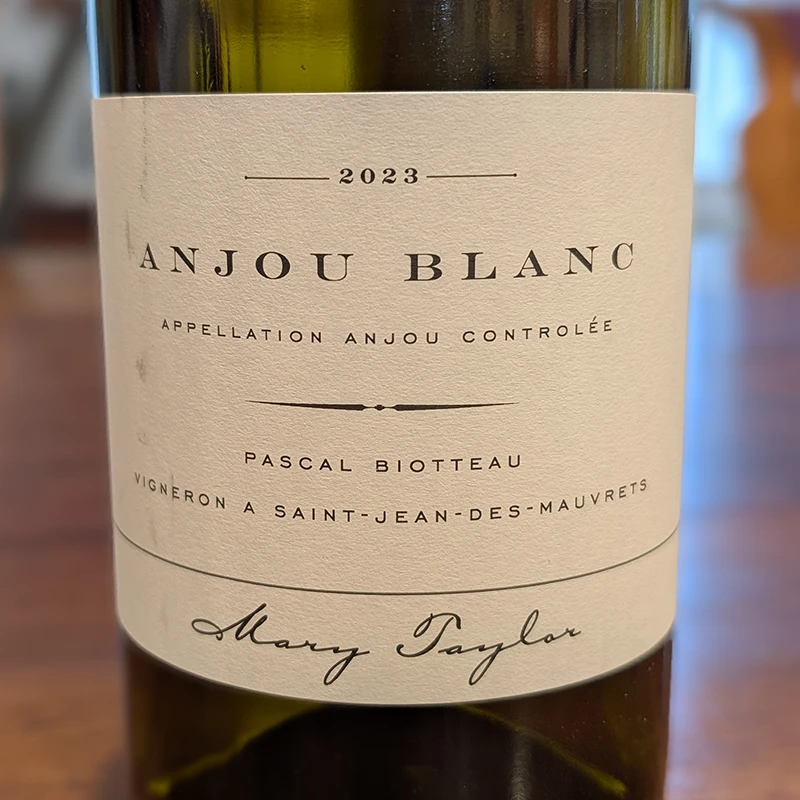
Another vineyard yielding top wines is ‘Clos du Frère Étienne’, a five-hectare vineyard in Anjou replanted to old, low-yielding, chenin blanc clones in 1994. Soil studies demonstrate only two to three feet of earth cover over a solid schist bedrock below the vines. Their resulting Clos du Frère Étienne Anjou Blanc produces two barrels of wine even more richly textured than Savennières, yet with a distinct mineral profile. An impressive wine with incredible clarity, intrigue, and emotion that you can drink now, or allow to improve in bottle for 10 years or more.
Cheese Pairings

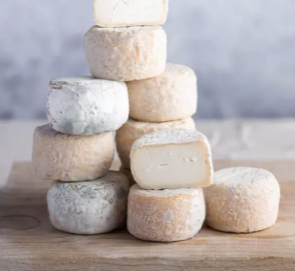
Le Crotin de Chavignol

Thin Red Line Goat Cheese
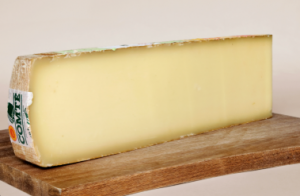
Comte
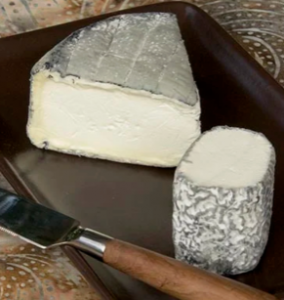
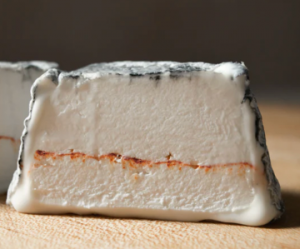
Valencay with Ash / French Goat Cheese
Food Pairings
Moules Mariniere (To pair with Muscadet)
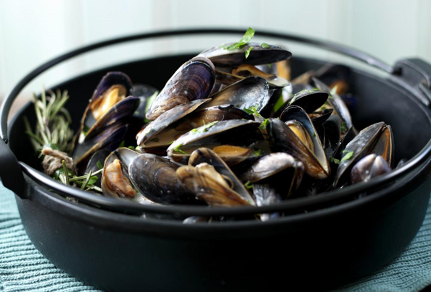
Get a couple of pounds of mussels and ask the fishmonger to clean them and remove their beards.
In a deep saute pan, soften minced shallots, leeks, garlic and aromatics in butter and olive oil.
Add a cup or so of white wine to the pot. When brought to a simmer, add the mussels and a bit of flaked red pepper if you like a bit of heat. Cover the pot and steam until most of the shells have opened, about 3-5 minutes. Remove to a bowl and discard any mussels that have not opened. Pour over the broth and shallot mixture, add a handful of fresh minced parsley, and drizzle with olive oil. serve hot with crusty French bread.
You may want to crisp a small dice of Spanish chorizo in a cast iron skillet to render its excellent flavor, fat and heat, and use that as the base for rendering out the aromatics.