
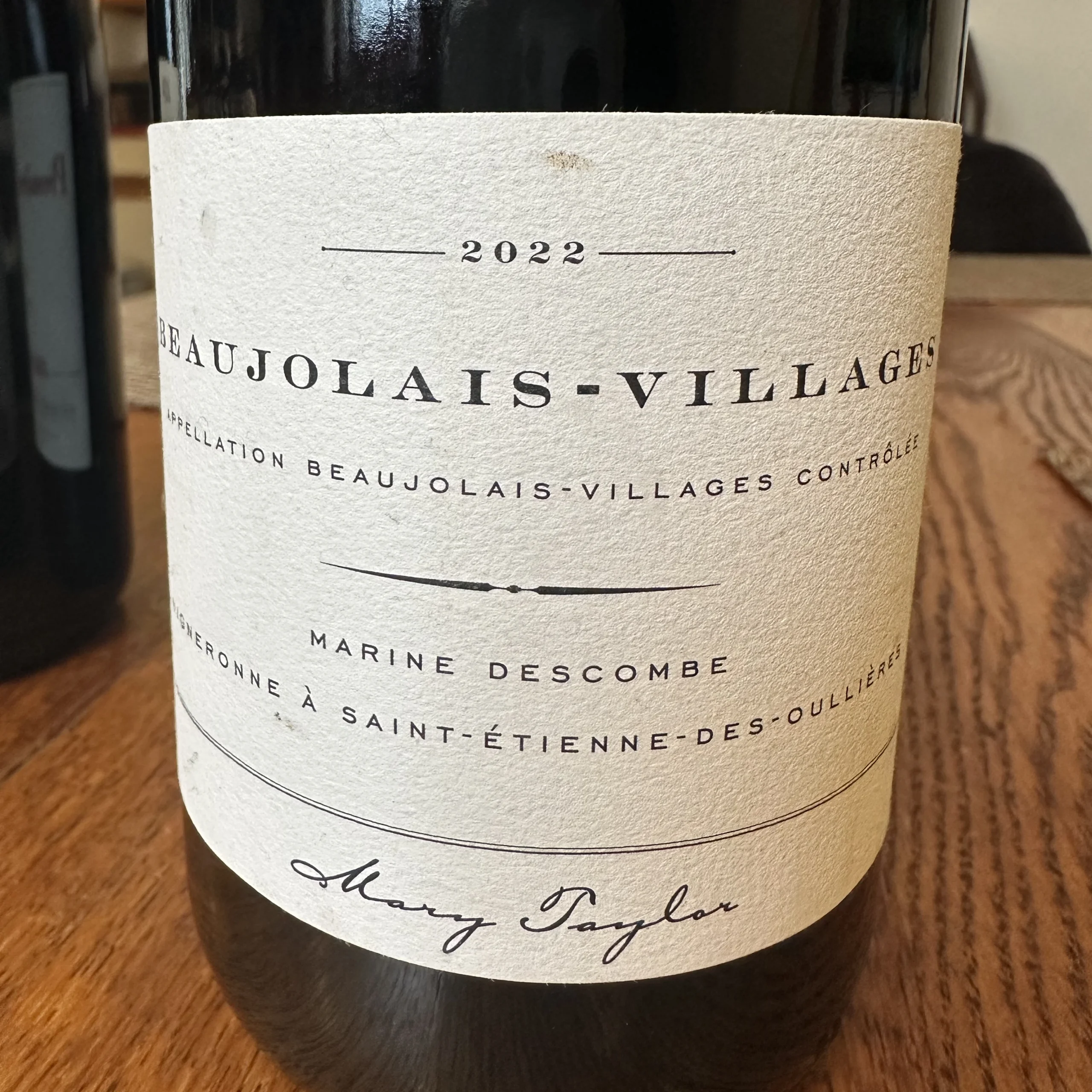
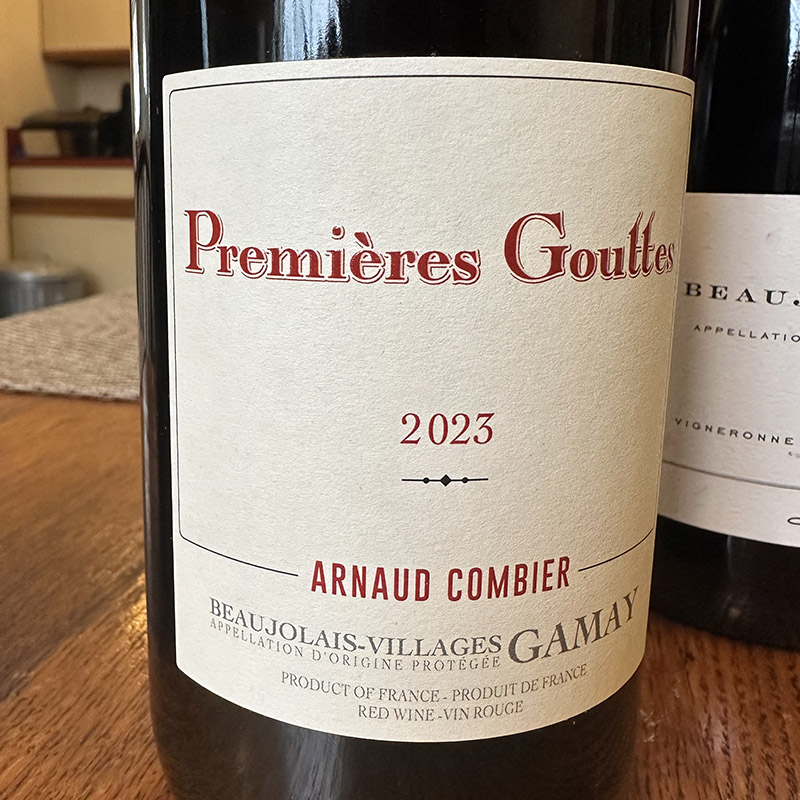
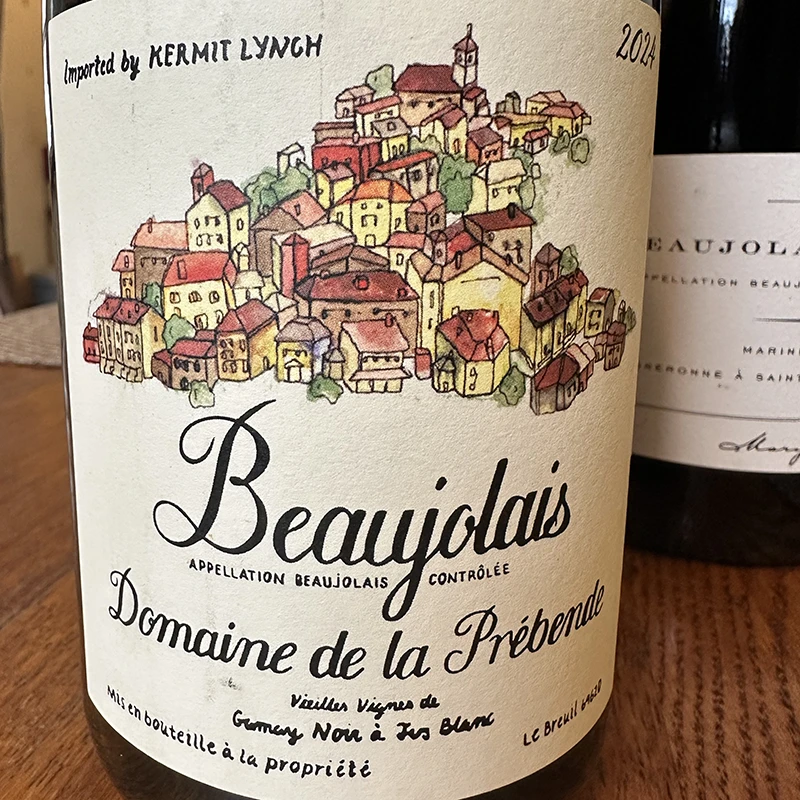
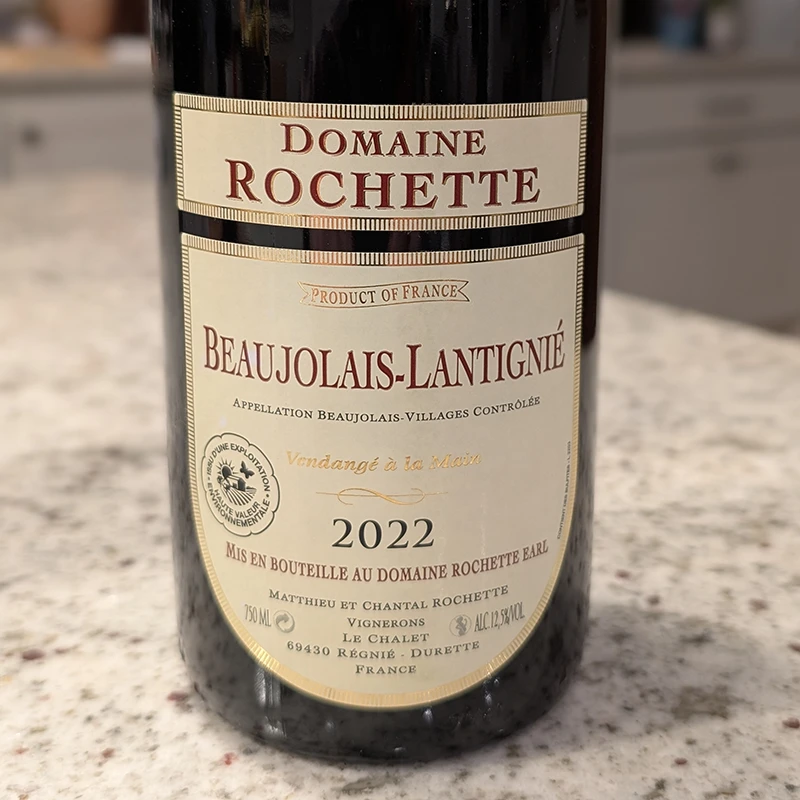
Beaujolais name
The name Beaujolais derives from the medieval town of Beaujeu, which once served as the administrative and cultural heart of the region.
The Lords of Beaujeu, a prominent noble family, ruled the area during the Middle Ages and left an indelible mark on its identity. The suffix “-lais” in French indicates belonging, so “Beaujolais” essentially means “of Beaujeu” or “pertaining to Beaujeu”. While the town itself may no longer be a central hub, its legacy lives on in the name that defines one of France’s most cherished wine regions.
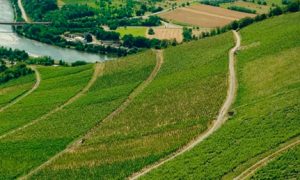
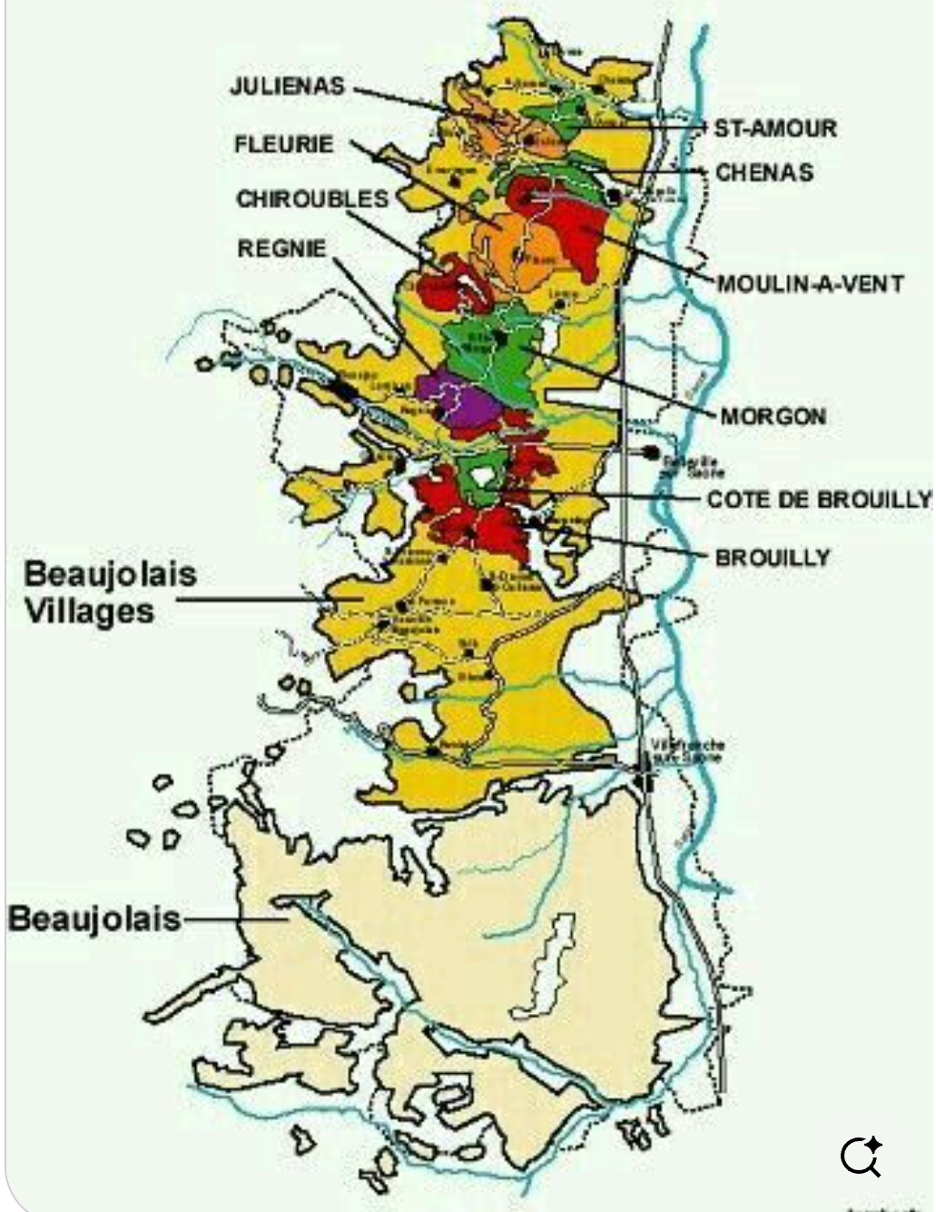
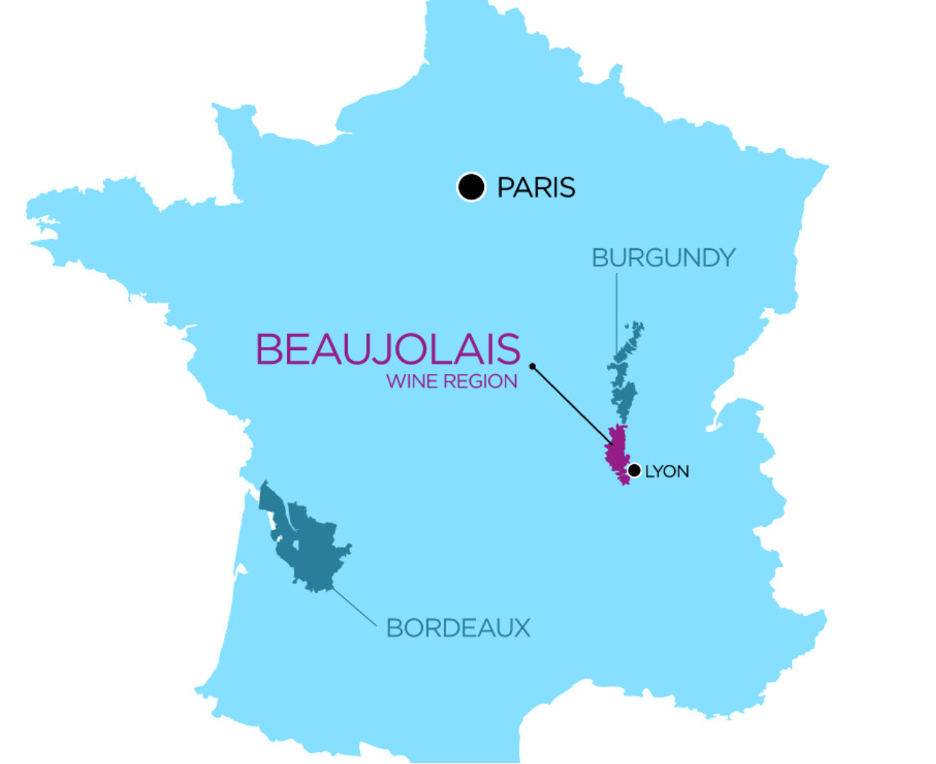
Nestled between the city of Lyon to the south and Burgundy to the north, Beaujolais is a picturesque landscape of rolling hills, granite soils, and sun-dappled vineyards. It stretches along the Saône River, covering approximately 55 kilometers in length.
The region is divided into two main areas:
Northern Beaujolais (the Crus)
Known for its granite and schist soils, this area produces the highly regarded Cru Beaujolais, wines with depth, complexity, and aging potential.
Southern Beaujolais (Beaujolais and Beaujolais Villages)
Characterized by clay and limestone soils, this area produces lighter, more fruit-forward wines.
At its heart lies the Gamay grape, which thrives in the region’s soils and climate. While Gamay might not have the prestige of Pinot Noir or Cabernet Sauvignon, it finds its ultimate expression in Beaujolais, producing wines that are approachable yet complex.
The region is most famously associated with Beaujolais Nouveau, a fresh and fruity wine released just weeks after harvest. This annual event, celebrated on the third Thursday of November, has become a global tradition, symbolizing the joy and conviviality of wine.
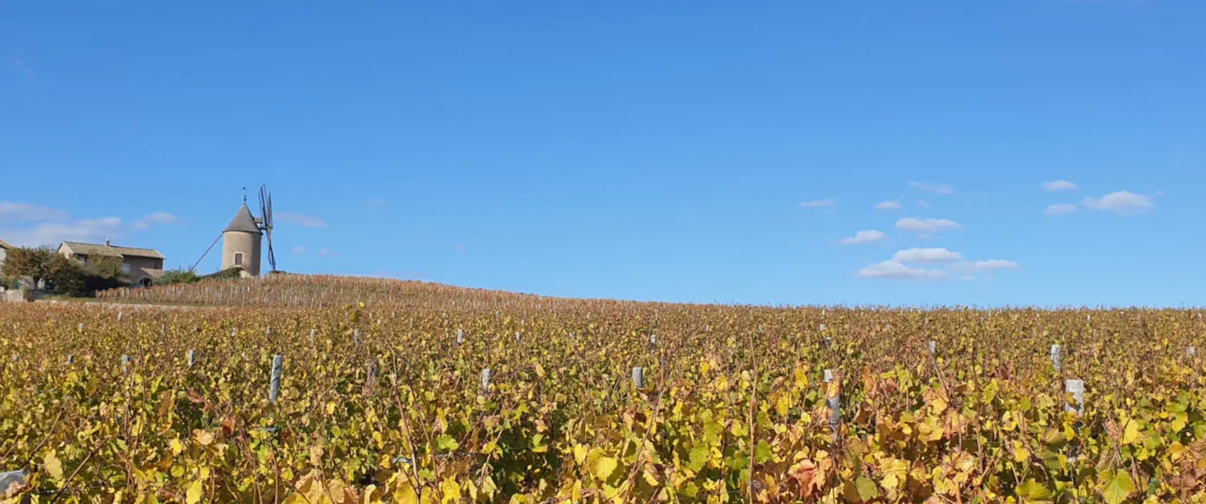
The ten Crus of Beaujolais, such as Morgon, Fleurie, and Moulin-à-Vent, showcase the potential for elegance and structure, proving that the region can compete with some of the world’s finest wines.
In recent years, Beaujolais has experienced a renaissance. Winemakers are embracing sustainable practices, focusing on organic and biodynamic viticulture to preserve the land’s vitality. This shift has led to wines that are more expressive of their terroir, gaining recognition among critics and consumers alike.
Beaujolais History
Ancient Roots & Middle Ages
Roman Era
Winegrowing began with the Romans, with notable vineyards on Mont Brouilly.
Medieval Monks
Benedictine monks became key cultivators from the 7th century onwards.
Lords of Beaujeu
The region took its name from the Lords of Beaujeu, prominent traders by the 10th century.
Burgundy Connection
In 1395, Duke Philippe the Bold banned Gamay in Burgundy, inadvertently pushing it south to Beaujolais. The first mention of Beaujolais wines in English followed soon after when Cyrus Redding described the wines of Moulin-à-Vent and Saint-Amour as being low-priced and best consumed young.
Rise to Popularity (17th-19th Centuries)
Lyon Market
Beaujolais became essential for Lyon’s growing industrial workforce, often sold as cheap “fake Burgundy” in the city’s bouchons (taverns).
Railways
The 19th-century railway expansion opened up the lucrative Parisian market, increasing demand.
The Nouveau Phenomenon (20th Century)
Early Release
Tradition started with winemakers celebrating the harvest by releasing young “vin de primeur” wine. The origins of Beaujolais Nouveau can be traced back to the early 20th century in the rolling hills of the Beaujolais region in eastern France.
Official Appellation
The Appellation d’Origine Contrôlée (AOC) was established in 1936, with regulations allowing early release.
Global Sensation
Marketing genius, especially by Georges Duboeuf, turned the third Thursday of November into an international event with the famous slogan, “Le Beaujolais Nouveau est arrivé!”.
Modern Era
Quality Renaissance
After the Nouveau craze, growers focused on quality, reviving traditional methods and highlighting the region’s diverse terroirs and 10 Crus (top villages).
There isn’t really any other wine that is defined so strongly by its grape and production method, and which defines both globally. While Gamay grows elsewhere, there isn’t much of it. It’s not like Cabernet Sauvignon, which while of course tied to Bordeaux, is also famous in many parts of the world. Gamay equals Beaujolais, a reference that is inescapable. Likewise, when anyone talks about carbonic maceration, it’s understood that the source of this technique is Beaujolais.
How Cluny’s monks shaped the vineyards of Beaujolais
The Beaujolais region, celebrated for its approachable and expressive wines, owes much of its viticultural identity to the monks of Cluny.
These medieval pioneers were not only spiritual leaders but also agricultural innovators who left an indelible mark on the vineyards of this picturesque region.
The rise of Cluny and its influence
A monastic vision
Founded in 910 AD by Duke William I of Aquitaine, Cluny Abbey became a beacon of religious reform and cultural influence.
The monks followed the Rule of Saint Benedict, emphasizing work, prayer, and self-sufficiency. This dedication extended to managing vast agricultural estates, including vineyards.
Cluny’s influence spread rapidly across Europe, with hundreds of monasteries adopting its reforms. Many of these satellite abbeys were located in Burgundy and Beaujolais, where viticulture thrived under the monks’ meticulous care.
Mastering the land: The monks and their viticultural innovations.
The monks of Cluny were among the first to study the nuances of terroir—the interplay between soil, climate, and grape variety.
They identified the unique characteristics of Beaujolais’ granite-rich soils, perfect for cultivating Gamay Noir, the grape that still defines the region.
Their records detail careful vineyard management practices, from pruning to harvesting, ensuring optimal grape quality. These practices not only improved the wine but also laid the foundation for the region’s reputation as a center of high-quality viticulture.
Creating a lasting legacy
By refining techniques for fermentation and storage, the monks ensured the preservation and transport of wine over long distances.
This was particularly important as Beaujolais wines became sought after by neighboring regions and even across Europe.
Their careful stewardship of the land also meant that vineyards thrived for centuries, leaving a legacy still visible in today’s rolling hills.
Economic and spiritual connections
Wine was not just an agricultural product; it was central to medieval life. The monks used wine for religious sacraments, particularly the Eucharist, ensuring that its production was treated with reverence.
Beyond the monastery, wine served as a vital trade good, fostering economic ties between the abbey and its surrounding communities.
Cluny’s economic power allowed it to reinvest in local agriculture, bolstering the prosperity of the region. Many villages in Beaujolais trace their roots to lands cultivated under monastic supervision.
Cultural footprints
The monks also acted as guardians of tradition, recording their knowledge and passing it on to future generations.
This cultural exchange helped establish Beaujolais as a distinctive wine region, defined by craftsmanship and respect for the land.
Cluny’s enduring legacy in Beaujolais
While the power of Cluny Abbey began to decline in the late Middle Ages, its influence endures in the vineyards of Beaujolais. The careful balance of tradition and innovation that the monks championed still resonates in the practices of modern winemakers. Their understanding of terroir and devotion to quality remain at the heart of the region’s identity.
For visitors to Beaujolais today, the legacy of Cluny can be experienced not only in the wine but also in the historic sites and landscapes that echo this unique monastic history.
The monks of Cluny were more than spiritual guides; they were stewards of the land, pioneers of viticulture, and architects of a cultural legacy that lives on in every glass of Beaujolais wine.
Their story is a testament to how devotion to both faith and craft can shape a region for centuries to come.
Middle Ages
From the early Middle Ages, the Lords of Beaujeu left their mark on the region. One of them, Bérard, became known from around 957 thanks to his wine trading. The Lords of Beaujeu gave their name to the area and contributed to its aura. Beaujeu was the capital of the Beaujolais region up until the early sixteenth century, when it was replaced by Villefranche-sur-Saône.
The earliest references to Gamay are medieval, and during the Black Plague much of Burgundy was replanted with Gamay instead of Pinot. Gamay vines are hearty and productive, much lower maintenance than the notoriously fickle Pinot Noir. Since mostly everybody was dead the people that survived had to keep chugging along, and Gamay made life a lot easier. By 1395 it had taken over so much of Burgundy that Philip the Bold, Duke of Burgundy, issued a very dramatic edict banning the grape from his lands. Poor Gamay was called disloyal, ruinous, harmful, infested with disease, and my favorite, full of horrible bitterness. In his effort to make Burgundy great again, Philip decimated the Burgundian wine industry for several generations, and Gamay was relegated south.
17th C
From the seventeenth century, the Beaujolais winegrowing area attracted the bourgeoisie from Lyon. Local dignitaries enjoyed non-taxable sales rights and used to sing the praises of Beaujolais wines in Paris.
New communication links like Briare Canal between the Loire and the Seine put the Beaujolais region on an important trading route between the south of France and Paris. Goods arriving at the port of Belleville on the Saône were transported onwards to the Loire via the Beaujolais region. Beaujolais wines could therefore be transported all the way to Paris.
Riverways
How Beaujolais and Cognac embodied the art of French trade
Long before motorways and marketing, France’s reputation for fine wine travelled by water. From the rolling granite hills of Beaujolais to the serene plains of Cognac, rivers carried barrels, merchants, and ambition — weaving together a national identity of taste and craftsmanship.
In the 18th and 19th centuries, the Saône and the Charente were not just waterways; they were the veins through which France’s vinous lifeblood flowed. Along their banks, a new generation of producers and traders learned how to move wine, shape demand, and transform local products into emblems of French refinement.
Beaujolais: wine on the move
The Saône, “the Walking Road”
For the vignerons of Beaujolais, geography was destiny. Their vineyards, perched on gentle slopes north of Lyon, overlooked the Saône — a river the Romans once called “le chemin qui marche” – “the road that walks”.
From the 17th century onward, barrels of young, lively Gamay were rolled, dragged, or carted down to the riverbanks before being loaded onto flat-bottomed gabares that floated south toward Lyon.
There, an insatiable market awaited: silk workers, artisans, and merchants who drank Beaujolais not out of prestige, but out of joy.
By the mid-18th century, the wine of the Beaujolais had become “the wine of the Canuts,” fueling the daily life of Lyon’s booming working class. In the city’s narrow bouchons, it was poured into short pots and shared with laughter.
The link between Beaujolais and Lyon was so intimate that vintners began tailoring their wines to the city’s palate — bright, fruity, and ready to drink.
Beyond Lyon: trade and expansion
The Saône and Rhône rivers did more than serve Lyon; they opened a route to the Mediterranean world. From there, Beaujolais reached Marseille, Italy, Spain, and even North Africa.
Meanwhile, another innovation changed everything: construction of the Canal de Briare began around 1604–1605 and was completed in 1642 after nearly four decades of work. The first boat passed through that same year, connecting the Loire and the Seine — a revolution for wine transport. This made it possible for Beaujolais wines to reach Paris, where they found a new bourgeois clientele eager for “country wines” with charm and authenticity.
By the 19th century, railways replaced barges. Beaujolais travelled faster and farther, pouring into Parisian cafés and London wine bars. Yet the river remained a symbol — of mobility, trade, and renewal.
Merchants and the birth of wine commerce
If the Saône carried the barrels, the merchants carried the story. In Lyon and Beaune, négociants organized the wine trade with precision. They bought grapes and wine from hundreds of small growers, blended, matured, and sold them under recognizable names — a precursor to modern branding.
This merchant system linked Beaujolais to Burgundy, its northern neighbour. For centuries, the two regions collaborated: Beaujolais supplied volume and vivacity; Burgundy provided prestige and structure.
Some Beaujolais wines were even sold under the Burgundy label — an early example of commercial synergy in the wine world.
As Lyon became a major industrial player in the 18th and 19th Centuries, Beaujolais was the juice that slaked the thirst of the explosion of workers. Coming in at around 15% ABV, Beaujolais was ubiquitous in the burgeoning Lyon restaurant scene at the bouchons, or the traditional Lyonnais restaurant from this time. Everyone must have been pretty hammered all the time, good times! It was often sold as fake Burgundy, and generally enjoyed a robust trade. The new wines were sent down the river still fermenting in their barrels, so great was the demand for more wine to keep all the silk workers and other factory laborers lubricated. With the advent of the railway, Beaujolais became trendy in Paris bistros, and by the late 19th Century had even appeared in London.
19th C
In the 19th century, the advent of the railways accelerated the expansion of Beaujolais wines. However, from 1875 the winegrowing area was reduced to a tiny proportion of what it had once been after it was decimated by phylloxera. It would be revived notably thanks in particular to research carried out by Victor Pulliat, a well-known figure in the Beaujolais region, who introduced American stock grafts that were more resistant to the American aphid.
Beaujolais Terroir
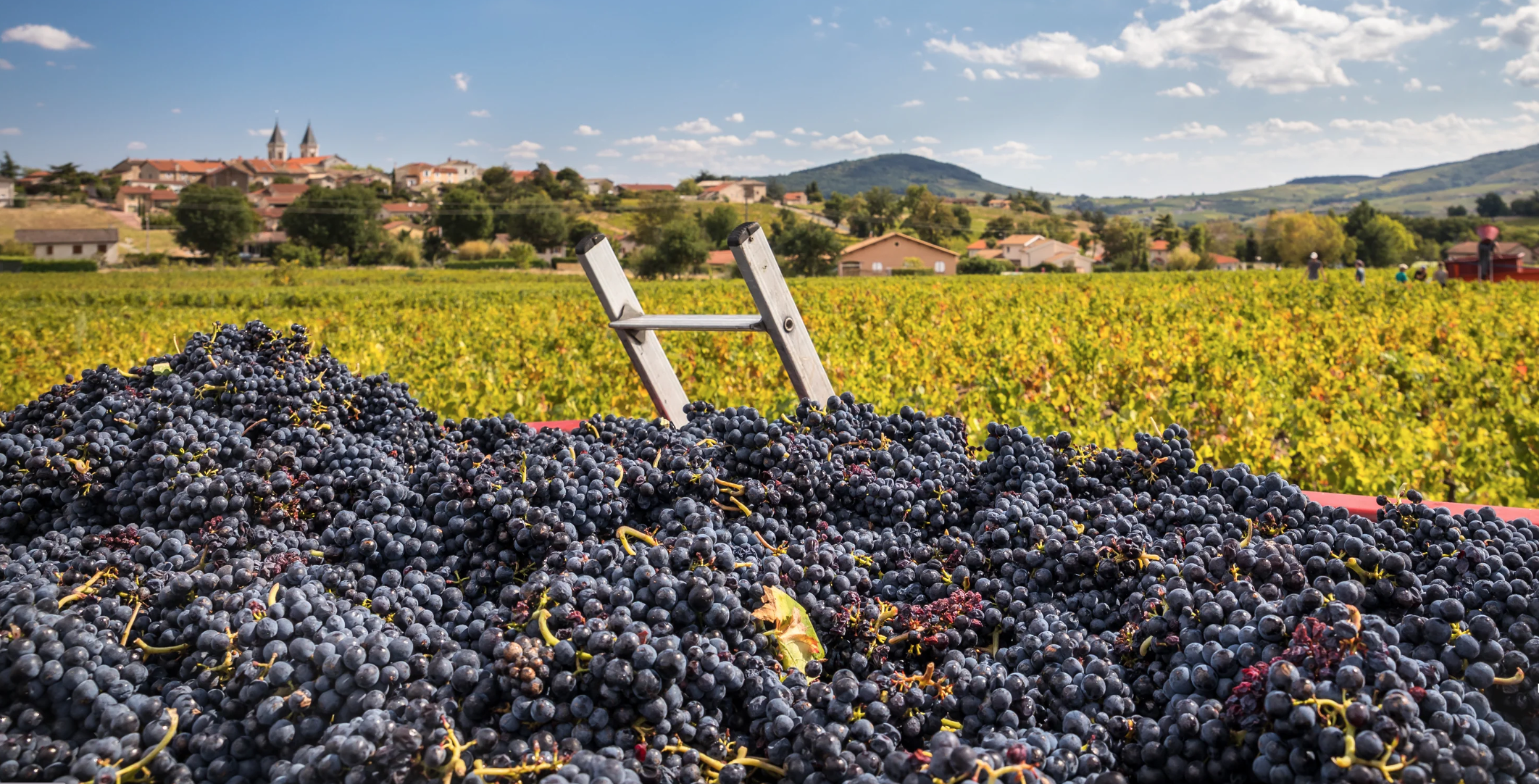
In April 2018, recognition of the outstanding geology led to the “UNESCO Global Geopark” designation. Consequently, the Beaujolais vineyard became the 7th Geopark in France in 2020 designated by Unesco, recognizing its unique geology and winemaking heritage. The southern part of Beaujolais is called the Golden Stone area because the houses are built of the region’s yellow stone, reminiscent of Tuscany
Although the Beaujolais wine region is not very extensive geographically speaking, it encompasses a multitude of different soils in a highly surprising way; over 300 variants have been identified and described.
The soils form on bedrock or on the parent material that supports them — over 500 million years of geological history for which all the traces can easily be found. It is located on the eastern edge of the Massif Central and impacted by the Alpine phenomenon of the Tertiary period — but spared by the glaciers, the Beaujolais wine region has inherited one of the richest and most complex geologies in France.
This is where each appellation or if not each “lieu-dit” initially draws its own individual character, especially given that Gamay is the only grape variety used in the Beaujolais region for producing all the red wines: crus, Beaujolais-Villages and Beaujolais.
Climate with Different Influences
The Beaujolais region benefits from a mild climate marked by three major influences. In winter, continental air masses contribute to the frosts that can sometimes continue until well into the spring. Between seasons, the oceanic air masses promote the regulatory function of the Saône River and reduce the differences in temperature. The return of warm weather brings with it the influence of Mediterranean winds.
The Upper Beaujolais mountain chain also helps protect the vine stock and attracts the foehn – warm air from the west that has a warming and drying effect in summer when it crosses the Beaujolais mountain ridges on its way down to the plain.
The winegrowing terroir has relatively low rainfall and can be affected by extreme heat as well as sometimes devastating storms.
Slopes with Good Sunlight
Most of the slopes in the Beaujolais region face south or east and benefit from long hours of sunshine and good light from spring to autumn. Another great advantage for producing exceptional Beaujolais wines
The Passion and Skills of Winegrowers in the Beaujolais
The Beaujolais region owes the different qualities and variety of its wines to the diversity of its terroirs as much as to the passion of its winegrowers and the intimate knowledge they have built up about their land. Knowledge and skills that are becoming increasingly specialized and very much dedicated to preserving this unique natural heritage.
Growing techniques in the Beaujolais still rely heavily on the physical involvement of the winegrower. Whether it’s for pruning the vine stock, looking after the soil, training the vine or organizing the harvest, Beaujolais winegrowers are always physically present on their land. Although mechanical means are used in some places to facilitate certain tasks (ploughing or harvests), the very nature of the land (relatively small plots, stony soils, hillsides, steep gradients, etc.) and the regulations governing the 12 appellations, require constant vigilance and all the skills and knowledge that are passed down from generation to generation.
Beaujolais Producers
The “best” Beaujolais is subjective, but top contenders often come from the Cru villages (like Morgon, Moulin-à-Vent, Fleurie) and top producers such as Château du Moulin-à-Vent, Jean Foillard, Domaine Lapierre, and Château Thivin, known for terroir-driven, age-worthy wines, with Morgon and Moulin-à-Vent praised for structure, while Fleurie offers elegance, though the best choice depends on preference for lighter, fruity styles or deeper, complex ones.
Top-Tier Producers & Wines
- Château du Moulin-à-Vent: Known for powerful, complex wines, especially from the Moulin-à-Vent Cru.
- Jean Foillard: A leader in natural, terroir-focused wines, especially acclaimed Morgon.
- Domaine Lapierre: Highly respected for traditional Morgon wines.
- Château Thivin: Excellent examples from Côte de Brouilly.
- Jean-Marc Burgaud: Produces exceptional Morgon Côte du Py.
- Domaine Mee Godard & Louis-Claude Desvignes: Consistently rank among the best.
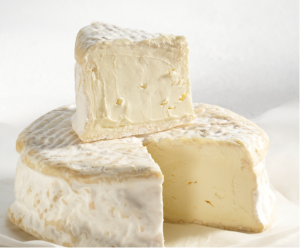
Brillat-Savarin
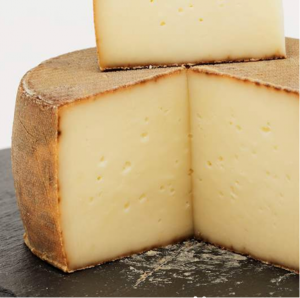
Timanoix
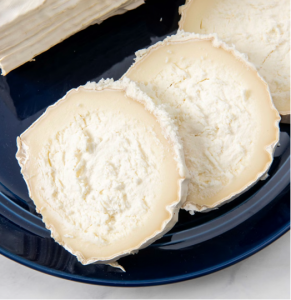
Bucheron
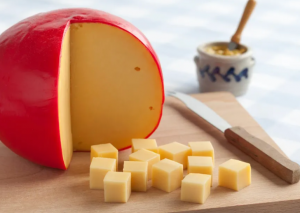
Edam
Food Pairings
French Ham and Cheese Croquettes

Make a bechamel by melting 2 T. butter in a saute pan and sauteing onion and garlic until tender. Drizzle in 2 T. or so of flour and stir for a couple of minutes to cook out the flour taste; while stirring, add 1.5 – 2 c warm milk to bring the sauce to the desired consistency.
To your sauce, add in a cup or so of finely diced ham and ½ c grated gruyere cheese. Continue to cook the bechamel until it is quite thick. Refrigerate for at least a few hours so the bechamel firms up enough to handle.
Shape into balls or cylinders and dip into beaten egg to coat; then dip into breadcrumbs or panko to completely cover the croquette. Refrigerate for ½ hour to help the croquettes hold their shape when frying.
Deep fry at 350 degrees until golden brown, about 3-5 minutes. Serve with chopped parsley and lemon aioli.